In Washington, the Supreme Court issued a ruling on Tuesday that overturns longstanding federal regulations regarding campaign finance. The decision specifically targets rules that previously capped the amount a national political party committee could spend in coordination with individual candidates.
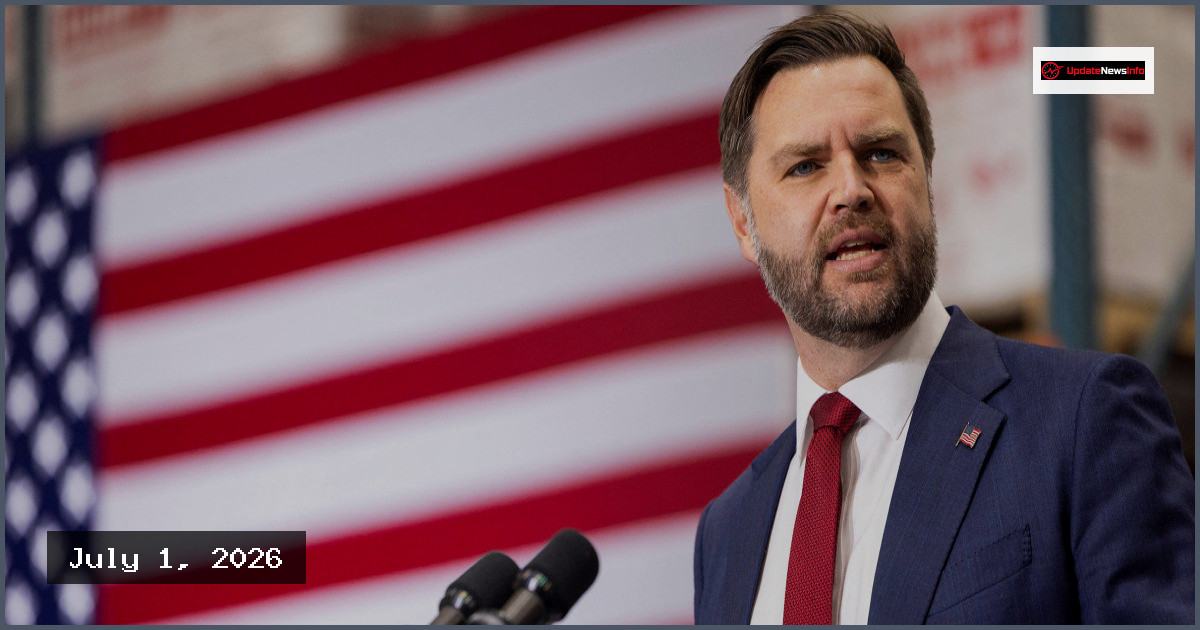
Justice Brett Kavanaugh authored the 6-3 opinion, which concluded that the existing restrictions are unconstitutional as they infringe upon free speech rights protected by the First Amendment. The court’s reasoning is rooted in the established legal theory that political spending functions as a form of speech. This legal challenge was spearheaded by the National Republican Senatorial Committee, the National Republican Congressional Committee, and the campaign committees representing two 2022 election candidates: current Vice President JD Vance, who was then a Senate candidate in Ohio, and former Representative Steve Chabot, who also sought re-election in Ohio at the time.
During the proceedings, the Federal Election Commission, operating under the Trump administration, supported the challengers. The Supreme Court’s conservative majority has consistently demonstrated skepticism toward campaign finance limitations, often aligning with Republican-led efforts to roll back such regulations. This ruling follows a historical pattern of Supreme Court decisions, most notably the 2010 Citizens United v. FEC case, which permitted unlimited independent expenditures by outside entities like super PACs.
Following the verdict, Republican leaders expressed strong approval. Rep. Richard Hudson of North Carolina, chair of the NRCC, and Sen. Tim Scott of South Carolina, who chairs the NRSC, released a joint statement declaring that the government lacks the authority to impose arbitrary limits on how parties support their nominees. They emphasized that they are prepared to fully back candidates to ensure success in the 2026 election cycle and beyond. Conversely, Democratic leadership—including DNC Chair Ken Martin, Rep. Suzan DelBene, and Sen. Kirsten Gillibrand—criticized the move, labeling it a victory for special interests and wealthy donors while accusing Republicans of manipulating the electoral landscape.
Prior to this ruling, while political parties were permitted to make unlimited independent expenditures that were kept separate from a candidate’s specific campaign, they were prohibited from exceeding coordinated spending caps. Such spending often included essential logistics like travel expenses, consultant fees, and venue rentals. These limits previously fluctuated based on voting-age populations, reaching up to $4 million for some Senate contests and $127,000 for at-large House races. Legal analysts note that with the massive influx of capital following the Citizens United decision, these specific caps had seen their influence diminished, failing to prevent the appearance or reality of corruption in the political process.