Nearly 2,000 people have been confirmed dead following the devastating twin earthquakes in Venezuela, with approximately 43,000 individuals still listed as missing. Aid organizations are currently raising alarms regarding an escalating food crisis and the risk of disease outbreaks as the nation’s healthcare system struggles to manage the aftermath.
Emergency response teams continued their efforts on Tuesday, nearly one week after the country was struck by powerful earthquakes of magnitude 7.2 and 7.5. These seismic events occurred just seconds apart, according to data provided by the Venezuelan government, opposition figures, UNICEF, and NASA. However, the window for finding survivors has largely closed, with the critical 72-hour period having passed, causing rescue efforts to decelerate significantly. Teams are now transitioning from a focus on rescue to the recovery of victims.
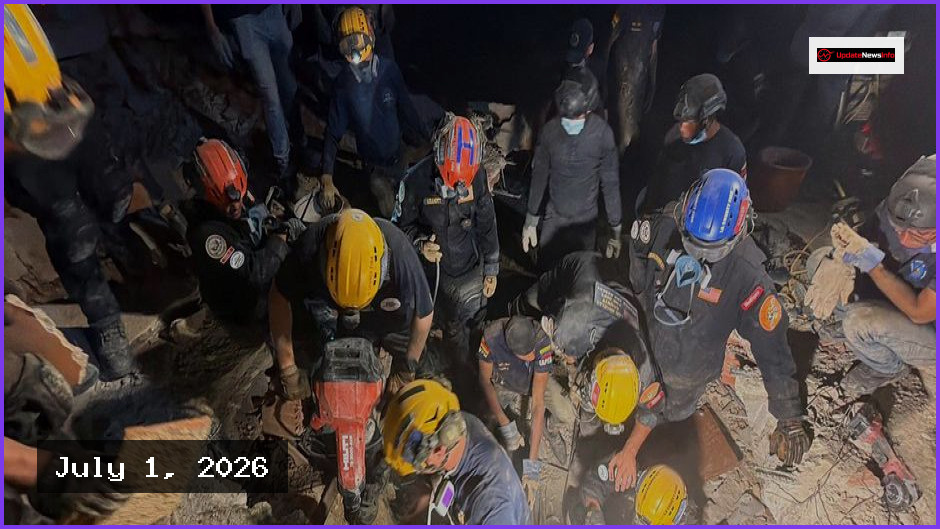
In the town of Macuto, La Guaira, rescue operations led by international teams from Ecuador and the United States were suspended on Tuesday. The teams had spent over 40 hours attempting to reach a mother and her three children trapped under building debris, but they ceased work after receiving no further signs of life. Major Jorge Montanero, who leads the Ecuadorian delegation, stated that they believe the time passed means they are now searching for the deceased rather than survivors.
Despite the grim situation, there have been rare instances of success, including a Jordanian rescue crew that managed to pull a three-year-old boy alive from collapsed structures in Caracas on Tuesday.
In addition to the physical destruction, aid groups are warning of a severe humanitarian emergency. The World Food Programme has requested $50 million, approximately €43.83 million, to provide urgent nutritional support to as many as 500,000 people over the next three months. Furthermore, the World Health Organization reported that the national healthcare system is under extreme strain, with at least three health centers suffering critical damage and six others maintaining only partial functionality. WHO spokesperson Christian Lindmeier has warned of potential outbreaks of yellow fever, measles, dengue, and malaria, exacerbated by poor sanitary conditions and limited vaccination access among the thousands of displaced citizens.