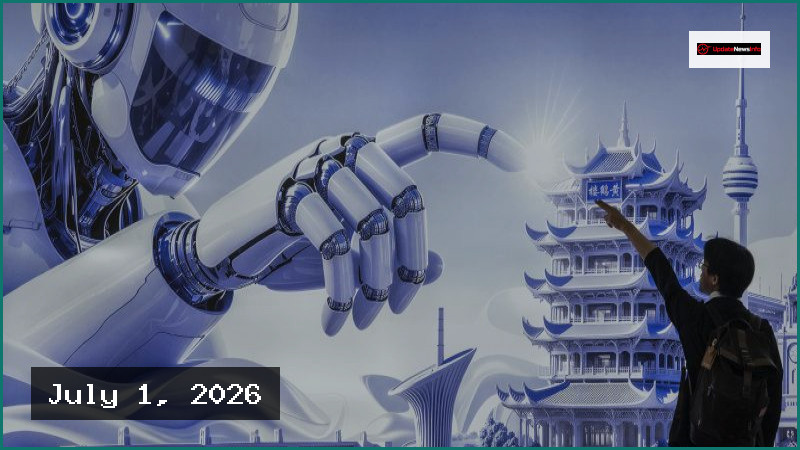
When humanoid robots took center stage at last year’s Spring Festival Gala, e-commerce livestreamer Ai Lin saw more than just a performance; he saw a lucrative business opportunity. Shortly after the event, the Hangzhou-based entrepreneur invested $30,000 in his first android to launch a rental venture. For a daily fee of 3,000 yuan ($443), clients can hire these machines to draw attention at exhibitions, perform at various functions, or even assist with marriage proposals.
However, Ai’s experience highlights a growing disconnect between the viral success of these robots and their actual capabilities. Despite the spectacle, these machines are not yet ready to replace human workers in factories or households. Ai noted that the current market for sales is sluggish because the robots still lack the autonomy required for practical tasks, effectively acting as high-tech, oversized toys.
Beijing is investing billions into humanoid robotics, viewing the technology as a strategic move to boost productivity amidst a shrinking workforce. Analysts from Omdia suggest this sector represents a rare chance for China to lead in a critical technological frontier. Investment bank Morgan Stanley projects that by 2050, as many as one billion humanoids could be in use, representing a market value exceeding $5 trillion. Currently, Chinese manufacturers account for the majority of global android deliveries, significantly outpacing American competitors like Tesla and FigureAI.
To accelerate adoption, Beijing recently launched a nationwide initiative to deploy robots in over 100 high-value scenarios before the end of the year. Following the hype from the Spring Festival, numerous rental services have emerged, with state media reporting over 153,000 such businesses currently operating in China. Leading maker AGIBOT established a subsidiary called SHAREBOT to capitalize on this, predicting the rental market could hit $1.5 billion by late 2026. In its first three months, SHAREBOT recorded over 5,500 orders for rentals starting at 3,500 yuan ($517) per day, a price that includes a human operator.
Despite this activity, some rental operators are reporting a decline in prices as the initial excitement fades. Zhao Xiaohong, who invested in eight humanoids, noted a sense of market fatigue due to stagnant technical progress. In tech hubs like Yizhuang, facilities showcase robots performing repetitive tasks, yet they are often guided by human trainers with handheld controllers, illustrating the industry’s struggle with physical-world data collection and hardware limitations. Analysts point out that components like dexterous robotic hands remain expensive and lack durability, further stalling widespread industrial integration.
While firms like UBTECH claim their robots achieve roughly 80% of human productivity in specific sorting tasks, actual deployment remains largely confined to pilot projects. Even Unitree, a prominent manufacturer preparing for a public listing in Shanghai, admits that research and educational institutions drive most of its sales, with industrial use accounting for less than 10%. As the sector navigates these challenges, experts warn of a potential bubble, suggesting that the industry will likely consolidate around a few major players while the reality of the technology catches up to the hype.