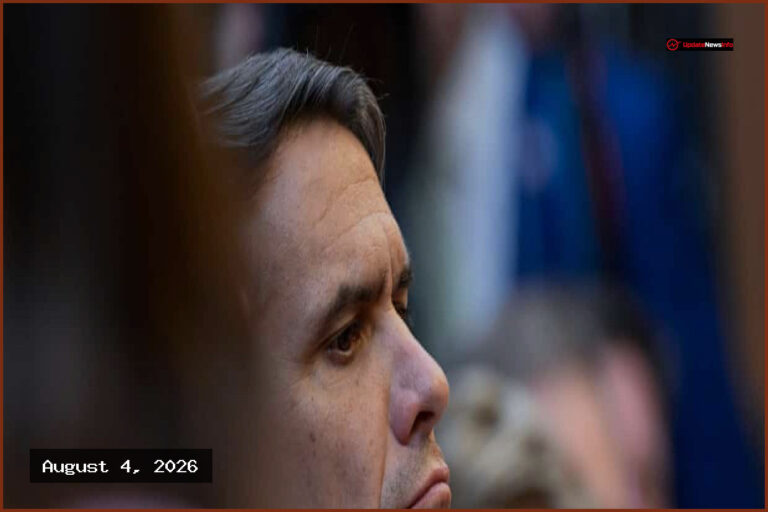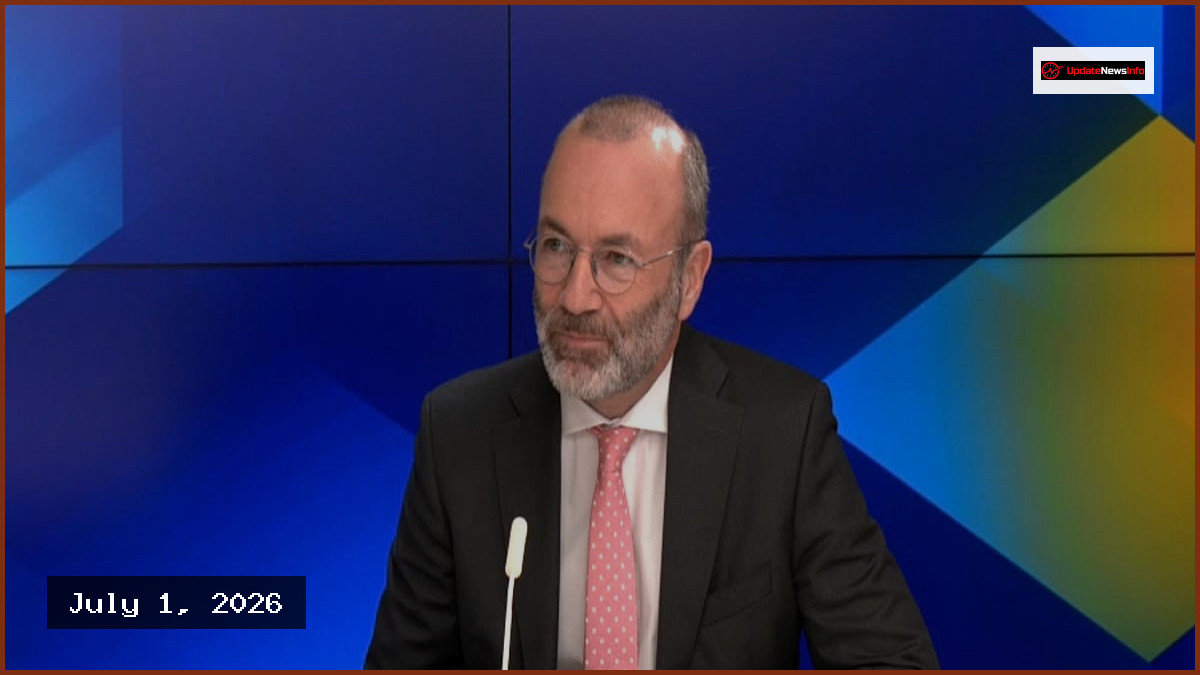
Manfred Weber, president of the European People’s Party, has stated that the European Union cannot afford to cripple its industrial sector in the name of climate change. During an interview on Euronews’ programme Europe Today, Weber addressed the issue as a severe heatwave across Europe, which has caused approximately 1,300 deaths, renewed intense debate regarding the bloc’s climate policies.
As the leader of Europe’s largest political force, Weber has overseen the rollback of certain elements of the Green Deal—a policy framework aimed at achieving net-zero greenhouse gas emissions by 2050—with the specific goal of maintaining industrial competitiveness. He emphasised the need for reasonableness and a balanced approach in business, noting that his party was instrumental in shaping the original Green Deal policies.
Weber also touched upon individual energy habits, defending the use of air conditioning as a necessity. He suggested that by powering these units with solar energy, the bloc could overcome the associated emissions issues typical of fossil fuel usage. Regarding the ongoing debate over European climate transition, he insisted that policy must remain grounded in economic reality.
The EPP leader further criticised Spain’s ambitious plan to regularise more than one million undocumented migrants. While Spanish Prime Minister Pedro Sánchez maintains that such immigration is vital for the economy to counter an ageing population, warning of a potential 19% GDP loss by 2050, Weber voiced strong reservations. He described the move as problematic for the wider EU, suggesting that such a massive legalisation could impact other member states if those migrants move freely throughout Europe. He characterised the procedure as abnormal.
Additionally, Weber supported EU legislation that allows for the creation of return centres for irregular migrants outside the bloc. Although the measure has faced criticism concerning human rights, it has been approved by the European Parliament. Weber stated that while the EU has potential partners in the Middle East and Africa to host these centres, the decision on how to proceed and finance them rests with the individual member states.