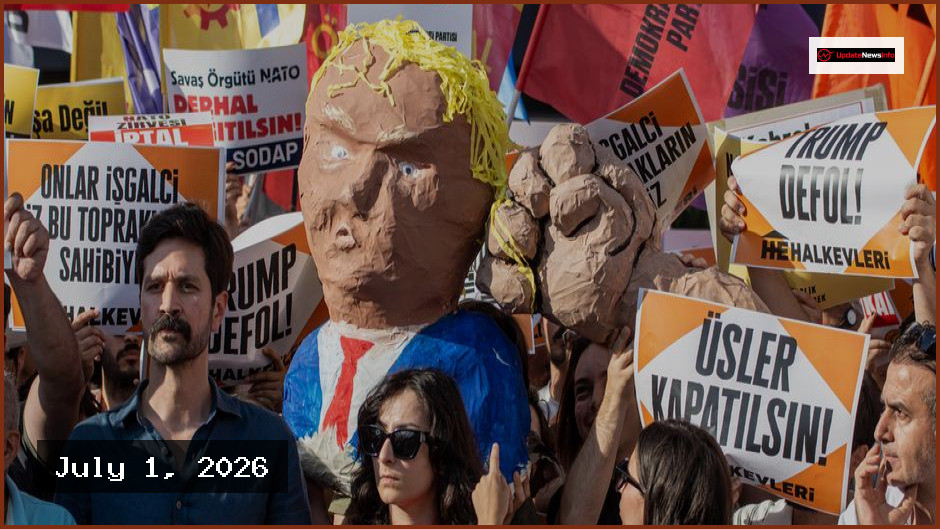
Ahead of the high-profile NATO summit scheduled for July 7 and 8, the city of Ankara has implemented a strict two-week ban on public gatherings. As part of these security measures, 225 activists have been taken into custody. This significant meeting occurs during a period of international tension, compounded by recent comments regarding the trans-Atlantic security alliance from US President Donald Trump. For Turkey, which maintains the second-largest military in NATO, the summit is of vital importance as the nation occupies a central position on the alliance’s southeastern flank. Notably, this event marks the first visit by a sitting US president to Turkey since Barack Obama’s trip in 2009.
The intensive preparations have been eclipsed by a wave of arrests in recent days. Of the 225 individuals detained, 178 remain in pretrial detention, including environmental activists, human rights advocates, and members of the press. Turkish prosecutors have framed the crackdown as part of ongoing investigations into terrorist organizations, stating the objective is to expose extremist activities throughout the country.
Those taken into custody include Nevzat Ozer of the environmental TEMA Foundation, economist Emel Memis Parmaksiz, and Yildiz Tar, who serves as the editor-in-chief of the LGBTQ news portal Kaos GL. Attorneys Semra Demir and Kursat Bafra were also detained on accusations of affiliation with an armed terrorist organization. During questioning, some detainees were asked about potential links to the banned Communist Party of Turkey/Marxist-Leninist, with inquiries focusing on military training, organizational structures, and possible aliases. The accused have denied these allegations, with some individuals stating they had no knowledge of the group mentioned.
Political scientist Berk Esen expressed doubt regarding the timing of the government’s actions, noting that seeking positive press ahead of such an important summit is undermined by these controversial measures. Esen observed that this reflects a repeating pattern seen during previous NATO summits in Turkey, where individuals from the political left are often targeted. He suggested the move could serve as a signal to the US, though he noted that many of those arrested lack political affiliations, potentially signaling broader issues within the Turkish judicial system.
The actions have drawn sharp criticism from Human Rights Watch. Benjamin Ward, the group’s deputy Europe and Central Asia director, stated that utilizing terrorism laws to conduct mass arrests ahead of a NATO summit contradicts the alliance’s foundational values. He further remarked that clearing the streets of potential protesters highlights the Turkish government’s escalating repression, urging international NATO allies to exert influence and encourage the authorities to shift their current approach.