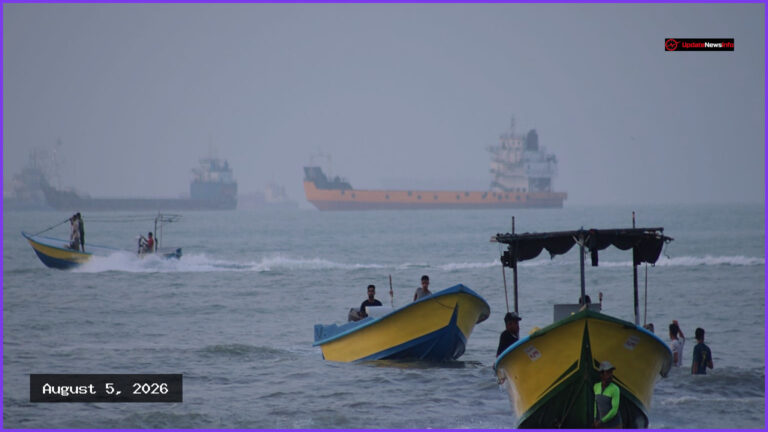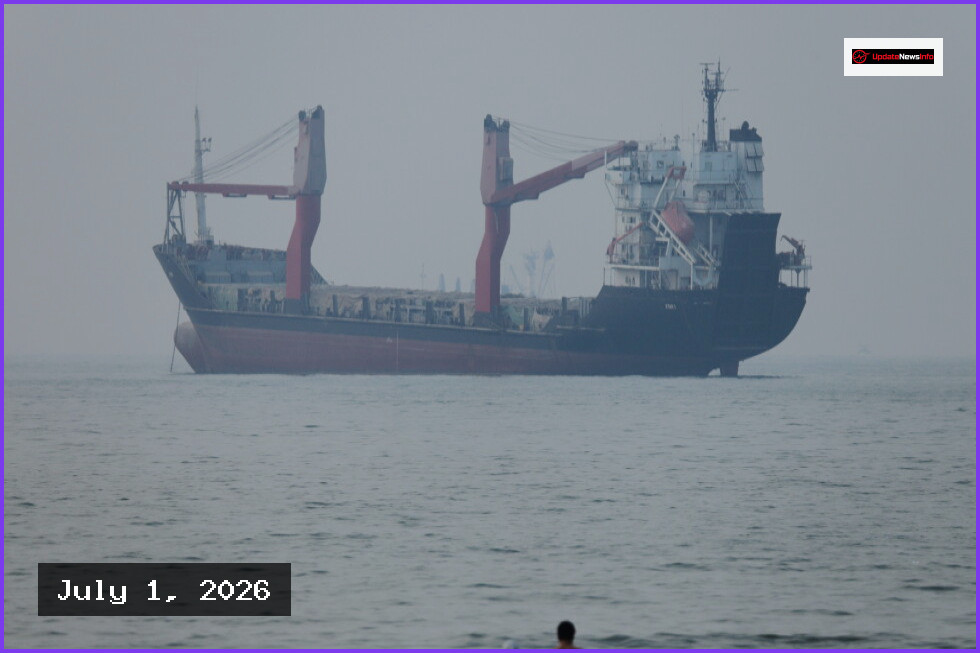
A foreign container ship has run aground in the Strait of Hormuz while navigating a path not approved by Iranian authorities, state television in Tehran reported on Wednesday. Although the vessel was identified as a foreign container carrier, officials provided no further specific details regarding the incident. The announcement appeared intended to reinforce Tehran’s claims of jurisdiction over the vital waterway, which traditionally functions as an international maritime passage and typically facilitates the movement of one-fifth of global oil and natural gas supplies during peacetime.
Since the onset of the current conflict, Iran has utilized its influence over the strait as a primary strategic lever, leading to significant disruptions in global energy and commodity markets. This development follows recent high-level diplomatic efforts in Doha, Qatar, where U.S. Mideast envoy Steve Witkoff and Jared Kushner, son-in-law of U.S. President Donald Trump, have been engaging in talks to secure a permanent end to the war. Iran’s lead negotiator, Kazem Gharibabadi, is also present in Qatar with his delegation.
The U.S. and Iran reached an initial agreement early Monday aimed at opening the strait and extending a shaky ceasefire, which could potentially restore essential energy flows to international markets. Technical discussions between diplomats commenced on Wednesday in Qatar to resolve specific details, although significant disagreements remain regarding the status of the strait and the situation in Lebanon. As part of an interim arrangement, both nations agreed to allow vessels to pass without charges for a 60-day period, though Tehran continues to insist on exercising control over transit routes and eventually imposing passage fees, a move that contradicts decades of established maritime practice. The United States and several Gulf Arab nations have rejected these demands, and recent attempts by Oman and a U.N. agency to establish an alternative route near the Omani coast resulted in regional attacks over the weekend.
Iranian state media asserted that the vessel became stuck due to shallow water along its chosen path, emphasizing that mariners must strictly follow instructions from the Iranian paramilitary Revolutionary Guard. The Guard’s navy has repeatedly warned that any transit outside the so-called ‘Route of Authority’ could lead to irreparable incidents. While reports noted the grounding, they did not address the two recent attacks by Iranian forces on ships attempting to transit the strait without permission, including one vessel transporting Qatari crude oil.
Diplomatic engagement continues in Qatar, where the Americans met with Foreign Minister Sheikh Mohammed bin Abdulrahman Al Thani. The Sheikh also met with Gharibabadi to discuss the implementation process of the memorandum of understanding on ending the war. Meanwhile, maritime traffic has seen some relief; Thailand’s Foreign Ministry reported Tuesday that 10 out of 11 Thai-flagged or chartered vessels have departed the strait safely, and South Korean officials stated that all but two of their country’s 26 previously stranded vessels have also left safely.
In a separate development on Wednesday, Iraqi authorities shot down a small, unarmed surveillance drone over Baghdad’s fortified Green Zone. This marked the first security incident in the capital since the U.S. and Iran agreed to a ceasefire, following a period where Iranian-backed Iraqi militias frequently targeted U.S. military and diplomatic facilities after the war began in late February.