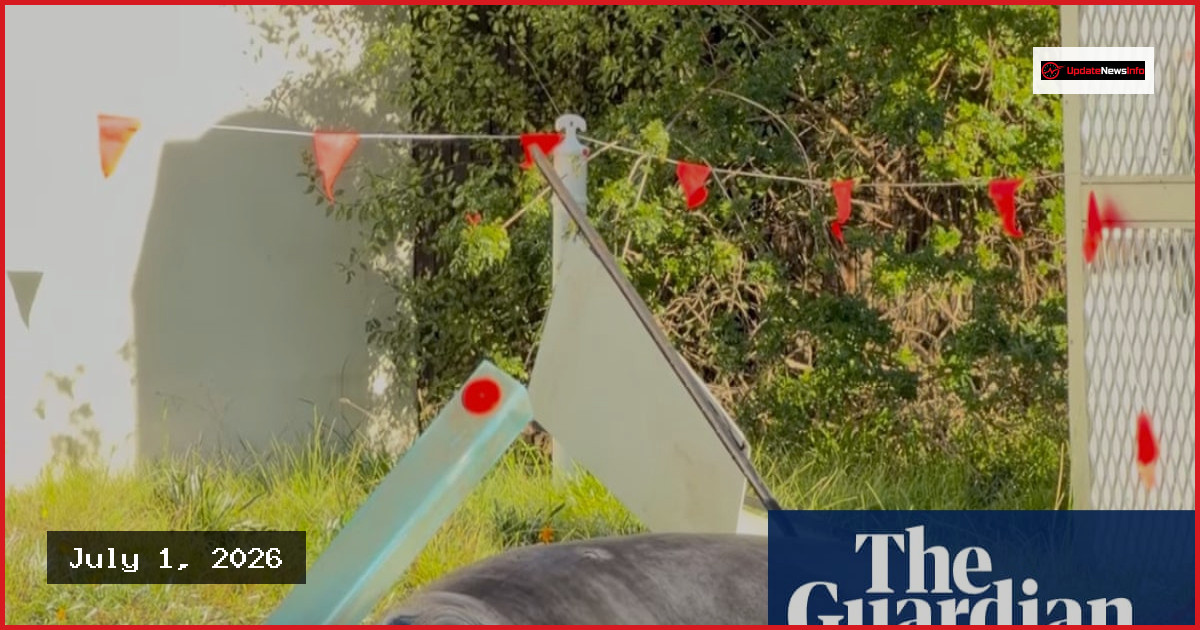
Bollards, traffic cones, fences and LandCruisers stand little chance against a one-tonne giant known as Neil the seal, who has become a local legend in southern Tasmania. Neil, a five-year-old elephant seal, has once again taken up residence in Tasmanian towns, bypassing barricades, crushing fences, lying on roads and bashing into at least one parked car. In short, he is acting like an unruly teenager, play-fighting with seal stand-ins. Rod Macdonald, the mayor of the Tasman council, which covers the area where Neil was born in 2020, says that while the seal is not the fastest mover, running into a car or putting his nose up on a bonnet is not ideal. However, he remains a celebrity who continues to earn his status.
As independent Tasmanian senator Jacqui Lambie puts it, he is the only bloke in Tasmania who can stop traffic, ignore everyone, and still be loved for it. Dr. Jane Younger, a senior lecturer and seal expert at the University of Tasmania, says Neil is simply engaging in normal seal behaviors. He has returned every year since birth but is much larger now. At 1,000 kilograms, he is increasingly capable of being a menace. Younger notes that he is set to grow significantly, as adult males are routinely more than 2 tonnes, with some larger ones reaching around three-and-a-half tonnes.
Dr. Clive McMahon, a marine ecologist who has worked with elephant seals for three decades, explains that Neil is on land for one of several haul-outs the creatures make annually. He appears to have arrived for a social visit and will likely stay for six weeks or so. Because he lacks other young males to interact with, he is forced to learn fighting and social behaviors by sparring with traffic cones and bollards. Often, when he is seen sleeping pressed against a fence, it is likely because he is trying to feel the presence of another creature, as these seals usually sleep in large, squished clumps.
Beyond Neil, elephant seals face dire threats. The International Union for the Conservation of Nature recently upgraded the southern elephant seal to vulnerable. This shift followed a wave of bird flu that tore through four out of five major populations. In some colonies, more than 90% of seal pups died, including 13,000 on Heard Island alone. Macdonald says residents are working out ways to coexist without getting into too much trouble with the animal, despite the danger he poses to infrastructure. Wildlife officials urge people to stay 20 metres away from Neil, and 50 metres if they have dogs. McMahon adds that Tasmanians should embrace these visits, noting that humans have the privilege to learn about these animals and their ocean environment.