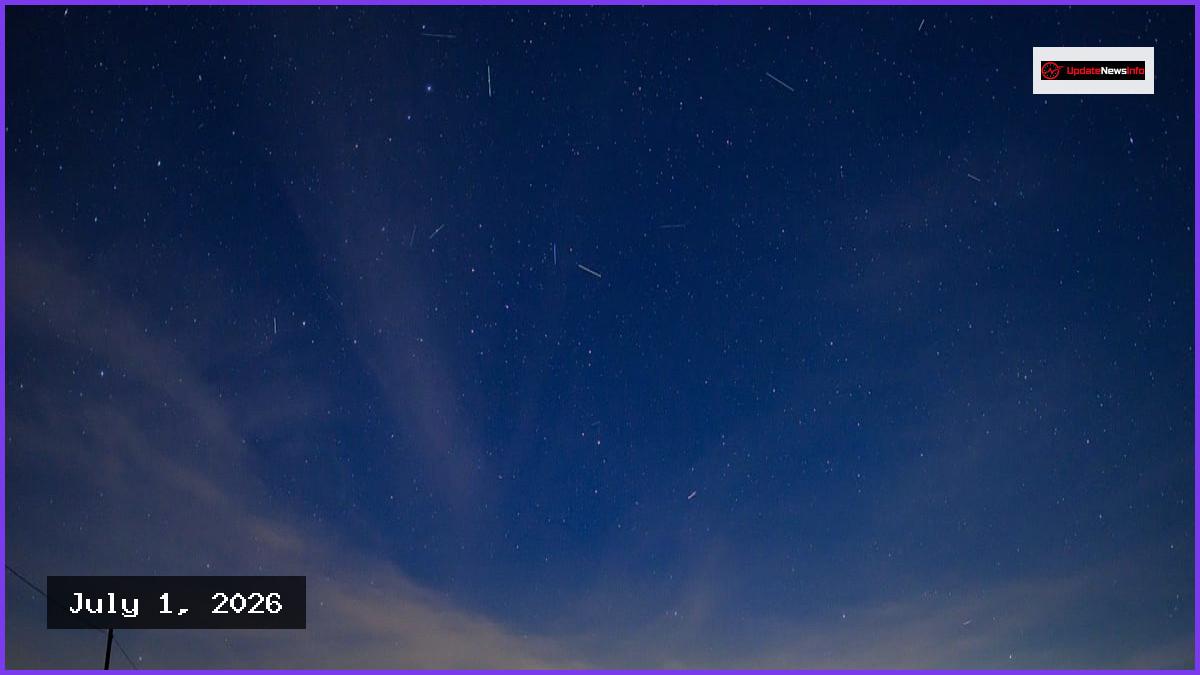
A new research report released on Wednesday warns that the approximately 1.7 million satellites planned for launch into Earth’s orbit in the coming years will cause devastating consequences for the field of astronomy. The European Southern Observatory (ESO), which led the study, describes the swarm of bright satellites as an existential threat to ground-based telescopes attempting to observe the universe. To preserve humanity’s capacity for space observation, the research team is advocating for a strict orbital cap of 100,000 satellites.
This study represents the first attempt to quantify how large constellations of high-brightness satellites will impact the night sky by increasing ambient light levels. Currently, there are 14,000 satellites in orbit, a number that has increased rapidly in recent years, largely due to Elon Musk’s Starlink internet constellation. SpaceX has outlined ambitious plans to launch over 1 million satellites by 2028 to support data centers for the AI sector. Other initiatives, such as the E-Space “Cinnamon” project and the Chinese CTC-1 and CTC-2 constellations, are expected to add hundreds of thousands more to the orbital count. Additionally, the U.S.-based startup Reflect Orbital intends to launch 50,000 large satellites equipped with mirrors to reflect sunlight toward Earth during the night.
ESO astronomer Olivier Hainaut, who led the study published in Astronomy & Astrophysics, explained that while occasional satellite streaks are currently manageable, scaling to 1.7 million would create severe difficulties. He noted that even when mirrors on Reflect Orbital satellites are not directly targeting an observer, the scattered light could make each unit as bright as Venus. The study found that such constellations would render nearly all images from the Vera C. Rubin Observatory in Chile unusable, effectively reducing the clarity of the night sky globally to that of a light-polluted city suburb.
In response to the study’s findings, a spokesperson for Reflect Orbital stated that the company is commissioning independent research into its technology’s impact and remains committed to dialog with the astronomy community, noting that they intend to avoid directing light near observatories. Meanwhile, the ESO is collaborating with the Royal Astronomical Society and the International Astronomical Union to present these findings to the US Federal Communications Commission (FCC) as it reviews launch applications. Beyond the impact on astronomy, experts are concerned about broader consequences, including the disruption of biological rhythms in humans and wildlife, the environmental costs of massive launch volumes, and the risk of “Kessler syndrome,” where cascading orbital collisions create dangerous debris fields.