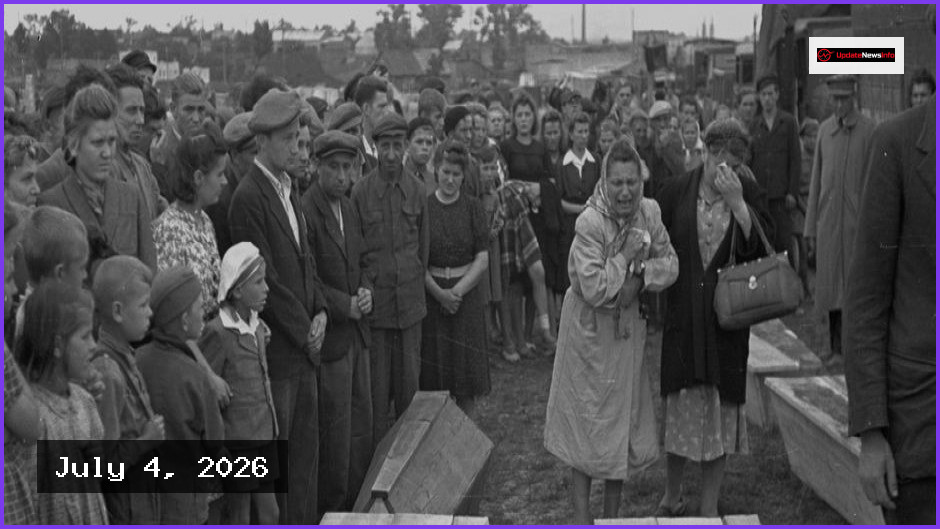
Eighty years have passed since the city of Kielce in southern Poland became the site of the most severe pogrom in the nation’s postwar history. Occurring just 14 months after the Allied victory over Nazi Germany, the 1946 massacre saw dozens of Jewish Holocaust survivors robbed, beaten, and brutally murdered by their own neighbors.
The violence centered on the morning of July 4, 1946, at the “Jewish House” located at 7 Planty Street. The building served as the headquarters for various Jewish aid organizations and provided temporary shelter for over 150 survivors who had endured the Nazi regime by hiding within Poland or living in exile in the Soviet Union. As these individuals sought to rebuild their lives or plan emigration to Palestine, an angry mob gathered outside, armed with clubs and stones, chanting, “Death to the Jews!”
The hostility was fueled by a fabricated “blood libel” rumor that Jews had kidnapped and murdered Christian children. The situation was ignited when a young boy named Henryk Blaszczyk, then eight or nine years old, concocted a story about being held captive in a basement to avoid trouble for being away from home for two days. Despite the fact that the house at 7 Planty Street lacked a basement, the boy identified a Jewish resident as his captor to police. When civic militia arrived, they failed to protect the residents, instead shooting at the building and forcing victims out into the hands of the mob.
Survivor Chil Alpert later testified that soldiers fired at the windows and forced their way inside, shooting at inhabitants and throwing them into the crowd to be beaten to death. Others were thrown from second-floor balconies. The violence intensified in the afternoon when a second wave of violence erupted in the early afternoon after the rumor of the murder of children reached workers at the Ludwikow metalworks in Kielce. Several hundred workers then joined the pogrom armed with their tools, and attacks spread to the city’s train station and transit lines.
While the exact death toll remains debated, the Institute of National Remembrance reports 37 Jewish deaths, alongside three Polish Catholics who were killed attempting to defend the victims. The POLIN Museum of the History of Polish Jews in Warsaw estimates at least 40 Jewish deaths and two Polish defenders. The massacre triggered a wave of panic that led approximately 100,000 Jews to emigrate from Poland.
Historians, including Julian Kwiek, note that this was not an isolated event; approximately 1,100 Jews were murdered in Poland between 1944 and 1947. Cultural anthropologist Joanna Tokarska-Bakir, a cultural anthropologist, suggests that the revival of the “blood libel” myth and disputes over property ownership were primary drivers of this postwar violence. Following the event, Polish authorities executed nine defendants within a week, but the topic remained largely suppressed under Communist-era censorship for years. In 2006, the Institute of National Remembrance concluded its investigation, finding no evidence of organized provocation and describing the massacre as a spontaneous act of violence fueled by deep-seated prejudice.