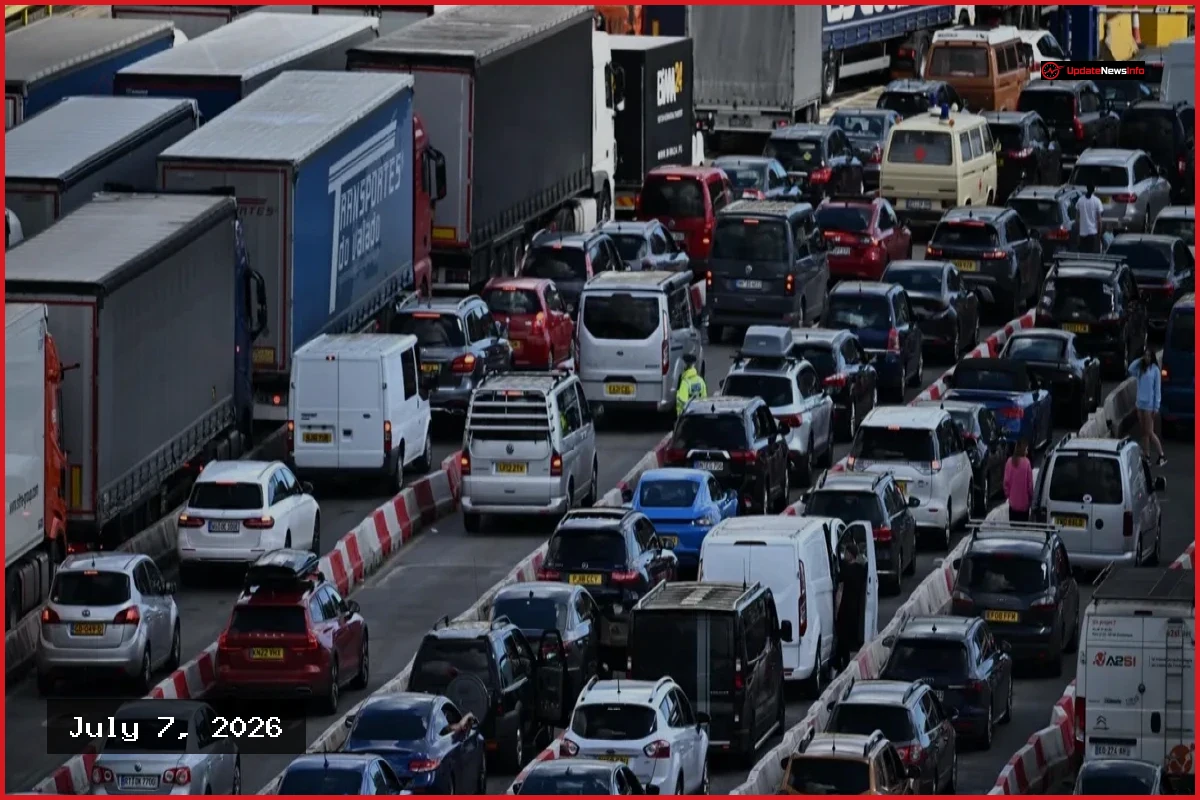
Travelers heading through the Port of Dover this summer are being warned of potential delays as the facility braces for the impact of the European Union’s new Entry & Exit System (EES) for biometric passport checks. Doug Banister, the chief executive of the Port of Dover, has cautioned that the site is likely to face repeated episodes of severe congestion throughout the upcoming peak travel season.
Addressing the potential scale of the disruption, Banister told The Independent that vehicles could be seen spilling out of the port onto public highways for miles if greater flexibility is not applied to the EES process. He emphasized that the local impact of such gridlock could be dire. The port has struggled with infrastructure limitations and restricted space since the conclusion of the Brexit transition period in 2021, making the adaptation to increased border scrutiny particularly challenging.
These complications are expected to reach a critical point this summer, marking the first peak travel period since the full-scale implementation of the EES checks. While border officials maintain the authority to suspend these checks if they result in significant operational problems—a measure that was utilized in Dover during the May half-term holiday—the risk of congestion remains high. During that May period, the port experienced queues lasting up to six hours.
READ ALSO: EES: Why is the UK-France border such a problem for the EU’s new biometric passport checks? The timing of the travel surge is expected to intensify toward the end of July and the beginning of August. However, the problems are expected to be worse this summer as it will be the first peak travel period to take place since the full-scale introduction of EES checks. While schools in France begin their summer break on July 4th, the majority of schools in the UK do not finish their terms until July 17th, leading to a convergence of travelers. Bosses at Le Shuttle say they are prepared for the summer peak.
Limited space and infrastructure problems at the port mean that it has had difficulty adapting to the extra passport checks required for British travellers since Brexit.