MEPs in the European Parliament have approved a comprehensive set of reforms to air passenger rights, which will impact everything from compensation for flight disruptions to seating arrangements for families traveling with children. These changes are set to become effective 12 months after their publication in the EU Official Journal.
Compensation for delayed or cancelled flights will continue to be based on journey distance, with payouts of €250 for journeys up to 1,500 km, €400 for journeys within the EU or between 1,500 km and 3,500 km, and €600 for journeys exceeding 3,500 km. Airlines are exempt from providing compensation if disruptions are caused by ‘extraordinary circumstances’ beyond their control, such as natural disasters, war, extreme weather, unruly passengers, or strikes.
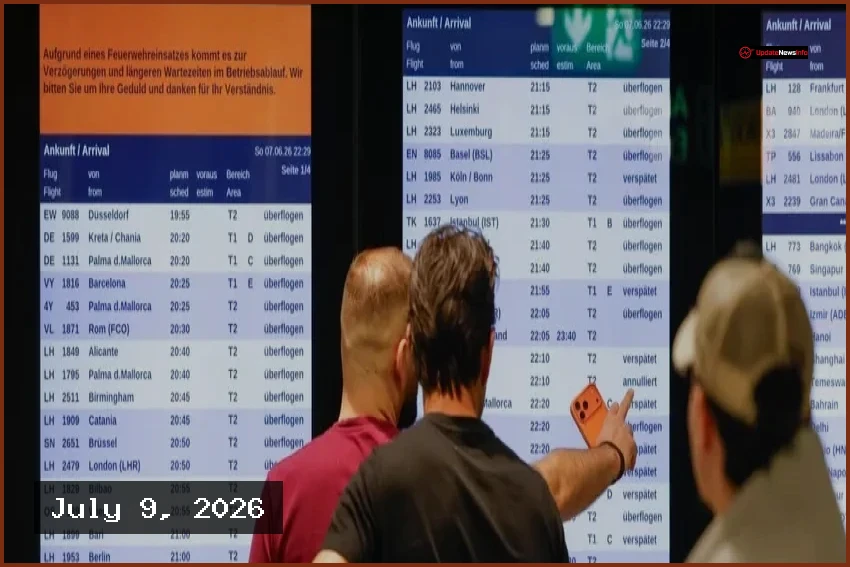
Airlines will be required to provide care for stranded passengers, offering refreshments every two hours of waiting time, meals after three hours and subsequently up to three times daily, and hotel accommodation for a maximum of three nights if necessary, including free transport to and from the hotel. Passengers will also be guaranteed free internet access and two phone calls. If an airline fails to provide this assistance, passengers can make their own arrangements and seek reimbursement.
Passengers with disabilities and reduced mobility will gain the right to compensation, rerouting, and assistance if they miss a flight due to inadequate airport support. They will receive priority assistance and can travel with their mobility equipment and assistance dogs without extra insurance costs. Airlines must also ensure that children under 14 and their accompanying adult are seated together without additional charges, a rule that also applies to pregnant women and passengers with disabilities.
A new requirement mandates that airlines provide clear instructions on how to claim compensation in an electronic format within 96 hours of arrival. Passengers will have nine months to submit a claim, and airlines will have 30 days to process the payment or provide a reason for refusal. Travelers will not need a user account or a specific app to receive this information or to obtain boarding passes digitally, and airlines cannot refuse boarding if a passenger uses their own printed version of a digital boarding pass. Correcting name spelling errors or obtaining a printed boarding pass after check-in will also be free of charge.
The new rules also prohibit ‘no-show’ clauses, preventing airlines from canceling return flights or denying boarding if a passenger missed an outbound flight. These regulations apply to flights within the EU, arrivals in the EU on EU airlines from non-EU countries, and departures from the EU on any airline. The European Commission will review the applicability to non-EU operators within three years.
European Parliament President Roberta Metsola stated, “This agreement marks an extremely important step forward for the millions of Europeans who rely on air travel every day.” She added that EU air passenger rights “will remain the strongest in the world.”
However, airline associations expressed criticism. Airlines for Europe (A4E) argued that obliging airlines to include the cost of hand baggage in displayed airfares contradicts EU law. The European Regions Airline Association (ERA) noted that rules designed for long-haul travel may not be suitable for regional airlines, potentially impacting connectivity.
Consumer groups welcomed the reform. Agustín Reyna, Director General of the European Consumer Organisation BEUC, commented, “Now, we need to make sure these rights are respected and that consumers have access to redress because only 38 percent of eligible passengers exercise their rights today.”
Meanwhile, the Commission will introduce a voluntary EU air passenger rights label that airlines can display during the booking process.
Current rules on air passenger rights have been in place since 2004. The Commission proposed a revision in 2013 but it took 13 years for the European Parliament and EU governments to come to an agreement, with MEPs taking the side of passengers and EU governments that of airlines.