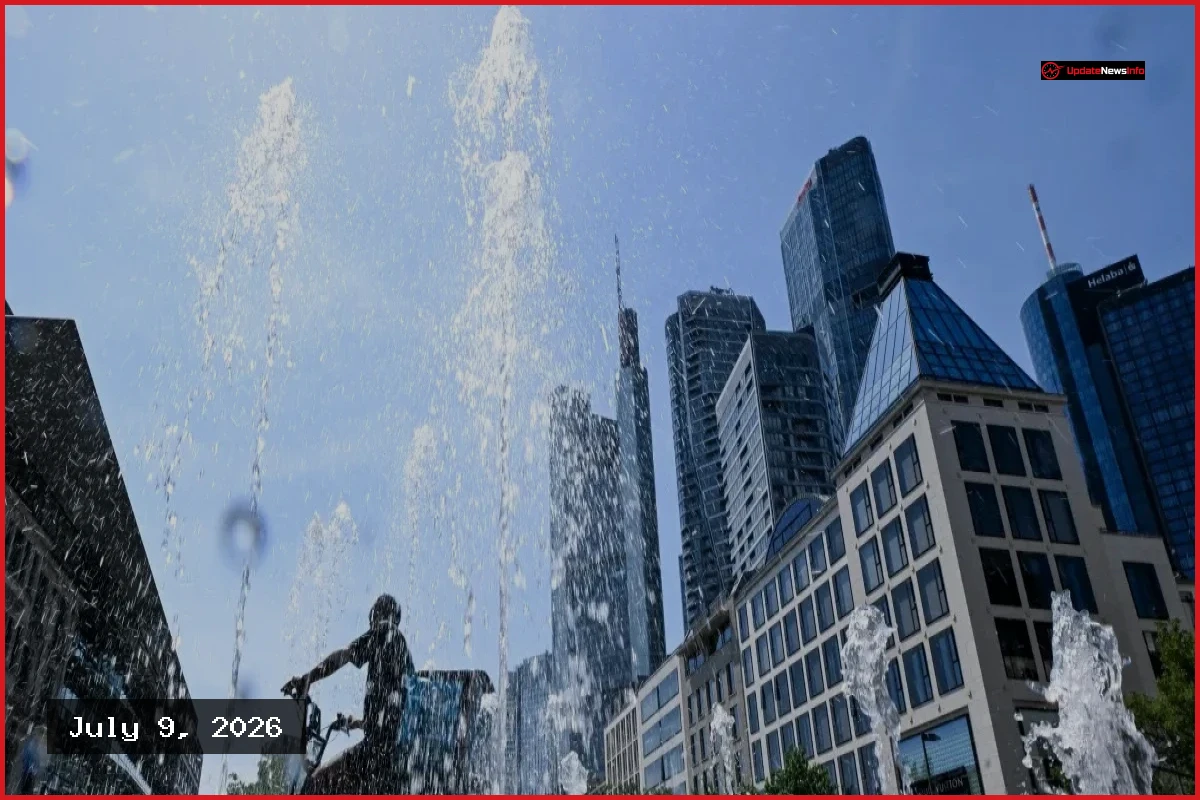
Germany is bracing for another period of intense heat this July, following a deadly, record-breaking heatwave that gripped the nation in the final days of June. That previous heatwave saw temperatures soar to an unprecedented 41.5 degrees Celsius in Saxony-Anhalt, leading to extreme heat stress, widespread forest fires, and significant disruption to daily life.
After a brief interlude of cooler temperatures and rain showers, a new weather pattern is emerging for the next 10-day period of July. Experts indicate that a low-pressure system, which has been influencing the weather in Germany’s east and north, is now shifting towards Eastern Europe. Concurrently, the Azores High is expanding further into Central Europe, setting the stage for rising temperatures.
Meteorologist Özden Terli, speaking to German media outlet t-online, explained the shift: "Once the storm system has passed over southern Scandinavia towards the Baltic states, the current cool and changeable spell of weather will come to an end. After that, a high-pressure system will take hold, causing temperatures to rise significantly once again." Terli, also a ZDF weather expert, noted that current major weather models largely agree on an "omega pattern" establishing itself and persisting until at least the beginning or middle of next week.
While Thursday is expected to start somewhat cooler, temperatures are forecast to climb throughout the day. By Friday, the German Weather Service (DWD) predicts highs of 27C in Berlin, with the southwest potentially reaching around 34C. Munich is expected to hit 31C, and Saarland and its surrounding areas could see temperatures of 32C. Initially, the hottest air will remain over France, but higher temperatures are set to reach Germany by the weekend.
Now another uncomfortable period of heat is coming. Just how intense is it expected to get? As sunshine returns, maximum temperatures on Saturday are projected to range between 25 and 30C across much of the country. However, the west and south-west of Germany will experience significantly hotter conditions, with localized temperatures potentially reaching up to 34C. Some model simulations even suggest peak temperatures could range between 37 and 39C. According to calculations by the European Centre for Medium-Range Weather Forecasts, this high-pressure system is expected to dominate the weather until at least Saturday, July 18th.
Whilst isolated, brief thunderstorms cannot be ruled out in the east, the rest of Germany will see sunny and dry summer weather. Unlike the previous heatwave, the air is anticipated to remain comparatively dry at first, with the dew point mostly within a comfortable range. This suggests the heat may feel less oppressive than in muggy, warm conditions.
Why heatwaves in Germany are getting hotter? Meteorologist Terli emphasized that these high temperatures are not solely due to current weather conditions but are fundamentally linked to climate change. "As a result of global warming, the overall temperature level is already significantly higher than it used to be," she stated. She added that hot air originating from southern regions is further intensified under stable high-pressure systems, leading to particularly high temperatures. This effect has become an integral part of Europe’s climate system and is projected to intensify further in the coming years.
Terli warned that "further heatwaves are possible as early as this summer," though meteorologists cannot predict their exact severity. She highlighted that south-west Germany is already experiencing its third heatwave of the year, underscoring a broader trend: "Heatwaves are occurring more frequently, reaching higher temperatures and often lasting longer than they used to."
READ ALSO: Germany's official advice for how to stay safe in a heatwave
READ ALSO: IN NUMBERS – Yes, summers in Germany really are getting hotter