On Monday, July 13, 2026, the Hungarian Parliament approved a significant constitutional amendment aimed at removing President Tamás Sulyok from office. The legislative move is part of a broader strategy by Prime Minister Péter Magyar and his center-right, pro-European Tisza party to dismantle the political framework established during the 16-year tenure of former Prime Minister Viktor Orbán.
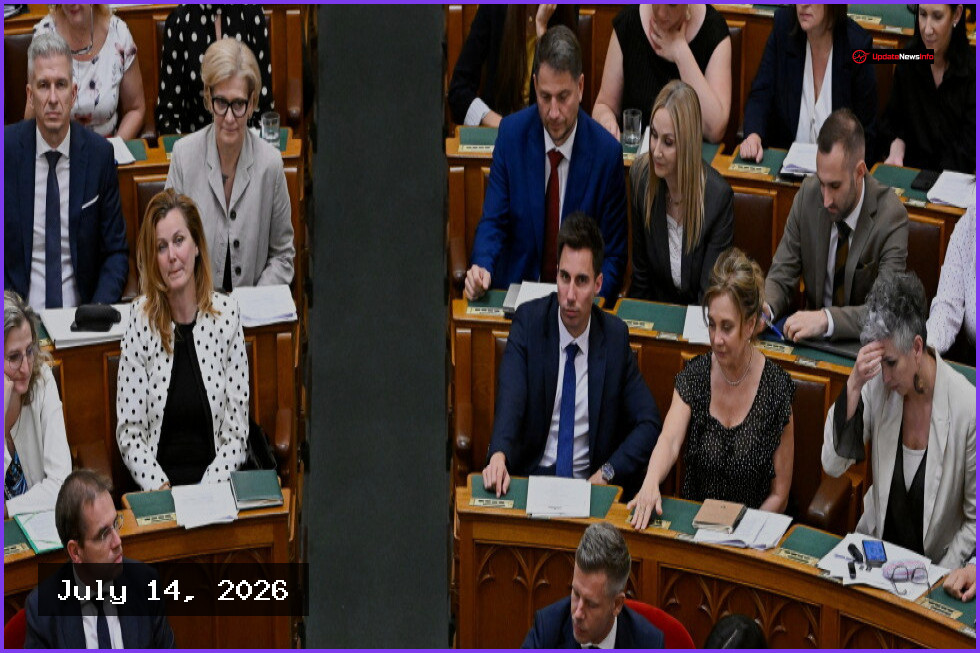
The 17th amendment to the Fundamental Law passed with 139 votes in favor and six against within the 199-member Parliament. While Tisza lawmakers celebrated the result with a standing ovation, members of the far-right Fidesz party boycotted the session entirely. The amendment is intended to fulfill the government's stated goal of “restoring rule-of-law democracy.”
For the measure to become law, President Sulyok must sign it within five days. Although Sulyok has not publicly stated whether he will comply, the Tisza party has declared its intention to initiate impeachment proceedings should he refuse. Magyar has consistently argued that Sulyok neglected his presidential duties by failing to challenge antidemocratic actions taken by the previous administration. Despite the Prime Minister's repeated calls for his resignation, Sulyok has remained in his position.
Following the vote, Prime Minister Magyar addressed a press conference, describing the action as the closure of an era. He emphasized that his party’s landslide victory in the April elections provided a clear mandate from the Hungarian people to transform the legal system inherited from the Orbán era. Beyond the removal of the president, the amendment introduces several judicial reforms, establishes a new office to investigate financial abuses under the former government, and mandates a 12-year term limit for members of parliament.
The opposition Fidesz party has strongly condemned the amendment, with caucus leader Gergely Gulyás characterizing it as an “unprecedented” attack on Hungary’s democratic order that undermines the rule of law. Gulyás announced his resignation as caucus leader, noting that the new term limits would prevent him from serving in Parliament in future national elections. Last week, Fidesz organized a protest against the reforms that drew approximately 3,000 attendees, though Viktor Orbán did not participate. Orbán, who was traveling to the United States for the World Cup, posted a message on Facebook labeling the current period of Hungarian democracy as spanning from 1990 to 2026.
The presidency in Hungary is largely ceremonial, but the holder of the office is responsible for signing legislation and possesses the authority to refer parliamentary bills to the Constitutional Court. The current government has expressed concerns that Sulyok, who was appointed during the Orbán era, could use these powers to obstruct their policy agenda. Since taking office in May, the new government has moved rapidly to remove various political appointees and heads of institutions associated with the former regime. Recent actions have included suspending the news service of public television and radio, which Magyar described as a “propaganda factory,” and closing the Sovereignty Protection Office, which critics viewed as a tool for silencing independent media and political opponents. Supporters of the Fidesz party planned a candlelight vigil outside the parliament building on Monday evening to protest what they termed the “tyranny” of the current administration.