The Bayreuth Festival, a global pilgrimage site for opera lovers, is marking its 150th anniversary while simultaneously navigating a difficult reckoning with its past. The festival's historical ties to the Nazi era and the outspoken antisemitism of its founder, Richard Wagner, remain central, contentious issues for the organization's leadership. Tensions recently flared when Jewish public intellectual Michel Friedman was invited to speak at a memorial ceremony for victims of National Socialism during the festival's opening. After being abruptly disinvited, Friedman was reinstated following significant public backlash and a series of reversals. This incident prompted the German newspaper Süddeutsche Zeitung to describe the situation as a reflection of a persistent, chronic German struggle to avoid confronting the nation's own history.
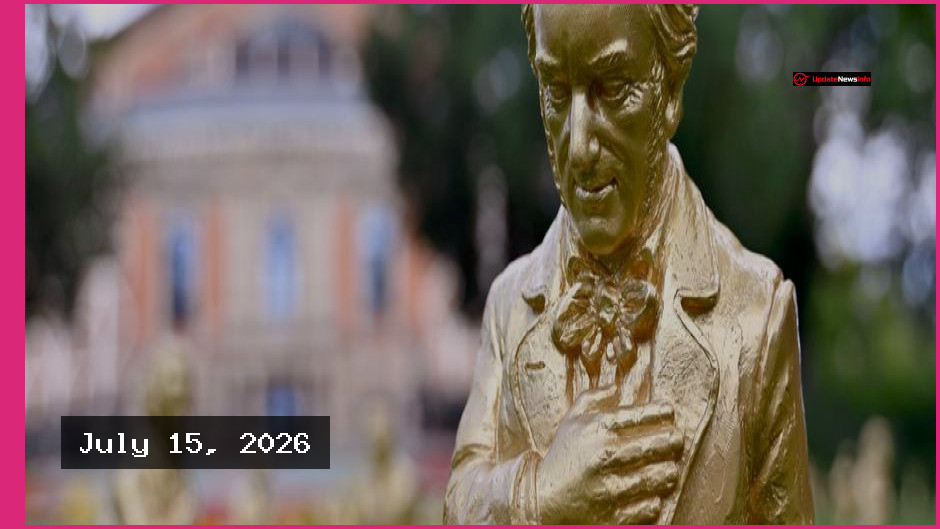
Anno Mungen, director of the Research Institute for Music Theater Studies at the University of Bayreuth, also criticized the festival's leadership in an interview with the weekly newspaper Die Zeit. He accused the organization of being "historically oblivious," specifically citing the decision to stage Wagner's opera "Rienzi" in Bayreuth for the first time during this 150th anniversary season, despite the fact that it was Adolf Hitler's favorite opera. Richard Wagner, who lived from 1813 to 1883, remains a polarizing figure as both a revolutionary composer and a committed antisemite. He envisioned his operas as "total works of art," or Gesamtkunstwerke, where music, drama, staging, and design formed a unified whole. To realize this vision, he built the Bayreuth Festspielhaus in 1876, inaugurating the venue with the 16-hour "Ring of the Nibelung" cycle. Wagner designed the architecture, wrote his own librettos, directed productions, and oversaw stage design, often drawing heroes from Germanic and Norse mythology.
Today, around 60,000 visitors from around the world make the pilgrimage to the festival on Bayreuth's "Green Hill." In keeping with Wagner's wishes, only a selection of his 10 mature operas is performed each year. Audiences willingly endure hard wooden seats without cushions, limited legroom, and a stuffy auditorium with no air conditioning, despite high ticket prices. The orchestra is hidden beneath the stage, performers are illuminated while the audience sits in darkness, and the wood-paneled auditorium creates remarkably clear acoustics. Sven Friedrich, director of the Richard Wagner Museum, noted that while these conditions might seem anachronistic in an age of smartphone reels, they are precisely what make the venue fascinating. However, the legacy of the Nazi regime continues to cast a long shadow. Hitler was captivated by Wagner’s dramatic use of light and darkness, and the dictator frequently visited the Wagner family villa—now the Richard Wagner Museum—where he found a sense of belonging. The Nazi regime appropriated Wagner's music for propaganda films and used it as part of the psychological torment inflicted in concentration camps, where about 6 million Jews were murdered.
The festival's artistic director, Katharina Wagner, has addressed these associations on several occasions. Notably, she invited German-Australian director Barrie Kosky in 2017, whose production of "Die Meistersinger" demonstrated that Wagner’s character "Beckmesser" bore stereotypical attributes of a Jew, serving as a scapegoat for the trauma of an entire people. Wagner's own 1850 essay, "Judaism in Music," argued that Jews lacked an authentic artistic identity, an antisemitic undercurrent that Friedrich notes was partially absorbed by Wagner's descendants in provincial Franconia. After World War II, Winifred Wagner and her son Wieland underwent the Allied denazification process. To save the festival from its Nazi associations, Winifred officially ceded her rights to her sons, Wieland and Wolfgang. The transition was controversial, as Hitler had granted Wieland special privileges during the war. Facing financial difficulties, Wieland reinvented his grandfather's operas with sparse, minimalist productions that defined the "New Bayreuth" style. Later, Wolfgang opened the festival to external directors, broadening the range of artistic styles.
In recent years, Katharina Wagner has sought to bring the festival into the 21st century. In 2022, she invited director Valentin Schwarz to reinterpret "The Ring" as a contemporary family saga, while director Jay Scheib staged "Parsifal" in 2023 using augmented reality. This year's new "Ring" production features stage design created with the help of artificial intelligence. As for the new production of "Rienzi," Hungarian directors Alexandra Szemeredy and Magdolna Parditka plan to interpret the work as a courtroom drama, drawing parallels to today's populist societies. Before the performance, the festival will host a concert featuring music by Jewish composers, followed by Michel Friedman's lecture.
Wagner's opera "The Mastersingers of Nuremberg" was traditionally performed on the eve of the Nazis' annual Nuremberg Party Rally.
To view this video please enable JavaScript, and consider upgrading to a web browser that supports HTML5 video