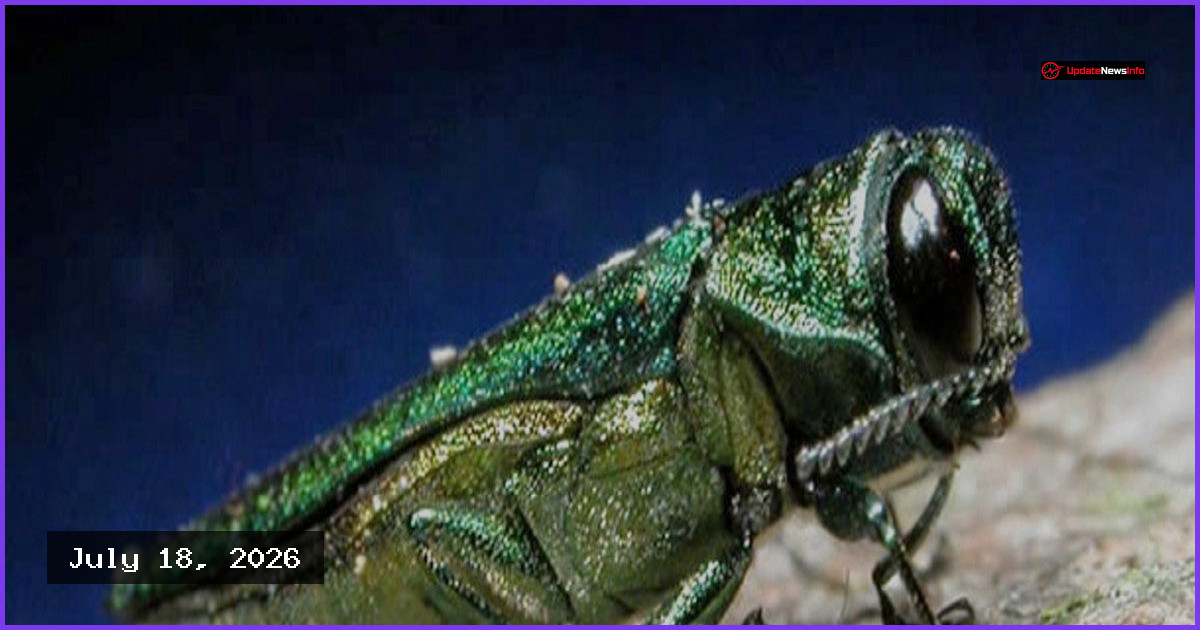
A destructive, Asia-origin beetle that has caused widespread devastation to ash forests throughout North America has been identified in the European Union for the first time. As reported on July 17, 2026, at 7:57 AM EDT, authorities in Hungary and Slovakia confirmed the presence of the emerald ash borer, a pest capable of growing up to half an inch long as an adult.
In Slovakia, officials from the Agricultural Central Control and Testing Institute in Bratislava reported that 18 emerald ash borers were discovered this month within the Streda nad Bodrogom district in the country's east. Meanwhile, Hungary’s NEBIH food safety office stated that two adult beetles were captured in June using a trap located in the Beregsurany forest, situated near the border with Ukraine.
Hungarian Agriculture Minister Szabolcs Bona emphasized the severity of the situation, noting that officials are taking every possible measure to prevent the pest from becoming permanently established or evolving into a significant plant health crisis for the entire European Union. Hungary has requested that the beetle's presence be added to the agenda for the upcoming meeting of EU agriculture ministers. Local authorities have expanded monitoring efforts by deploying additional traps and are urging the public to report any ash trees displaying suspicious symptoms.
The emerald ash borer is recognized as one of the most serious threats to ash trees and has already caused substantial tree mortality in both North America and Eastern Europe. According to the U.S. Department of Agriculture, the beetle has damaged or killed tens of millions of trees since it was first detected in southeast Michigan in 2002. The pest has since spread across 38 U.S. states and the District of Columbia, reaching Minnesota in 2009, North Dakota in 2024, and Denver last summer. The USDA notes that the beetle is a strong flyer well-suited to the climate, allowing it to spread naturally.
In response to the infestation in North America, various control measures have been implemented. Minnesota has launched a program to release specific species of wasps that target the beetle during its life cycle without harming other species. Additionally, a 2025 study identified certain fungi in Minnesota capable of killing the invasive insects. Many European nations maintain emergency plans in anticipation of such an arrival, and officials remain focused on containing the current threat.