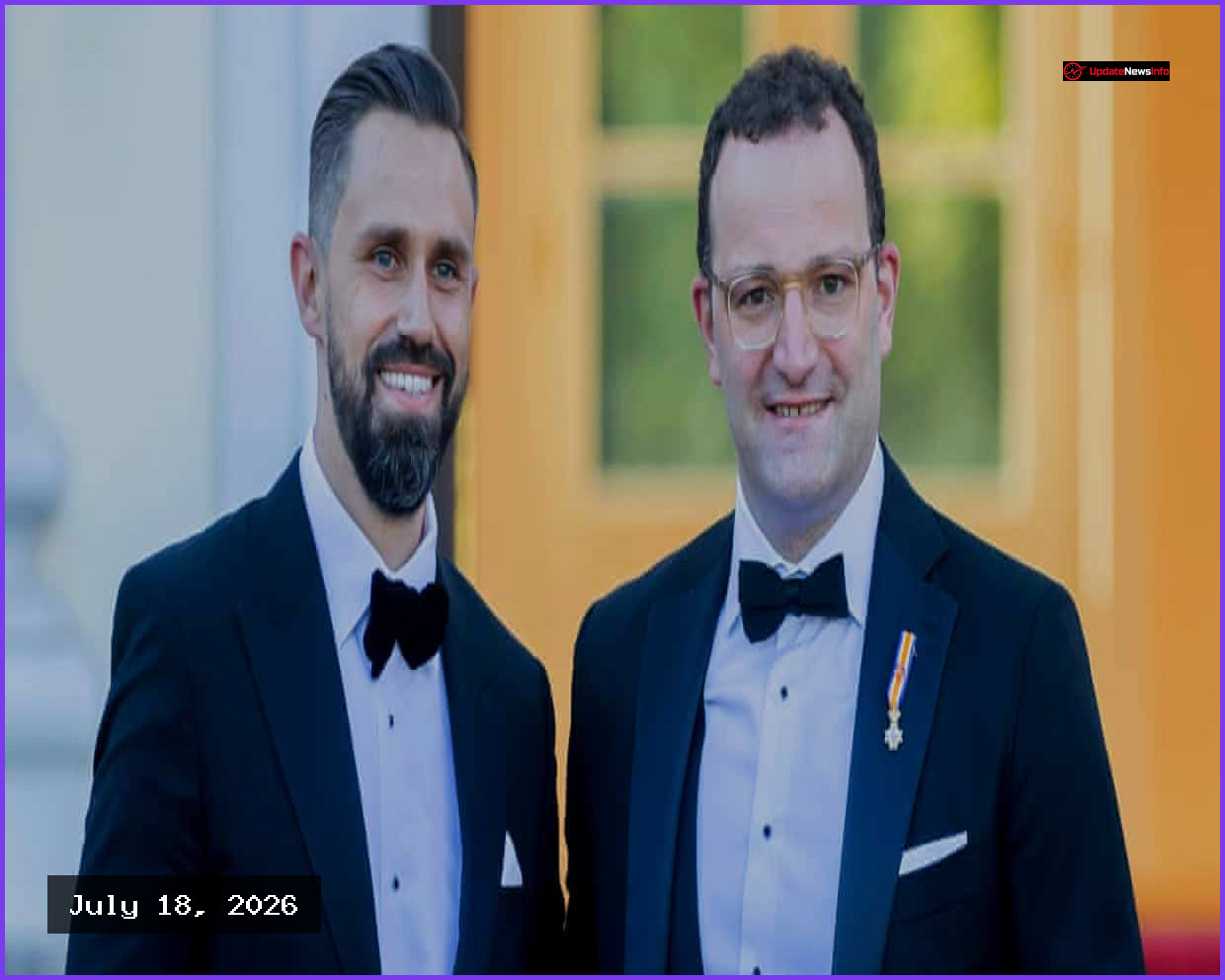
Jens Spahn, a senior German politician and prominent ally of Chancellor Friedrich Merz, has resigned from his position as chair of the Christian Democrat (CDU) parliamentary group. The resignation follows intense public and political backlash after Spahn and his husband, Daniel Funke, used a surrogate mother in the United States to have a child. The practice is currently banned in Germany, and the CDU has maintained a firm stance against it.
The controversy centers on accusations of hypocrisy, as Spahn has previously spoken out against surrogacy. In 2015, he wrote that he found the idea of a "rented womb" personally difficult to reconcile with his identity as a gay man and a Christian. Furthermore, when serving as health minister in 2020, Spahn refused to relax the ban on surrogacy. The CDU reaffirmed its opposition to the practice at a party conference this past February, while the surrogate mother was already pregnant with Spahn’s child.
Following the birth of his son, Georg, on Wednesday, Spahn told the newspaper Bild that the child was their "greatest joy," but the announcement triggered immediate criticism. Marion Rosin, a member of the Women’s Union in Thuringia, argued that politicians who establish standards for the public must adhere to them personally, stating that the loss of credibility made his resignation a matter of consequence. Similarly, Janosch Dahmen, the CDU’s health spokesperson, remarked that the issue was not about the child, but about double standards and political integrity.
Calls for his departure intensified when Daniel Peters, the CDU leader in Mecklenburg-Western Pomerania, labeled Spahn’s position untenable. Under the 1990 Embryo Protection Act, surrogacy is a punishable offense in Germany, carrying potential penalties of up to three years in prison or a fine, which often leads German couples to seek such arrangements abroad. Despite Spahn’s initial attempt to defend his decision by noting he had "wrestled" with the issue, the pressure from within his own party forced his hand.
By Saturday, Spahn announced his resignation, concluding that his personal life and family goals were incompatible with his political office. Friedrich Merz, who had previously deferred comment to the party executive, later addressed the matter on X, stating that Spahn’s decision was "right and inevitable" and emphasizing that credibility remains the most valuable asset in politics.