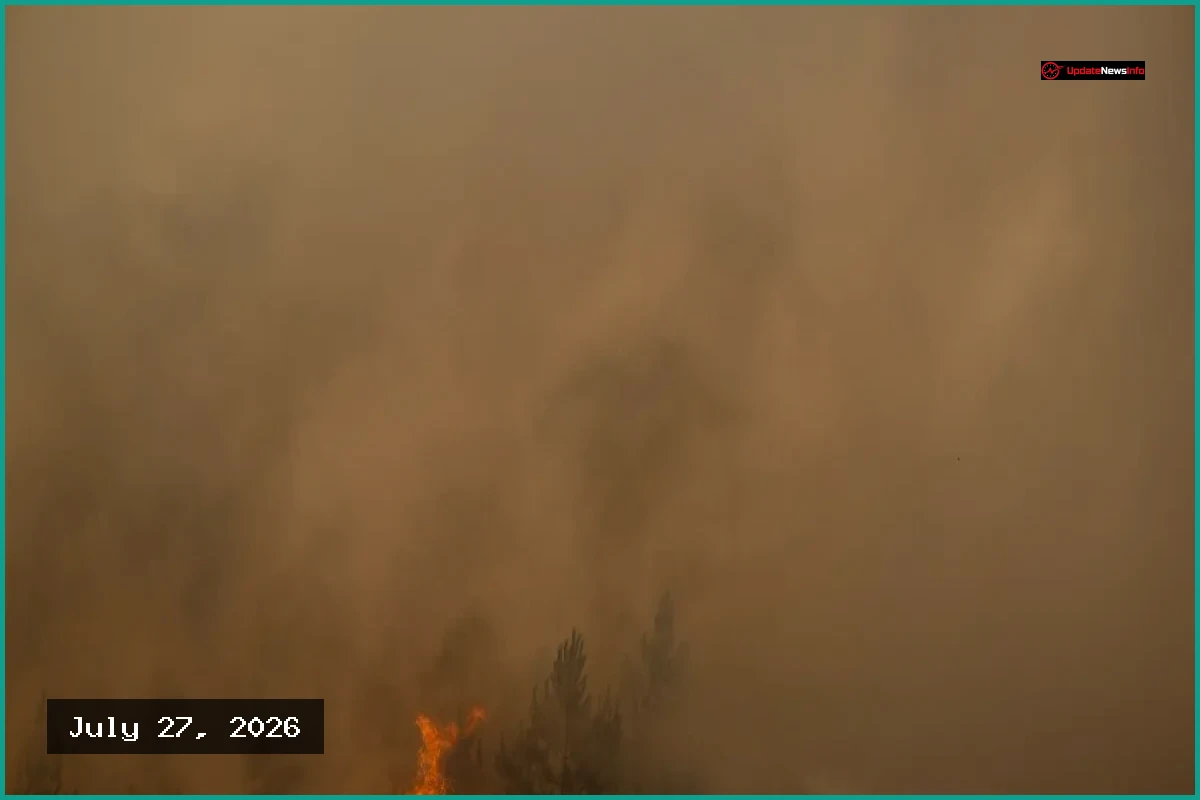
As massive wildfires continue to tear through parts of France and Spain, the human cost has reached a critical stage. By Sunday, more than 300,000 people had been forced to flee their homes and holiday accommodations, seeking refuge in emergency shelters. The situation remains dire, with authorities confirming one fatality in eastern Spain and issuing new evacuation orders for areas surrounding Bordeaux in France and the Spanish capital, Madrid.
Beyond the immediate threat of flames, experts are sounding the alarm regarding the long-term and widespread health risks posed by the thick plumes of smoke generated by these fires. According to Anses, the French health safety agency, burning vegetation releases a toxic mixture of gases and particles. Of particular concern are fine particulate matters capable of penetrating deep into the lungs. The agency also identified several other hazardous substances, including carbon monoxide, carbon dioxide, and volatile organic compounds such as acrolein, benzene, and formaldehyde. These risks are further compounded when fires consume buildings or vehicles, potentially adding additional pollutants to the air.
French pulmonologist Bruno Crestani, who leads the Respiratory Health Foundation, emphasized that the danger is not limited to those in the immediate vicinity of the flames. Smoke can be carried by winds over long distances, affecting populations hours or even days after the initial blaze. Crestani warned that the impact extends beyond respiratory irritation. Because fine particles can enter the circulatory system, they may potentially trigger severe health events, including heart attacks, strokes, or diabetes.
Vulnerable groups, such as the elderly, infants, asthmatics, and those with pre-existing respiratory diseases, are at the highest risk, as smoke inhalation can destabilize previously managed conditions. However, Crestani stressed that the entire population faces long-term risks. Global data supports these concerns; in December 2025, The Lancet estimated that fine particulate matter from wildfire smoke was responsible for approximately 154,000 deaths worldwide during the previous year. In France alone, Oxfam has estimated that air pollution from wildfires causes 2,800 early deaths annually.
The threat is also significant for emergency responders. Anses noted that firefighters face risks not only while actively battling blazes but also during post-fire monitoring, investigations, and while handling contaminated equipment back at fire stations. Factors such as heat stress, dehydration, sleep deprivation, and strenuous exertion further increase their vulnerability.
To mitigate these risks, French Prime Minister Sebastien Lecornu has committed to distributing 1.5 million FFP2 masks to the Gironde region. While Crestani noted that masks do not provide 100-percent protection, he emphasized they are a useful tool for those struggling with smoke exposure. For those in non-evacuated zones, health authorities advise limiting outdoor activities and keeping doors and windows shut. Additional precautions include draping wet cloths over air vents and disabling automatic bathroom ventilation systems. Anyone experiencing persistent breathing difficulties or other symptoms is urged to seek medical assistance immediately.