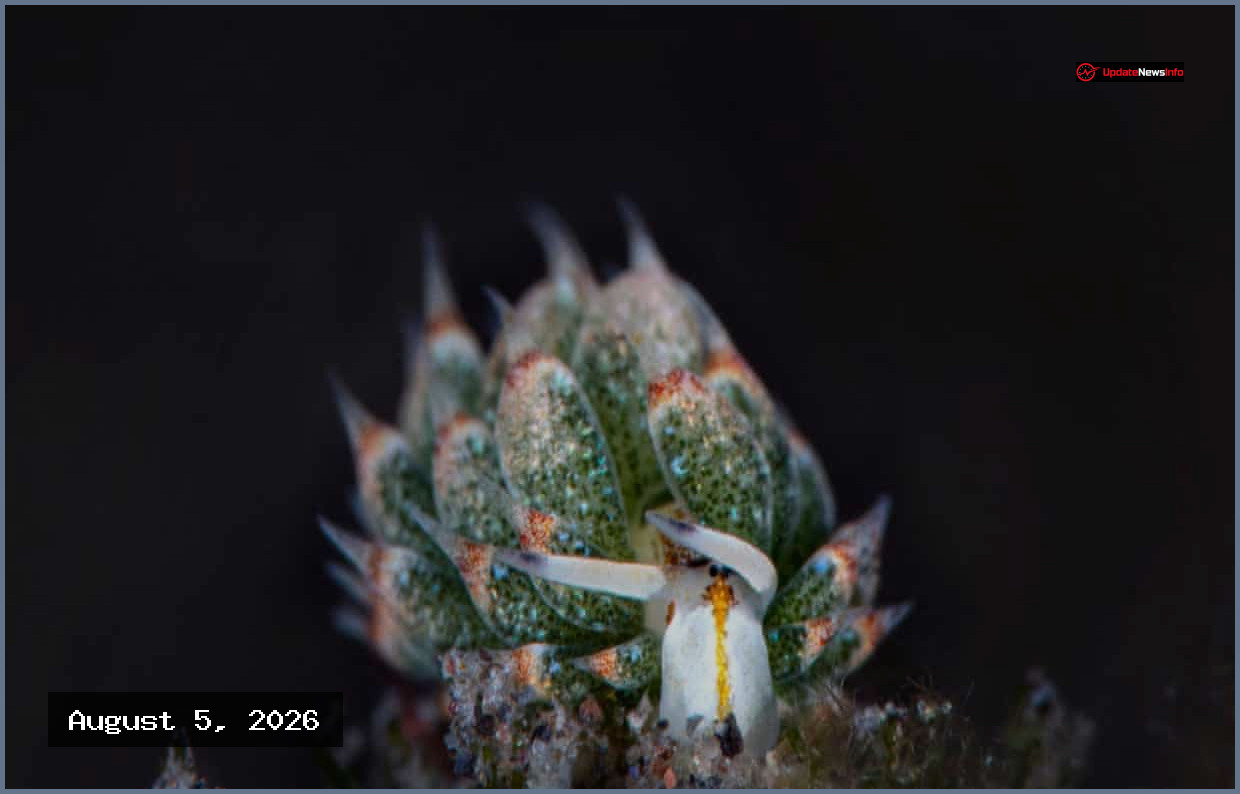
A tiny, beady-eyed marine creature, affectionately known as the 'leaf sheep' or 'sea sheep,' is drawing significant public interest due to its extraordinary ability to generate its own energy from sunlight. Scientifically named Costasiella kuroshimae, this solar-powered sea slug, often likened to a Pokémon, has seen a surge in popularity in recent years, largely thanks to advancements in underwater and macro photography.
Measuring approximately the size of a grain of rice, the leaf sheep is a neon green invertebrate that grazes on specific species of algae. It thrives in the tropical waters surrounding Japan, Indonesia, and the Philippines, typically residing on Avrainvillea, a velvety type of algae found in fine silts around shallow reefs.
The remarkable ingenuity of the leaf sheep lies in a process called kleptoplasty, where it effectively 'steals' the chloroplasts from the algae it consumes. Chloroplasts are the structures plants use to capture sunlight and perform photosynthesis. The slug sequesters these intact chloroplasts within its own cells, storing them in the leaf-like branches on its back, known as cerata. These cerata then function as natural solar panels, enabling the slug to power itself through photosynthesis.
Beyond their role in energy production, the leaf sheep's vivid green cerata, which frequently display white, pink, or purple tips, also provide crucial chemical defenses for the tiny animal. Their vibrant coloration offers excellent camouflage against the algae it inhabits. The slug navigates its world and locates its food using two ear-like structures situated above its eyes, called rhinophores, which act as both sense and taste receptors.
First described by science in 1993, the leaf sheep's irresistibly cute appearance has only recently become widely appreciated, largely due to the capabilities of modern underwater and macro photography. Matt from Colorado commented on its appeal, stating, “It looks like a Pokémon that you’d never want to use in battle but would definitely want as a pet.” This sentiment was echoed by nine-year-old Rei from Devon, who specifically identified it as resembling a Shaymin Pokémon. The leaf sheep’s inspiring example of harnessing energy directly from the sun resonates strongly with contemporary interests in natural innovation and sustainable energy.
Revealed: the top 10 invertebrates of the year