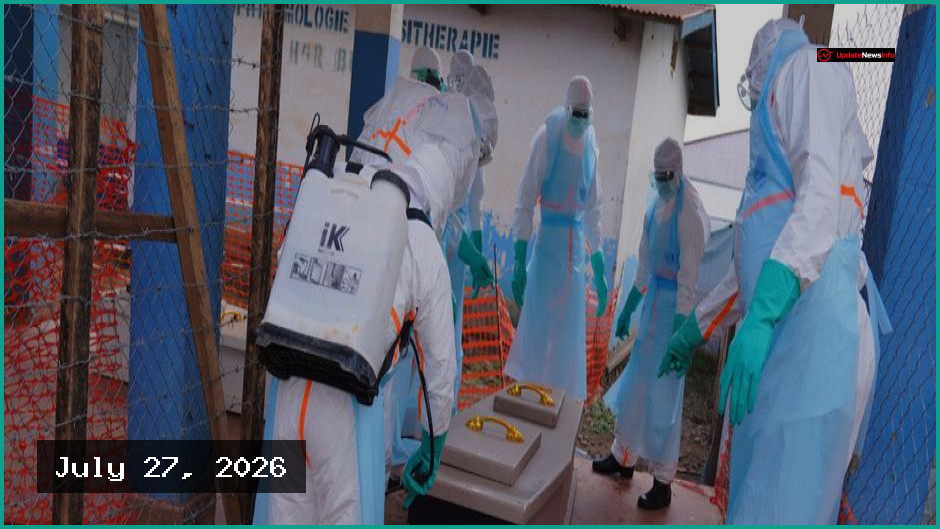
The Ebola outbreak currently affecting the Democratic Republic of Congo has reached a critical stage, with health authorities confirming 3,200 infections. Since the epidemic began in late April, 1,405 people have lost their lives to the virus, resulting in a fatality rate of 43.9%. This event marks the 17th time the country has faced an Ebola outbreak, which has now spread across five provinces in the nation's conflict-scarred eastern region.
According to the World Health Organization, nearly 90% of the recorded cases have been concentrated in the northeastern province of Ituri, an area situated near the borders with Uganda and South Sudan. While official figures remain high, experts suggest that the actual number of infections could be significantly greater, as many cases remain unreported or undetected. However, public health officials noted that the recent surge in reported numbers is partly due to improved detection and expanded testing.
The current crisis is driven by the rare Bundibugyo strain of the virus, for which no approved treatment or vaccine currently exists. In response, scientists are developing several vaccines and medicines targeting this specific strain. The UK's Oxford University recently announced that the first volunteer has been administered an experimental vaccine designed specifically to protect against Bundibugyo Ebola. Alongside this development, other vaccine candidates are slated for accelerated clinical trials, and researchers are simultaneously working on two potential treatments for the disease.
Despite these efforts, experts warn that the epidemic may persist for several more months. Response operations have faced additional challenges, including strikes by health workers protesting unpaid wages, which have hampered the response in some hospitals. Ebola, which spreads through direct contact with an infected person's bodily fluids and induces severe hemorrhagic fever, has claimed more than 15,000 lives across Africa over the last 50 years.
To view this video please enable JavaScript, and consider upgrading to a web browser that supports HTML5 video
Don't let the algorithm hide the news. If you rely on our team for trusted reporting, please take a moment to select us as your Preferred Source on Google by clicking here and hitting the "star" or "preferred" button, so you'll always see our verified news first.