Iran initiated a drone strike against Bahrain while a separate vessel was attacked in the Strait of Hormuz on Saturday, actions appearing to be a direct retaliation for overnight airstrikes conducted by the United States. These developments across the Persian Gulf highlight the increasing risk of the Iran conflict spiraling out of control, even as both nations work toward an interim agreement to resolve their ongoing hostilities.
The American military action was prompted by an Iranian drone attack on a ship attempting to exit the strait on Thursday, a move that exacerbated the fragile ceasefire. In response to the heightened situation, a multinational maritime organization managed by the U.S. Navy announced on Saturday that it would broaden a transit route near Oman, potentially creating a new point of friction with Tehran.
The targeting of Bahrain is viewed as a strategic choice, given the kingdom’s role as a vocal critic of Iran and its status as the host of the U.S. Navy’s 5th Fleet. Recently, Bahrain hosted U.S. Secretary of State Marco Rubio for a Gulf Cooperation Council meeting where participants demanded an end to Iranian aggression and advocated for open access to the strait. Bahrain’s Foreign Ministry confirmed that multiple drones targeted the nation, labeling the incident a major threat to its residents.
Tehran’s Revolutionary Guard verified in an IRNA state-run media report that they had attacked several locations associated with the American military, though they did not specify which sites were hit. Meanwhile, U.S. Central Command confirmed that its own overnight strikes successfully targeted Iranian coastal radar stations and facilities housing missiles and drones.
U.S. Vice President JD Vance, who is spearheading diplomatic negotiations, stated on social media that while communication remains open for ceasefire discussions, the U.S. would respond to violence with force. Both nations are currently within a 60-day window to finalize terms concerning maritime passage and Iran’s uranium enrichment program.
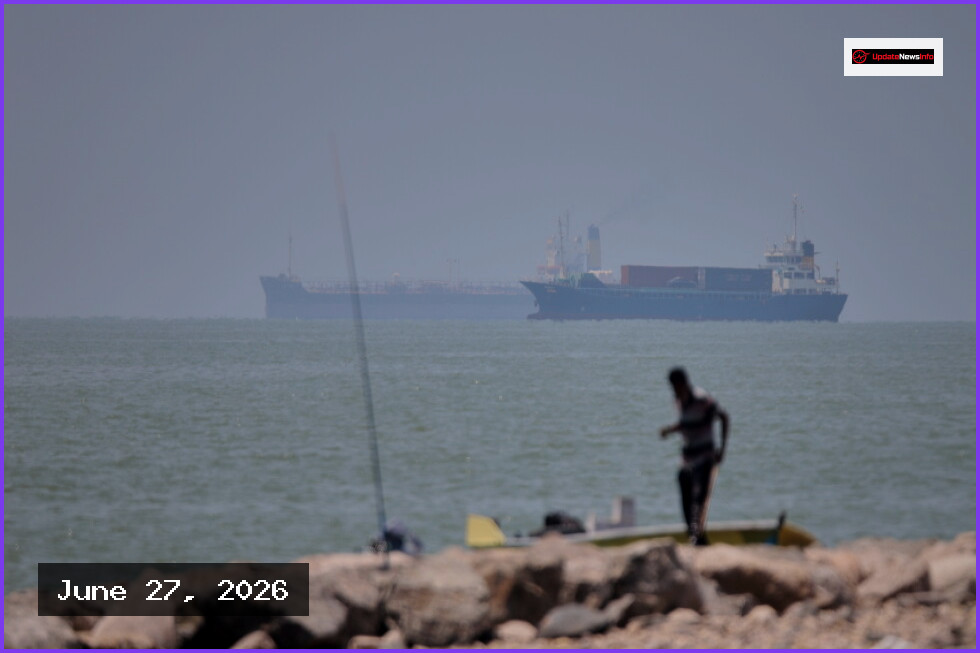
Separately, the United Kingdom Maritime Trade Operations center reported that a tanker was struck in the strait on Saturday. While no group claimed responsibility, suspicion immediately centered on Iran. Shortly after this incident, the U.S.-led Joint Maritime Information Center announced the expansion of the maritime route near Oman to accommodate both inbound and outbound traffic. Iran has continuously warned that it intends to levy transit fees and regulate shipping, though international authorities maintain that the strait is an open waterway. The information center has issued a warning to mariners, noting that the threat to vessels remains substantial and that the area may contain mines.