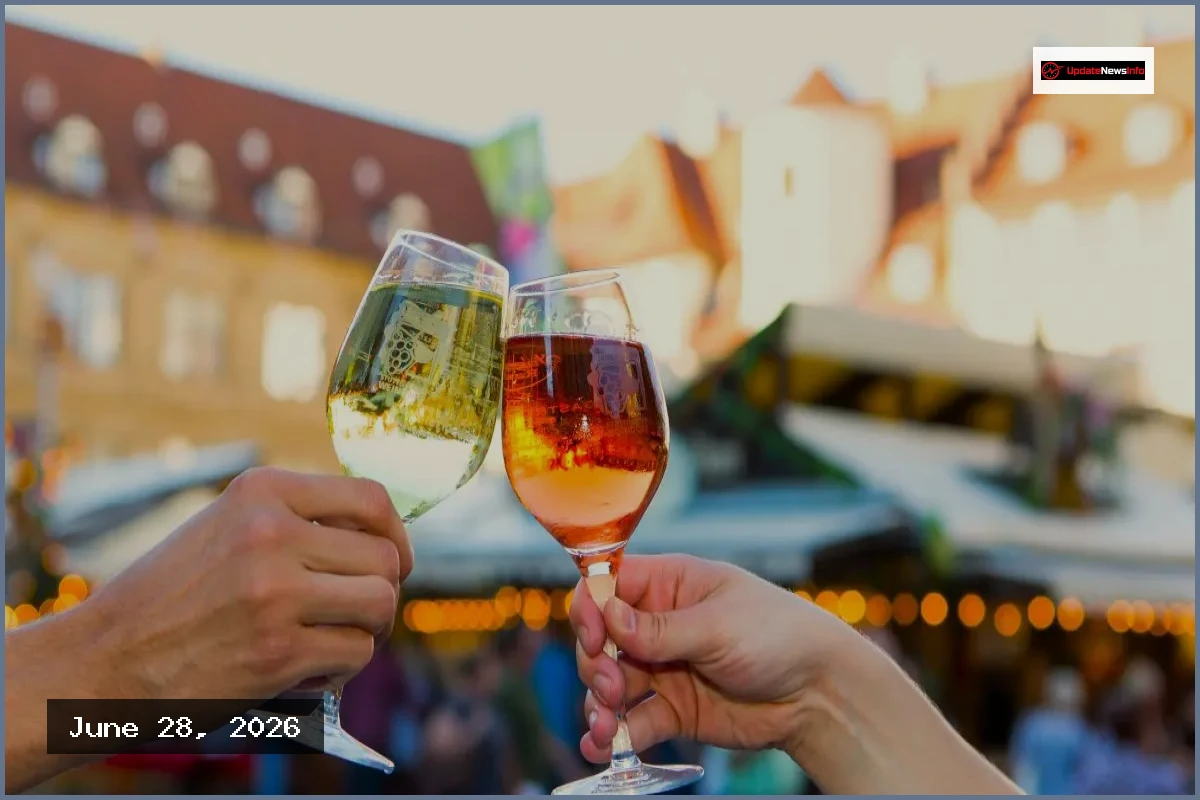
While Germany is globally recognized for its vibrant beer festivals, the nation’s extensive wine-making heritage and associated public gatherings frequently go overlooked by visitors. For those who prefer a glass of red, white, or sparkling wine over a large Maß of Helles, these regional wine festivals offer a significantly more relaxed and accessible cultural experience. Following a personal visit to Würzburg’s Weindorf, an annual event where local producers set up tents in the city’s central square to serve their finest vintages and fare, it is clear these gatherings provide a unique, sophisticated atmosphere compared to the often chaotic nature of larger beer halls.
Unlike the loud, crowded environments of major beer festivals, which can become overwhelming and generally unsuitable for children after 6pm, wine festivals maintain a more peaceful, community-driven vibe. The scene at the Würzburg ‘wine village’ felt more akin to a festive farmer’s market, where diverse groups including couples, friends, families, pensioners, and bachelorette parties gathered in comfort. These events avoid the rowdiness found at beer tents, ensuring a more easy-going affair rather than an evening centered on standing on tables to holler classic rock lyrics.
A primary motivation for visiting is the chance to discover exceptional German wines, particularly those specific to the local region. Whether you are sampling Franken wines in Würzburg or Bamberg, or exploring varieties from the Rheingau, Mosel, Nahe, or Baden regions, you are supporting smaller, sustainable businesses while enjoying a fresher product. Furthermore, drinking local helps cut out the necessity for large-scale manufacturing and extensive global shipping processes.
Financially, these festivals offer excellent value compared to urban wine bars. At the recent Würzburg Weindorf, 0.25-litre glasses were priced at roughly five euros, with vendors often pouring generous amounts well above the line. This is a significant bargain compared to the approximate seven euros one might pay for a 0.1-litre glass in a city like Berlin or Munich. Larger groups can stretch their budget further by opting for magnum bottles at their tables.
The festivals cater to a wide array of preferences, offering non-alcoholic wines and various seasonal drinks, such as the Erdbeerbowle, a refreshing strawberry spritz with the strength of sparkling wine. Hearty German food is also plentiful to accompany the drinks. These festivals also serve as a perfect reason to explore charming German cities. While the Würzburg Weindorf concluded on June 10th, other highlights include Wein am Stein in Würzburg from July 9th to 26th, and the city’s ‘Wine Parade’ from August 27th to September 6th. The Freiburger Weinfest runs from July 2nd to 7th, while the Burgunderfest in Bad Neuenahr-Ahrweiler takes place on July 25th. Visitors can also experience the Rheingau Wine Week in Wiesbaden from August 14th to 23rd, the Stuttgart ‘Wine Village’ from August 20th to September 5th, or the world’s largest wine festival, the Wurstmarkt in Bad Dürkheim, held over the weekends of September 11th–15th and 18th–21st.