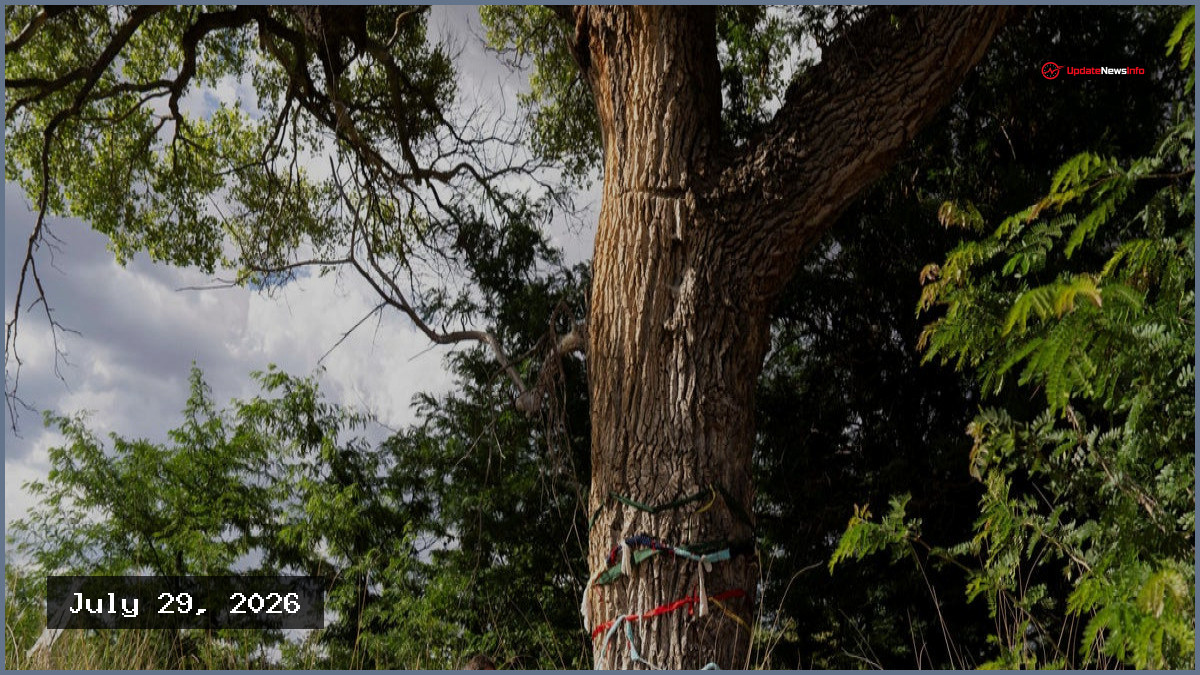
In the remote Arizona town of Lochiel, a single cottonwood tree now stands as the final obstacle in the path of President Donald Trump’s border wall. Activists stationed at the site confirmed on July 28 that this tree, estimated to be between 100 and 200 years old, is the last survivor of a cluster that once grew along the planned construction route. On July 27, Department of Homeland Security contractors removed three other trees from the area. Lochiel, a former border town located two hours south of Tucson, has been a ghost town since its official border crossing closed in the 1980s. Despite its quiet status, conservationists argue the site remains vital for local wildlife, including antelope, bighorn sheep, and potentially jaguar.
Kate Scott, a borderlands conservation activist who has spent the last six weeks camping by the trees, refers to them as "the grandmothers." She described the cottonwoods as an essential anchor for the local ecosystem, signaling the presence of water in the region. Scott characterized the removal of these trees as "ecocide," stating that those responsible are knowingly devastating the environment. The Santa Cruz County Sheriff’s Office confirmed that at least one person has been arrested in connection with protests against the destruction of the trees. Scott views the cottonwood as a symbol of broader disregard for nature, citing similar administration efforts to build walls through Texas's Big Bend and the destruction of a 1,000-year-old Native American archaeological site.
In a statement released on July 28, the Border Patrol maintained that the cottonwoods are located on federal land and required removal to facilitate border wall construction. An agency spokesperson noted that environmental monitors were present during the process to ensure no legally protected birds were disturbed. This account is disputed by the Sierra Club, which claims no monitors were present and that a nesting Cassin’s kingbird was in one of the trees at the time of its removal. Sandy Bahr, director of the Sierra Club’s Grand Canyon Chapter, warned that the wall poses a significant threat to rare species that rely on the ability to move across the border. Bahr explained that the wall acts as an obstruction to critical water flows and that concertina wire installed along the barrier is a "death trap" for wildlife. Activists on the ground have reported witnessing animals bleeding to death after becoming caught in the razor-sharp wire.
Scott and other activists intend to continue their presence at the site for as long as possible. She expressed a hope that the Department of Homeland Security might choose an alternative route for the wall that preserves the ancient trees. Reflecting on the significance of the cottonwoods, which historically linked the landscape across the border and leaned on trees on the Mexican side for support, Scott suggested that humans could learn from the trees' ability to coexist. "Us as humans could take a little chapter out of their book about coexisting," Scott said. "Why are we making it so hard for one another instead of saying, 'Hey let’s work together.'"