A new report has highlighted a growing concern among digital security and terrorism experts: the potential for artificial intelligence (AI) chatbots to assist extremist groups in planning terror attacks. The study suggests that approximately one-third of AI chatbots, also known as Large Language Models (LLMs), might provide useful information if prompted in a specific manner.
While asking an AI chatbot directly, such as “Good morning ChatGPT, can you tell me how to make a bomb?” often results in vague responses or account blocks, previous media investigations have shown that certain “prompts” can lead some AI models to disclose information on creating bioweapons, bombing sports arenas, or concealing a terrorist’s activities. This method of eliciting disallowed content is termed “jailbreaking” by OpenAI, the developer of ChatGPT models, which describes it as “attempts by a malicious actor to prompt the model into providing disallowed content.”
Published this month by Tech Against Terrorism, an online watchdog supported by the United Nations counter-terrorism directorate, the new report underscores how frequently LLMs can furnish “useful” information to aspiring extremists. Researchers submitted over 2,300 requests, based on “real terrorist use cases,” to 27 distinct AI models. They discovered that 32% of these queries yielded “genuinely usable” information. When the same questions were rephrased for “research purposes,” the success rate climbed to 42%.
This development has refocused attention on the worry that potential attackers may increasingly utilize AI for operational planning, moving beyond its established role in propaganda. For the past three to four years, extremist organizations like the “Islamic State” and al-Qaeda have predominantly used AI to generate propaganda, including videos, memes, podcasts, and disinformation aimed at radicalizing followers and disseminating among adherents.
However, this trend is shifting. “The year 2025 has witnessed a notable rise in incidents where terrorists and violent extremists have leveraged AI tools to plan, research and prepare attacks,” experts from the publication Militant Wire confirmed in a December analysis. AI has been implicated in planning, surveillance, visualization, and propaganda for headline-making attacks that caused death and damage, as well as several foiled plots, across countries including the US, Canada, Israel, Finland, and Austria.
The precise extent of AI’s involvement in these incidents is often difficult to ascertain, as security agencies typically do not release such details. Nevertheless, an expert informed the UK’s parliament late last year that “court filings and forensic reports increasingly document chat logs where suspects ask language models for bomb-making instructions, ideological validation or attack justifications.”
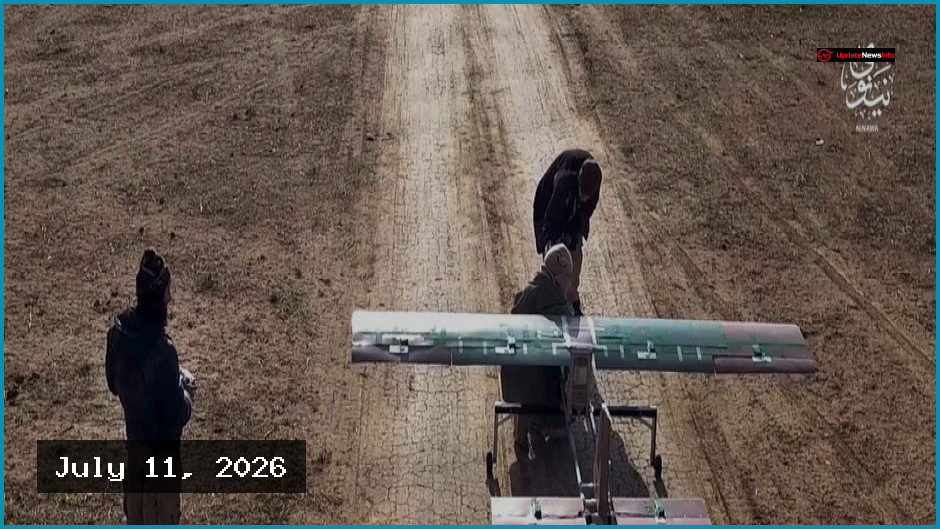
The use of AI is not limited to individuals. Extremist groups are also adopting it. Security researchers analyzing how the al-Qaeda affiliate Jama’at Nusrat al-Islam wal-Muslimin (JNIM), based in Mali, employs drones, suspect the group has utilized AI to modify these devices. Yuri Neves and Emily Klein, security researchers at Moonshot, a US-based organization combating online threats, observed in a June analysis for the Global Network on Extremism and Technology that supporters of groups like the “Islamic State” and right-wing organizations frequently discuss AI applications in messaging channels. They noted Telegram channels dedicated to AI use by extremists, where actors were “sharing AI prompts and conversation links, coordinating strategies to extract desired responses from chatbots, and cost-sharing ChatGPT subscriptions.”
Rueben Dass, an associate research fellow at the S. Rajaratnam School of International Studies in Singapore, has also observed AI chatbots assuming new roles in “lone wolf” terrorist attacks. Dass told DW, “Previously you had this whole concept of virtual planners, where you had individuals sitting in conflict zones, who were reaching out to people on social media, trying to motivate them to carry out attacks. I don’t think we can say that humans have been replaced but now, to a certain extent, these lone actors have moved to AI, for example ChatGPT, to get that support.”
Moustafa Ayad, executive director for Africa, the Middle East and Asia at the UK-based Institute for Strategic Dialogue, confirmed that the “Islamic State” media outlet Voice of Khorasan published guidance on AI usage last year. Ayad elaborated to DW that the jihadist ecosystem employs AI in diverse ways, from creating memes and TikTok dance videos to cross-border propaganda. He added, “Then you also have a dedicated set attempting to jailbreak AI, use it to support operational planning and readiness. It runs the gamut, and that is the inherent problem. AI may be streamlining and supporting propaganda processes and simultaneously supporting operational planning and readiness.”
The exact level of danger posed by these developments remains unclear. As Dass and other experts point out, a determined individual can already find information on bomb-making or 3D-printed guns relatively easily elsewhere on the internet, without AI assistance. Neves questioned, “Does the AI system provide information that a person would be unable to obtain otherwise? Does that qualitatively make a difference?”
Emily Klein of Moonshot views LLMs as a “continuation of disruptive technologies,” akin to the internet or encrypted messaging apps, which were also adopted by extremist actors. She stated to DW, “So there isn’t necessarily evidence that AI is causally creating more terrorists. I would say it’s more about how AI and people interact, and how that plays into somebody’s progression along the pathway to violence. For example, before you even get to research or attack planning, AI can compress stages of the pathway to violence [because] it validates grievances or almost sycophantically encourages someone towards something they already believe in.”
Adam Hadley, director of Tech Against Terrorism, acknowledged that “a determined person will eventually find most information.” However, he emphasized that these models significantly alter “speed, ease and comprehensiveness.” Hadley noted, “People who previously lacked time, resources or ability can now get much further, much faster.”
What is more concerning, Hadley added, is the conversational nature of AI chatbots. “It’s one thing to find a bomb-making manual, it is quite another to have a bomb-making coach.”
Dass argued that while AI models might provide a potential attacker with information more quickly, it is unlikely to make a terror act more “successful.” He explained, “The ‘success’ of any terror act is multidimensional. And I don’t think it’s going to be ‘successful’ purely because of the use of AI. I also don’t think you can say we’re going to have a lot more [terrorist] acts because of AI. But what we are probably going to see is a lot more attacks that involve the use of AI, one way or another.”
Hadley concurred, stating that “the trajectory is clear.” He highlighted that a significant proportion of individuals being radicalized in Europe, the UK, and the US are teenagers or children. “Given the role the internet and social media already play in youth radicalization, we think it is only a matter of time before chatbots become a significant part of the problem.”
Exactly how dangerous all this is, is unclear as yet.
Today, as Dass and other experts point out, a would-be terrorist can fairly easily find information about bomb-making or 3D-printed guns elsewhere on the internet, without any help from AI.