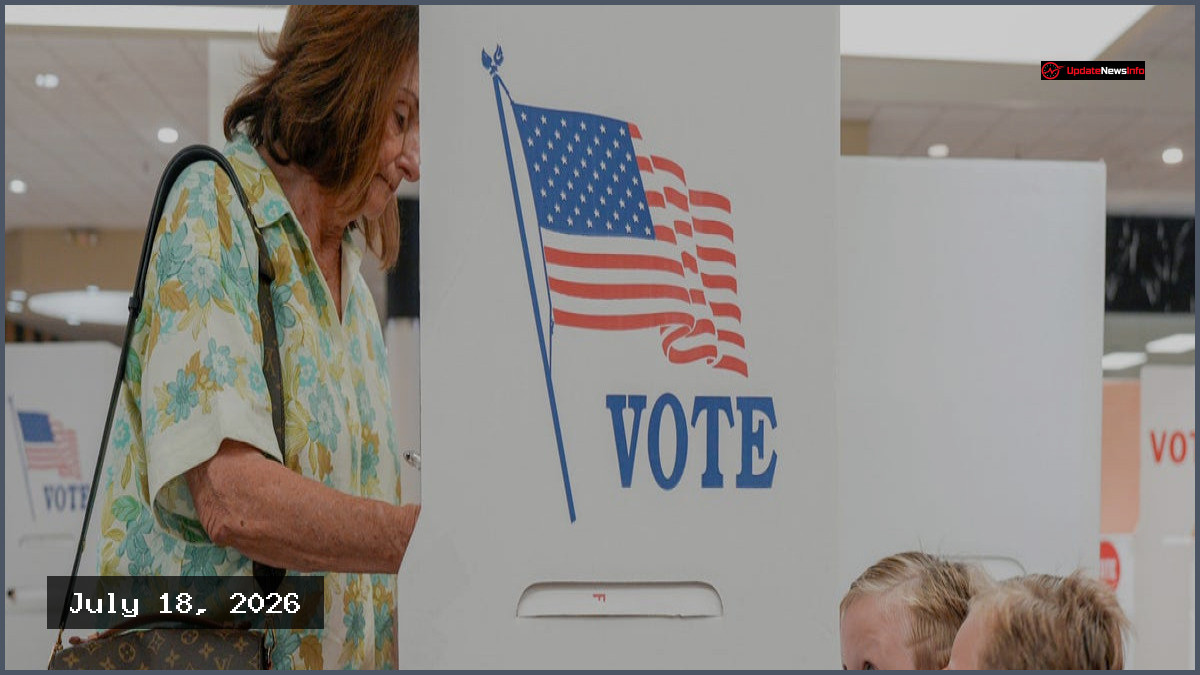
Federal courts across the nation have unanimously rejected the Trump administration's Justice Department's efforts to gain access to state voter rolls, dealing a significant setback to the administration's push for greater federal control over elections. In 16 federal court decisions issued to date, the department has lost every case concerning its demands for voter lists containing personal data such as addresses, dates of birth, and driver's license and Social Security numbers.
Local officials have voiced concerns that such access would create a "sweeping surveillance tool." The opposition to these demands is not limited to Democrats; Republican officials in states like Idaho, Kentucky, Utah, and West Virginia have also contested the requests. Notably, seven of the 15 U.S. District Court judges who have ruled against the Justice Department were appointed by President Trump.
The litigation centers on whether the federal government can police state voter lists and potentially establish a national database, a move framed by the administration as part of President Trump's effort to prevent noncitizens from voting. However, judges have consistently ruled that states, not the federal government, are responsible for running elections. Furthermore, some states argue that the federal government's attempt at oversight is an effort to address a problem that is virtually nonexistent.
Despite President Trump's continued complaints about election security and noncitizen voting, including in a White House speech on July 16, judges, election experts, and even Republican state officials have described allegations of noncitizen voting as "inaccurate" and "not a systemic problem." The court decisions carry urgency as the Nov. 3 congressional midterms approach, with a 1993 law prohibiting broad purges of voter rolls within 90 days of an election or after Aug. 5. Two appeals courts have agreed to expedite their reviews of lower court rulings.
Harmeet Dhillon, head of the Justice Department's Civil Rights Division and lead counsel in these lawsuits, stated, "The Justice Department is committed to ensuring that our elections are accurate, fair, and secure, and that starts with clean, up-to-date voter rolls. We are confident in the legal basis for these cases and will continue to pursue them vigorously, including on appeal."
President Trump signed an executive order in March 2025 directing the Justice Department to prioritize preventing noncitizens from voting, asserting it is his "unavoidable duty" to secure elections. Following this, Dhillon began requesting voter rolls from states to verify citizenship and identify inaccuracies like voters who had moved or died. She cited the 1960 Civil Rights Act and the 1993 National Voter Registration Act to justify her requests, arguing that federal law requires states to maintain accurate registration lists and that the department will act to enforce this obligation where states fall short.
The administration sought to cross-reference state voter lists with the Department of Homeland Security's Systematic Alien Verification for Entitlements (SAVE) database. However, one judge blocked this, deeming the database "inaccurate" and "unreliable" for such a purpose. Election experts emphasize that the Constitution grants states the authority to administer elections, and the 1974 Privacy Act aims to prevent the kind of personal voter information sharing sought by the executive branch.
"The Department of Justice has no power – none – to purge the voter rolls," said Justin Levitt, a professor at Loyola Law School and former DOJ official. "The courts aren’t buying what the Department of Justice is selling."
While 23 mostly Republican-led states initially provided voter information, many refused, citing privacy laws and a lack of federal authority. The Justice Department subsequently sued 30 states and the District of Columbia for unredacted lists. Fifteen U.S. District Court judges, including nine appointed by Republicans, and the 6th U.S. Circuit Court of Appeals have ruled against the department's demands.
U.S. District Judge David Carter, in one of the earliest decisions on January 15, declared the government's request "unprecedented and illegal," adding, "It is not for the Executive, or even this Court to authorize the use of civil rights legislation as a tool to forsake the privacy rights of millions of Americans. That power belongs solely to Congress." The Constitution, he noted, provides that states determine the "Times, Places and Manner of holding Elections."
David Becker, a former senior trial attorney for the DOJ’s Civil Rights Division, expressed surprise at the department's unanimous losses, stating, "As a former DOJ attorney, the idea of going 0-15 in cases – you can’t even wrap your head around it. It’s just remarkable."
However, Acting Attorney General Todd Blanche informed the Senate Judiciary Committee on July 15 that most cases are still under appeal and that some judges have supported certain departmental positions. For instance, U.S. District Judge Kent Wetherell ruled on July 7 that four Republican-led states could use the SAVE database to check voter citizenship, a decision that conflicted with U.S. District Judge Sparkle Sooknanan's June 22 order halting the use of the "unreliable" database.
Republican election officials are among those opposing the DOJ's demands. Kentucky Secretary of State Michael Adams argued that the request to surrender personally identifying information would transform a "little-used provision of the Civil Rights Act of 1960" into "a sweeping surveillance tool." Utah Lt. Gov. Deidre Henderson, who oversees elections, called the demand "unlawful." West Virginia Secretary of State Kris Warner agreed with the goal of maintaining accurate voter rolls but stated that turning over sensitive data would violate state law, noting the judge found "no indication" of problems with West Virginia's list maintenance.
The Justice Department acknowledged in a court filing on January 16 that members of a Trump advisory group, the Department of Government Efficiency (DOGE), had gained access to Social Security Administration information in March 2025, contrary to previous denials. The DOJ stated in the filing that an unnamed political advocacy group had asked two DOGE members to analyze state voter rolls to find "voter fraud and to overturn election results in certain States."
Despite the administration's focus on fraud, studies indicate that instances of noncitizens voting are rare, largely due to the documentation required for voting also serving as evidence of criminal behavior. "This notion that noncitizens are voting in large quantities is fiction," Levitt commented. "You are leaving a trail of criminal behavior that is going to be discovered." Federal authorities have cited a few recent examples in pending cases, including charges against two Pakistani men in New Jersey for allegedly attesting to citizenship when registering to vote, a lawful permanent resident from Australia charged in Louisiana for fraudulent voting, and a Chinese student at the University of Michigan charged with registering and voting using a student ID before fleeing the country.
U.S. Attorney Jerome Gorgon in Michigan emphasized the seriousness of illegal voting, stating it "cast doubt on our elections and serves to disenfranchise United States citizens by diluting their power at the ballot box." Following President Trump's July 16 speech, the Department of Homeland Security claimed over 250,000 noncitizens were illegally registered in California, Pennsylvania, New Jersey, and Nevada, though the department did not provide documentation for this estimate. DHS Secretary Markwayne Mullin subsequently sent letters to election officials in these four states urging them to check voter rolls against the SAVE database and threatened criminal penalties for noncompliance.
Dhillon also sent letters earlier this month to election officials in all 50 states, threatening criminal investigations if noncitizens were found to have voted in the 2026 election. Federal monitors are reportedly being sent to Arizona, Michigan, Massachusetts, Minnesota, New Hampshire, and Virginia. Dhillon stated on social media that an "intentional act that is aimed at diluting the votes of citizens could also constitute a violation" of federal law. Henderson, the Utah Republican, responded to these "threats of criminal prosecution" on social media July 7, calling it "truly bizarre behavior by the federal agency that is supposed to be protecting civil rights."
States have provided data illustrating their existing efforts to police voter rolls and the minimal extent of the noncitizen voting problem. Utah's yearlong audit found 27 noncitizens removed from rolls out of over 2 million voters, with a small number having voted in past elections. Idaho officials verified citizenship for 1.1 million voters before the 2024 election, referring 34 people for investigation, though none had voted in that year's elections. Texas audits have identified noncitizens on voter rolls, such as 1,136 in Harris County and one in Val Verde County. Louisiana reported 390 noncitizens registered and 79 who voted, but Secretary of State Nancy Landry, a Republican, clarified that "noncitizens illegally registering or voting is not a systemic problem in Louisiana."