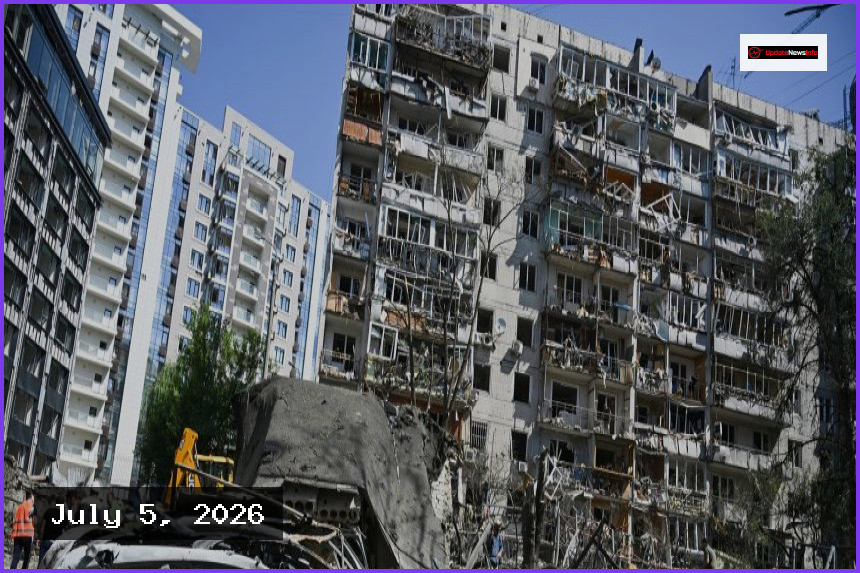
A ferocious Russian attack on Kyiv Thursday killed at least 30 people, making it the third deadliest assault against the Ukrainian capital since the start of the war. While Ukraine has faced hundreds of large-scale strikes, this specific incident proved exceptionally lethal due to the deliberate targeting of residential areas and the deployment of advanced weaponry, including ballistic missiles, loitering munitions, and new jet-powered drones.
These jet-powered drones, such as the Geran-4 UAV, are a recent addition to the Russian arsenal, having first appeared earlier this year. With speeds reaching 500 kilometers per hour, they pose a significant challenge to Ukraine’s defenses, moving too quickly for mobile fire groups to intercept and necessitating the use of limited ground-to-air missiles or fighter jets. Ukrainian Air Force spokesperson Yurii Ihnat stated on Friday that the increasing frequency of these drones is depleting critical defensive resources.
Analysts from the Institute for the Study of War (ISW) observed that Moscow is leveraging these technological innovations to maximize civilian harm. Beyond the drones, the attack was notable for the heavy use of ballistic missiles, with 28 of the 77 deployed missiles falling into that category. Among these was the Zircon hypersonic cruise missile, which Ihnat noted is extremely difficult to intercept without Patriot systems. Although the Ukrainian Defense Ministry reported that over 90% of cruise missiles and Shahed-type drones were intercepted, the nation faces an urgent shortage of Patriot missiles, a situation compounded by delivery delays caused by the conflict in Iran.
In response to the supply crisis, the Ukrainian government has reached out to nearly 40 countries, requesting the transfer of Patriot missiles from existing stocks in exchange for future contracted deliveries. The ISW suggested that Russia likely spent June stockpiling these munitions to enable such high-intensity strikes, noting that Moscow has increased its drone production capacity to thousands of units per month.
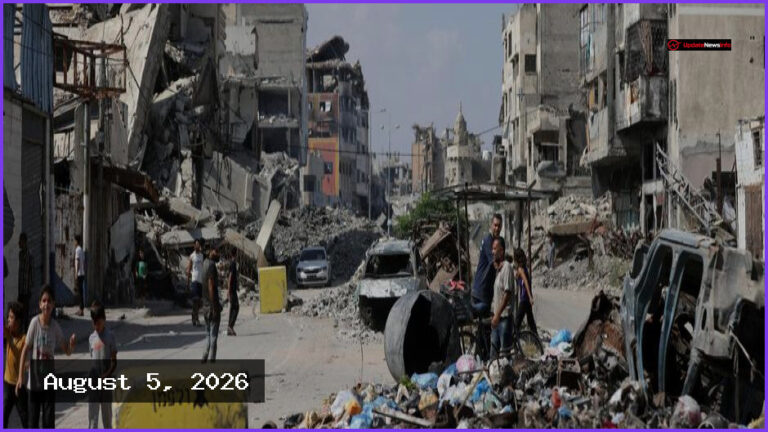
The impact on the ground was severe, with approximately 25 sites across Kyiv struck, many of which were residential. One missile alone destroyed a 64-apartment residential building, causing multiple fatalities and displacing dozens of families. While the Russian Ministry of Defense claimed the strike targeted military-industrial and energy facilities, Ukrainian President Volodymyr Zelensky pointed to the extensive damage across more than 130 residential buildings as evidence of a campaign of terror against civilian infrastructure.
Despite the high death toll, the outcome could have been far worse. Following an intelligence warning issued late Wednesday, tens of thousands of residents sought safety in shelters, with the Kyiv Metro reporting that 52,500 people, including 4,500 children, spent the night underground. Search and rescue operations continued through Friday as authorities searched for the missing, including parents of a 10-year-old boy rescued the previous day.