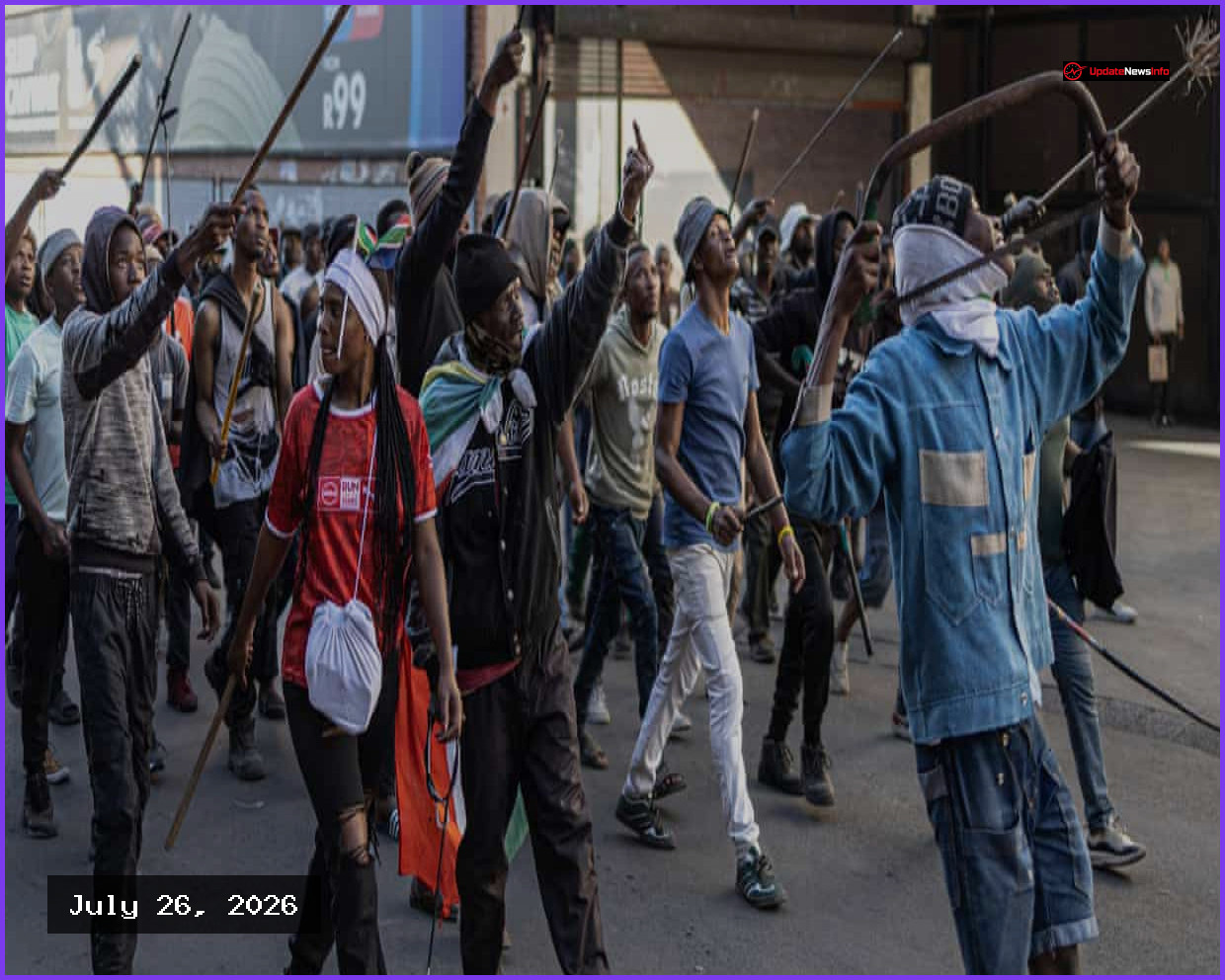
A persistent wave of anti-immigration protests has roiled South Africa since March, resulting in the departure of more than 160,000 foreign nationals, including people from Mozambique, Nigeria, and Zimbabwe. According to an AFP tally of official figures, at least 54,000 of these individuals were deported, while at least four people have been killed during the unrest. The crisis has seen immigrants targeted in their homes, with many forced to abandon their lives due to fear and intimidation.
In Thembelihle, an informal settlement south of Johannesburg, long-standing peaceful relations between residents and Malawian immigrants have deteriorated rapidly. On 29 June, Eibraheem Hussein, a 60-year-old Malawian who has lived in the country since 2000, was beaten and robbed in his compound. By 16 July, gangs had targeted at least four households in the same area, with assailants speaking Zulu and demanding that the residents return to their home countries. Moosa Addi Kunje, a victim of one such robbery, suffered head injuries requiring stitches after he was attacked with a pistol. The assailants stole his belongings and money, leaving his home splattered with blood. Another neighbor, Aisha Muhammed, reported losing 4,000 rand she had been saving for her return to Malawi.
The tension has been fueled by campaign groups that set an unofficial deadline of 30 June for illegal immigrants to leave South Africa. Activist Jacinta Ngobese-Zuma, leader of the group March and March, stated that demonstrations would continue every Thursday for six months. These marches have often been accompanied by violence, with protesters breaking into homes while police look on. In the Johannesburg township of Alexandra, marchers carrying sticks and clubs targeted residents indiscriminately, affecting both migrants and South Africans. Police later removed several individuals, including two men and two women, claiming it was for their safety.
The humanitarian impact is significant, with thousands of Malawians seeking shelter outside their consulate in north Johannesburg, enduring temperatures below 10C. Claire Waterhouse, who managed a Médecins Sans Frontières clinic at the site, highlighted critical issues, including patients with drug-resistant tuberculosis and a woman suffering from severe psychiatric hallucinations after being denied access to medication at a government facility. Justice Minister Mmamoloko Kubayi, however, asserted that there is no humanitarian crisis and that the government’s obligation is limited to emergency care for illegal immigrants. Conversely, Sasha Stevenson, executive director of the human rights NGO Section27, noted that South African law guarantees everyone access to primary healthcare regardless of immigration status.
While South Africa has historically imported labor, the foreign-born population grew to 2.4 million by 2022, representing 3.9% of the total population. Rising unemployment and inequality have intensified the scapegoating of African migrants. Although some government ministers have questioned the timing of the ongoing marches ahead of November’s local elections, opposition parties such as uMkhonto we Sizwe, ActionSA, and the Inkatha Freedom party have expressed support for the demonstrations. Meanwhile, police spokesperson Brenda Muridili warned that door-to-door demands for identification are illegal, and representatives from March and March have disavowed responsibility for the violence occurring during these events.