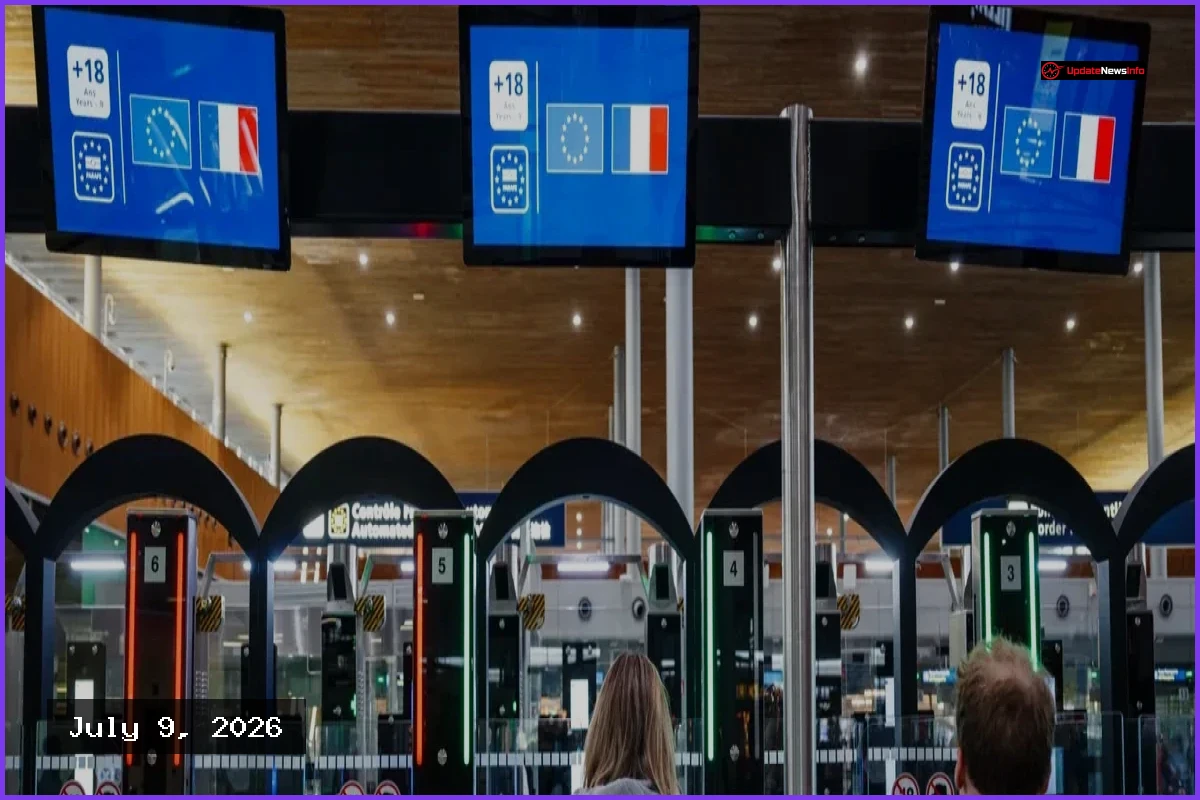
European Union officials have firmly rejected requests to suspend the recently implemented Entry/Exit System (EES), despite mounting pressure from airports and airlines concerned about potential travel chaos during the summer season. While acknowledging that the system is not perfect, EU representatives stated that a full suspension is neither necessary nor possible, noting that inconsistent application across member states would only exacerbate existing issues. They warned that if some countries operated the system while others did not, travelers could face significant risks, such as being incorrectly flagged for overstaying their 90-day limit and subsequently being denied entry.
Since October 2025, the 29 countries within the Schengen area—comprising 25 EU member states alongside Iceland, Norway, Switzerland, and Liechtenstein—have utilized the EES to replace manual passport stamping. The IT-based scheme records digital personal data, including facial images and fingerprints, to track entries and exits across the region’s external borders. While the system is designed to enforce the 90/180-day rule more effectively, it has been linked to severe wait times at various border crossings, with disruptions intensifying during peak periods like the Easter holidays.
In a letter to the industry, migration chief Magnus Brunner acknowledged the concerns raised by stakeholders and vowed that the bloc would intensify efforts to resolve operational hurdles. According to EU officials, the system is functioning without major issues at the vast majority of its 1,500 border crossing points, identifying only 20 locations as particularly difficult. Brunner defended the rollout, describing it as a gradual and careful process intended to enhance European safety, while suggesting that some reported delays might stem from insufficient infrastructure or staffing levels rather than the EES itself.
The European aviation industry, including the International Air Transport Association (Iata), had previously called for an urgent halt to the controls, citing wait times reaching up to five hours. Industry groups argued that these delays are damaging Europe’s reputation, tourism, and connectivity. Although current regulations allow airports and ports to temporarily opt out of the system if queues become unmanageable, that provision is set to expire in September. Brunner emphasized that the framework already includes flexibility, such as the option to temporarily suspend biometric registration, to help mitigate early-stage challenges. Organisations representing European airports and airlines called on the European Commission to adopt urgent measures to limit delays at border checks, which are now not only causing disruptions for travellers but also “undermining Europe’s reputation, European tourism and connectivity,” the letter said.