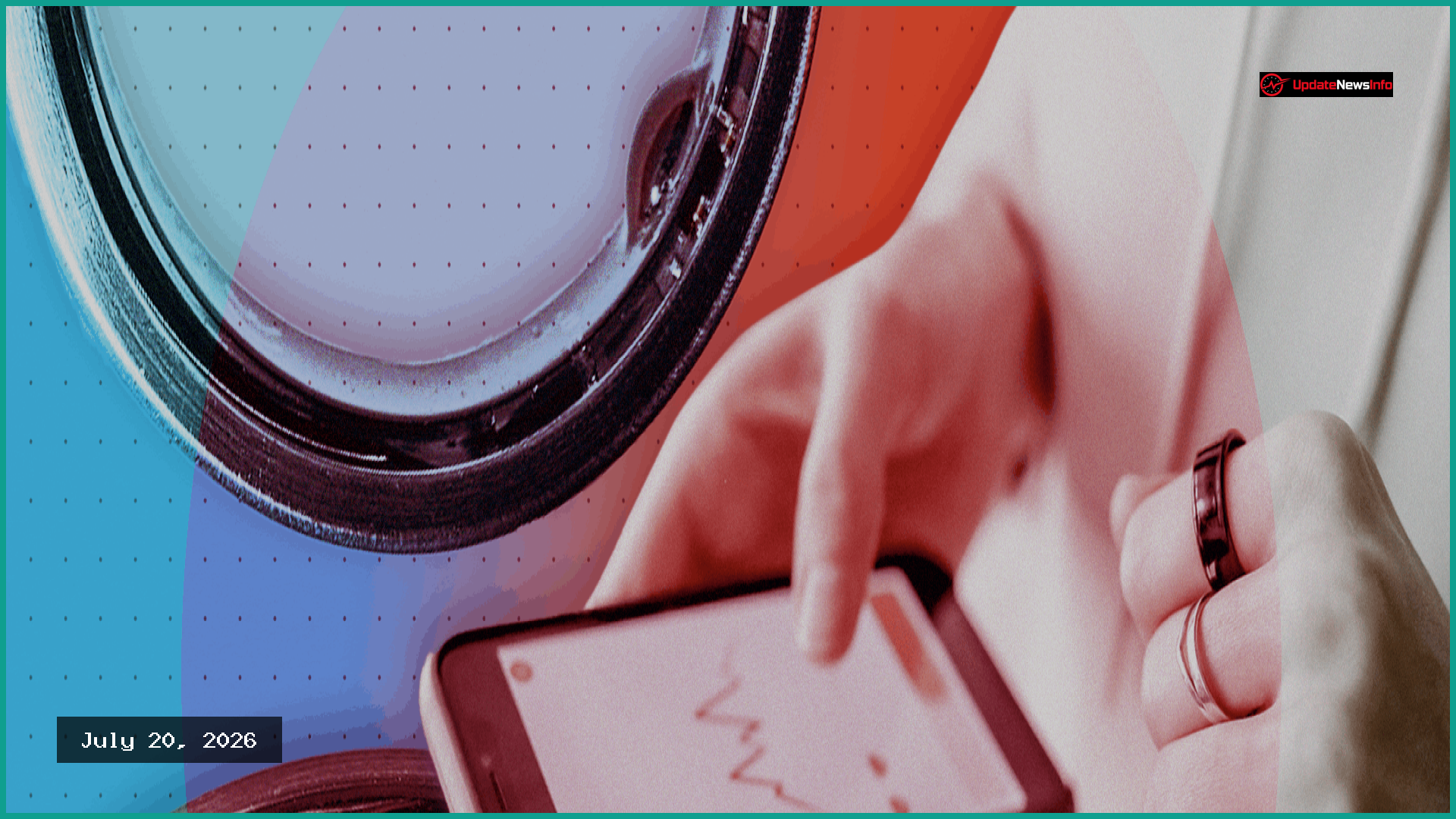
Fitness trackers are increasingly providing women with early indications of pregnancy and even miscarriage, often before traditional tests can confirm the changes. This emerging trend, while offering unprecedented early insights, also brings with it concerns about data reliability and the potential for increased anxiety among users.
Ravika, a 34-year-old solicitor from the West Midlands, experienced this firsthand during a birthday holiday with her husband. Her Oura ring flagged a poor health score, noting an elevated heart rate, increased body temperature, and a drop in heart rate variability (HRV), despite her feeling completely fine. When these statistics showed no improvement a week later, Ravika researched online and discovered a community of women reporting similar early pregnancy signs from their fitness trackers. It was another week before her own pregnancy test returned positive.
However, Ravika's journey soon turned anxious. After experiencing cramping and receiving a phone notification indicating her body was under "significant strain," she consulted a doctor. She was advised to return 10 days later for further testing to ascertain the health of the pregnancy. This waiting period became agonizing, leading her to obsessively check her tracker's stats, waking at 4 am nightly "just to refresh my app to see if my stats were still low, if my temperature was still elevated.
I was holding on to hope that it was a viable pregnancy." She described the stats as an "obsession," feeling it was "a life or death situation." Ravika sadly miscarried.
Sofia, 32, shared a similar experience, having detected two miscarriages through her Oura ring data before successfully carrying a third pregnancy to term, resulting in her now five-month-old baby son. During her first pregnancy early last year, she meticulously checked her app daily. "When I would wake up to see the [temperature] line progressing, and then I saw in the app one morning that my temperature had dropped – and that's how I knew, something's weird," she recounted.
This early data allowed her to be "mentally prepared" for the miscarriage. The same pattern recurred three months later with a second loss.
After taking a break from trying to conceive, Sofia received a "minor signs of strain" notification from her ring, coupled with an elevated temperature. A subsequent test confirmed her third pregnancy. Despite this pregnancy being healthy, the early weeks were filled with anxiety. She found herself repeatedly checking her data, fearing another loss.
"I was like, 'Oh my God, is this going to happen again?', and I remember I would wake up at four or five in the morning and just check my app to see if my temperature had dipped," she said. The constant monitoring became so intense that she removed her ring at seven or eight weeks and did not wear it for the entire first trimester.
The ability of fitness trackers to detect early pregnancy stems from physiological changes. In a typical menstrual cycle, a woman's body temperature rises after ovulation and drops sharply just before her period. In early pregnancy, however, body temperature usually remains elevated. Trackers capable of measuring body temperature can identify this sustained elevation as an early symptom, often before a missed period, which is when most traditional pregnancy tests can detect hormonal changes.
The popularity of fitness trackers, including smart rings, smartwatches, and chest-mounted devices, has surged in the UK. YouGov research indicates that 36% of British adults owned and used a fitness tracker in January 2026, nearly double the proportion recorded in July 2019. Finnish-US company Oura leads the smart ring market, which also includes India-based Ultrahuman and Hong Kong-based RingConn.
Dr. Stuart Lavery, a consultant of reproductive medicine at University College Hospital in London, acknowledged the understandable desire for early understanding and detection, given the profound impact of pregnancy planning. However, he cautioned, "we might be running before we can walk." Dr. Lavery emphasized the need for more data and research on reliability, warning that without it, "your levels of anxiety will just skyrocket." He believes that while more people will adopt wearable technology for such insights, it "should come with quite a big health warning about how much we can rely on them for accuracy."
Addressing the reported anxiety, Dr. Chris Curry, Oura's clinical director of women's health, stated that "With or without biometric tracking, pregnancy can be an uncertain time where many women, particularly those pregnant for the first time, are in the dark about the range of what's normal." She added that if users feel overwhelmed, the company "encourages members to take a break from the app experience, whilst Oura Ring continues to collect data and gather insights," clarifying that "The ring is a support tool, not a replacement for your care team."
Following her miscarriage, Ravika hopes to try conceiving again soon. Her experience has led her to rethink wearing her tracker. "I didn't really see myself as being an anxious person, but… I think going forward if it came to a point where I had an inkling that I was pregnant and my stats were low, as soon as that positive pregnancy test was there, I do think it would be the best thing for me to take the ring off," she concluded.