For those arriving from North American work cultures, where employees are often expected to project an intense, unwavering love for their jobs, the Swedish professional environment can be a significant adjustment. In Sweden, it is not only common but expected to openly discuss how eager you are to step away from your professional duties for a month-long summer break. This cultural contrast is stark, as many international workers are accustomed to a pervasive expectation that one should never explicitly express a desire to escape the office, even for a short period.
The roots of this difference lie deep within the history of Swedish social democracy. Historically, the central pillar of Swedish society and its institutions has been the worker. The prevailing philosophy is that a person who is properly nurtured and supported by society will ultimately become a more effective and productive contributor to that same society. While these ideals might be less immediately obvious than the ubiquitous fluorescent "H&M" signs or the prevalence of dyed blonde hair, they are fundamentally embedded in the Swedish built environment and the daily lives of its citizens. Even in a modern Sweden that has seen a political shift toward the right, many of the institutions and cultural norms established by social democratic policies remain considered axiomatically Swedish, even by those who hold more right-wing views on individualism and capitalism.
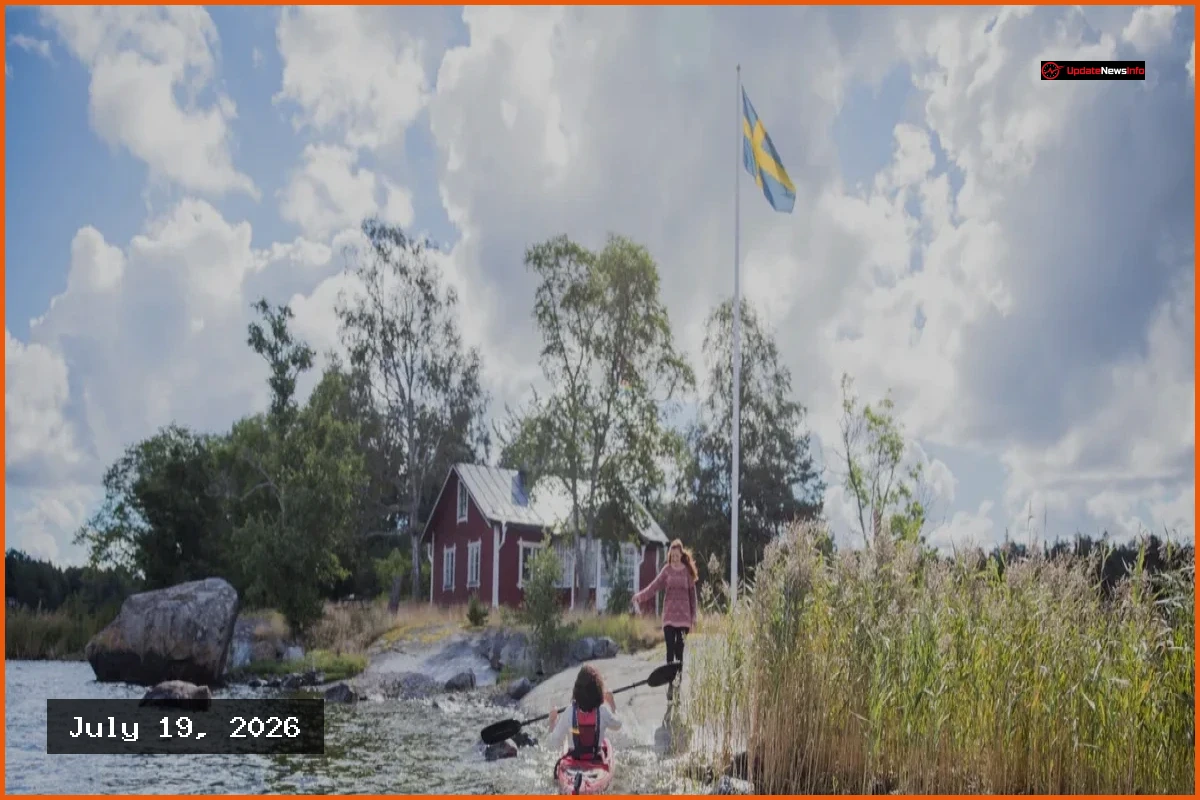
This commitment to the worker is physically manifested in spaces like the folkets hus, or "people's houses," which serve as community-owned and operated centers, and the folkparker, or "people's parks." However, the most cherished manifestation of this support is the right to "semester," the Swedish word for vacation. The term was popularized in the 1930s by Ernst Wigforss, a finance minister from the ruling Social Democratic party. Wigforss noted that in France, military service was divided into "semestres," or half-years, where soldiers had paid time off. He successfully championed legislation in the Swedish parliament to grant workers the right to at least two consecutive weeks of paid leave during the summer, ensuring they could enjoy the precious daylight hours. Over the decades, this entitlement has expanded to four weeks, creating a societal rhythm where, after Midsummer, the pace of work slows significantly until the arrival of autumn.
As summer approaches, the anticipation of this break becomes a universal topic of conversation. Whether in the office or elsewhere, Swedes frequently discuss how many weeks remain until their semester, how much they look forward to being away for a full month, and how they feel upon returning to work. For those new to the Swedish workforce, participating in these conversations is a key way to fit in. If you want to engage with your colleagues, you might say you are "längtar efter semester," which translates to "longing for vacation," or, when facing a difficult work challenge, you can sigh and remark "snart är det semester," meaning "it is vacation soon."
Despite the openness regarding the desire for time off, there is a specific nuance to these interactions. It is important not to be overly dramatic. The Swedish approach balances the desire for holidays with the understanding that both the work and the rest are simply part of the normal ebb and flow of life. If you find yourself back at your desk and feeling bummed about the end of your holiday, your colleagues will certainly commiserate with you. However, they will likely follow up with the phrase "men så är det," which translates to "but so it is"—a sentiment much like the French "c'est la vie"—reminding everyone that this is just the natural rhythm of existence.
I will never forget the look on my husband's face the time he emerged from a Zoom meeting in the basement of our rented Toronto bungalow and said: