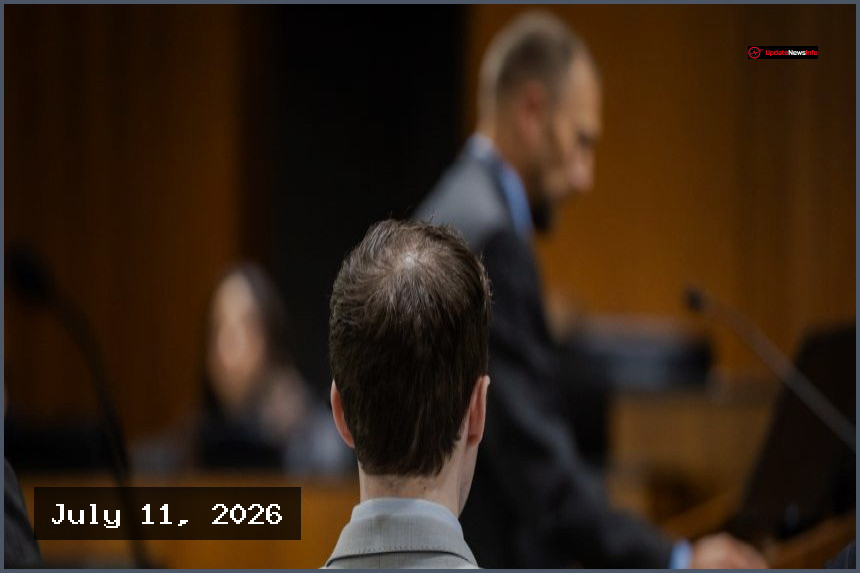
A Provo, Utah, courtroom recently concluded a five-day preliminary hearing that provided the most detailed account to date of the case against Tyler Robinson, the 23-year-old man accused of fatally shooting conservative activist Charlie Kirk. Attorneys, reporters, and spectators gathered as prosecutors from the Utah County Attorney’s Office presented evidence to convince a judge to advance the case to trial, nearly ten months after Kirk’s death.
The proceedings, often slowed by debates over the admissibility and public broadcasting of evidence, were nonetheless a crucial moment, laying out the prosecution’s case against Robinson. This included campus surveillance video from around the time of the shooting, alleged messages from Robinson that prosecutors describe as a confession, and a videotaped interview with a key witness: Robinson’s former roommate and romantic partner.
Conversely, Robinson’s defense team aimed to undermine the forensic evidence and raised questions regarding law enforcement’s handling of the investigation. Defense attorneys called three witnesses to testify on DNA and ballistics testing results, but Robinson, following his legal team’s advice, did not take the stand.
Now, with both sides having presented some of their evidence, Judge Tony Graf is tasked with determining if there is probable cause to support the charges against Robinson: aggravated murder, felony use of a firearm, obstruction of justice, witness tampering, and committing a violent act in the presence of a child. Judge Graf is expected to issue a ruling after oral arguments scheduled for early September, shortly before the anniversary of Kirk’s death. If sufficient evidence is found, Robinson will be arraigned and enter pleas. Prosecutors have indicated their intent to seek the death penalty against Robinson, who turned himself in to police the day after the shooting.
Charlie Kirk, the 31-year-old conservative firebrand and co-founder of Turning Point USA, was killed on September 10, 2025. He was fatally shot in front of approximately 3,000 attendees during a Turning Point USA event at Utah Valley University (UVU) in Orem. Graphic videos of the incident quickly spread across social media, prompting condemnation from politicians across the political spectrum, highlighting a broader concern about political violence in America.
Among the most anticipated evidence presented was a recorded video interview from April with Lance Twiggs, who was Robinson’s roommate and romantic partner at the time of Kirk’s killing. Twiggs told prosecutors that Robinson expressed remorse the day after the shooting, hours before surrendering to police. “He started crying a little bit and said he wishes he hadn’t done it, and then kept going around and just doing stuff, I think to keep himself busy or distracted or something,” Twiggs stated in the interview, parts of which were redacted by court order.
Twiggs is a pivotal witness for the prosecution not only for this alleged conversation but also for text messages exchanged with Robinson hours after the shooting, which prosecutors argue constitute a confession. Around 11 p.m. on the day of the shooting, Robinson allegedly texted Twiggs to “drop what you are doing, look under my keyboard.” Twiggs described finding a note from Robinson, which was read aloud in court. According to an affidavit, the note read, in part: “If you are reading this per my text, then I am so sorry. I left the house this morning on a mission, and set an auto text. I am likely dead, or facing a lengthy prison sentence. I had the opportunity to take out Charlie Kirk, and I took it.” Twiggs then texted Robinson, “you weren’t the one who did it right????” to which Robinson allegedly replied, “I am, I’m sorry.” Twiggs’ attorney confirmed his client has “cooperated consistently with the investigation.”
Prosecutors also played surveillance footage that allegedly captured Tyler Robinson on UVU’s campus four times in the hours leading up to and following Kirk’s death. Sergeant David Hull, a former investigator with the Utah State Bureau of Investigation, testified that Robinson’s car was first seen pulling into a parking garage around 8:30 a.m. on the day of the shooting. After leaving on foot, Robinson visited the courtyard where Kirk’s event was scheduled and spoke with Turning Point USA representatives before leaving campus around 9:25 a.m.
About an hour later, cameras again captured Robinson on foot as he purchased food on campus and entered a nearby wooded area. He returned without a backpack and left campus shortly before 11 a.m. Robinson was seen again on campus surveillance footage around 11:53 a.m., approximately 30 minutes before Kirk was killed. Hull noted that Robinson was wearing different clothes and walked with a limp not observed in earlier footage.
Additional surveillance footage, captured from a distance, showed Robinson running across the rooftop of the Losee Center, a UVU building near the event courtyard. Hull testified that this footage depicted Robinson running across the roof, crawling to a corner, and lying prone around 12:22 p.m. The footage then showed Robinson, appearing to carry an object, run back across the roof and lower himself down before entering the nearby wooded area.
Later that night, around 12:30 a.m. on September 11, surveillance cameras recorded Robinson’s vehicle stopping and attempting to turn onto a campus road. Hull testified that an officer conducting security detail interacted with the vehicle, noting its license plate due to something about the interaction. When the officer later learned a similar car was suspected in the shooting, he identified the male driver, finding the car registered to Tyler Robinson and his mother. While prosecutors did not elaborate on the significance of Robinson’s presence near the scene that night during the hearing, text messages with Twiggs allegedly show Robinson expressing a desire to retrieve his rifle, which a law enforcement witness testified was later found in a wooded area nearby.
Forensic evidence presented by prosecutors included ballistics and DNA testing results, which they argue link Robinson to the alleged murder weapon. This weapon, a Mauser Model 98 .30-06 caliber bolt-action rifle, was discovered wrapped in a towel in a wooded area near campus. Sergeant Jennifer Faumuina, an investigator with the State Bureau of Investigation, testified that the rifle contained one spent cartridge casing and three unfired rounds, each engraved with messages. Approximately a month before Kirk’s killing, Twiggs stated Robinson asked for a Dremel tool to engrave bullets for a family hunting trip. Police later seized a Dremel and several cartridge casings of the same type found in the rifle from the home Robinson shared with Twiggs; one casing had “TEST SHOT” engraved on it, according to a photo shown in court.
A US Bureau of Alcohol, Tobacco, Firearms and Explosives (ATF) report, read in court, confirmed that the cartridge casings found inside Robinson’s home had been fired by the rifle discovered near campus. An ATF analysis also determined that the recovered Dremel tool made the engravings on both the cartridges found with the rifle and those inside Robinson’s home. However, the ATF analysis concluded that a bullet jacket fragment recovered from Kirk’s body “could not be identified or excluded” as having been fired from the rifle, stating the comparison was “inconclusive.” Defense witness Samantha Karner, the report’s author, testified she was “unable to say one way or another” due to a lack of microscopic marks on the fragment.
DNA testing on different parts of the rifle yielded significant results. Caitlin Oliver, ATF DNA section chief, testified that it was at least 1 trillion times more likely that Robinson contributed DNA to these samples than not, the highest statistic permitted under her laboratory’s guidelines. Additionally, Amanda Bakker, an FBI DNA forensic examiner, stated there was “very strong support” for the conclusion that DNA collected from the towel wrapped around the gun and a screwdriver found on the Losee Center roof originated from both Robinson and Twiggs.
Before this week, Robinson’s defense strategy remained largely undisclosed, with pretrial proceedings focusing on technicalities like perceived conflicts of interest and efforts to ban cameras from the courtroom. However, the preliminary hearing offered glimpses of their approach. Defense attorneys questioned forensic evidence and grilled law enforcement officers about their investigation, highlighting potential leads that were disregarded.
For instance, former UVU Officer Chris Bagley testified under prosecution questioning that he saw an empty pistol holster in the grass after the shooting but disregarded it, believing the gunshot he heard came from a rifle. Defense attorney Kathryn Nester pointed to another officer’s report, introduced during Hull’s testimony, which stated a gun was found in the holster. Nester also questioned Hull about a bullet found on a different campus building’s roof and other individuals questioned early on; Hull clarified the bullet was unfired and ejected from an officer’s rifle, and the other individuals had been cleared. Nester further inquired about event security protocols, with Bagley testifying that six of the department’s 15 officers were working, he was unaware of a security debrief, and no magnetometers or drones were used to screen the crowd. Meanwhile, defense attorney Michael Burt attempted to discredit the DNA and ballistics reports by questioning forensic witnesses on lab policy semantics and evidence quality.
Kirk’s loved ones attended each day of the hearing, describing the past several days as “difficult” in a statement released Friday. Erika Kirk, Charlie Kirk’s widow and now leader of Turning Point USA, was observed crying at times, dabbing her eyes with tissues and receiving comfort from those around her. She briefly exited the courtroom on several occasions, including when former UVU Officer Bagley described the shooting and when videos of the shooting, not publicly displayed, were shown to the judge and parties.
Following the conclusion of testimony on Friday, Kirk’s family filed a request for a “prompt” ruling on whether the case should proceed to trial, citing the “overwhelming evidence presented.” They also released a statement calling the process “an important step forward in the pursuit of justice for Charlie.” The family expressed that, “As difficult as these last few days have been, it brings our family comfort to know that the world has witnessed the overwhelming evidence of what occurred to Charlie that day.” The Kirks have consistently advocated for keeping the courtroom open to the public and media to counter conspiracy theories about Kirk’s death, a desire reiterated this week as the court deliberated which exhibits could be publicly broadcast. Kirk’s attorney requested all evidence be made public without redactions, and after Judge Graf denied this, followed up with a written notice requesting all evidence, including additional evidence, be made public. Judge Graf denied this request Thursday morning. The family’s Friday statement concluded, “Nothing will ever undo the loss of our beloved Charlie. As this case moves into its next phase, we pray that truth will continue to be heard through a process that is fair, transparent, and grounded in the facts.”
CNN’s Andi Babineau reported from Provo, Utah, while Nicki Brown reported from New York. CNN’s Sneha Dhandapani and Kristen Holmes contributed to this report.
Scan the QR code to download the CNN app from the Apple Store.