The operator of the Keystone Pipeline system has reached a proposed legal settlement with the U.S. government, agreeing to pay a $26.9 million civil penalty in response to a major oil spill that occurred in Kansas in December 2022. In addition to the fine, the operator, South Bow—a Canada-based firm—has committed to spending approximately $40 million on initiatives aimed at preventing future accidents.
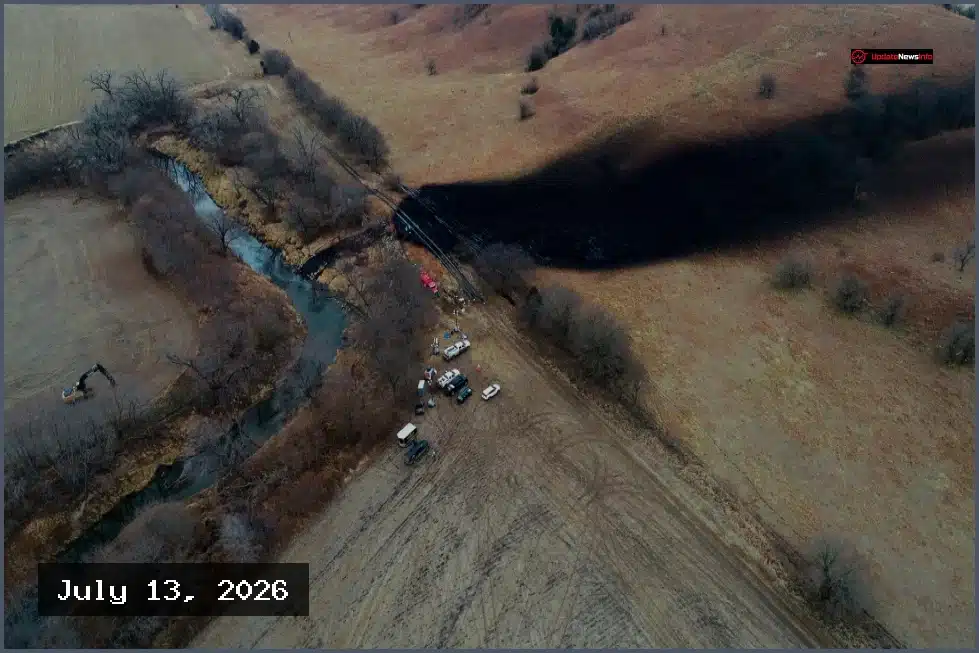
The agreement seeks to resolve allegations brought by the U.S. Environmental Protection Agency and the state of Kansas, which claimed that South Bow violated both federal and state clean water regulations. The incident involved the rupture of the pipeline, which released nearly 13,000 barrels of heavy crude oil into a creek located in a rural pasture in Washington County, Kansas, situated roughly 150 miles northwest of Kansas City. This event marked the largest onshore crude pipeline spill in the United States over the last nine years, with the volume of leaked oil sufficient to nearly fill an Olympic-sized swimming pool. According to a 2021 report from the U.S. Government Accountability Office, the scale of this spill surpassed the combined total of the 22 previous incidents on the same pipeline system.
Under the proposed decree, which was filed Friday in U.S. District Court in Kansas, South Bow is also required to pay Kansas more than $3 million to fund environmental restoration projects. The agreement is subject to a 30-day public comment period followed by judicial approval. Jeffrey Hall, the EPA’s assistant administrator for its enforcement office, stated that the spill rendered the waterway lifeless and necessitated extensive cleanup efforts, noting that the penalty reflects the severity of the environmental damage.
Although no residents or pipeline workers were injured and officials confirmed that public water supplies remained unaffected, the U.S. government's complaint noted that more than 2,700 animals were killed or harmed. The affected area is known habitat for the endangered long-eared bat. A May 2023 report from an engineering consulting firm suggested that the pipeline bend where the rupture occurred had been overstressed since its installation in December 2010, likely due to construction-related land alterations. The government’s court filing further alleged that the soil beneath the pipe had been improperly compacted and that, despite re-excavating the site in 2013, the company failed to replace the pipe section.
South Bow spokesperson Sara Hunter stated that the company proactively launched its response before receiving formal government directives and completed comprehensive environmental remediation in February 2024. Hunter added that the company has since conducted over 12,000 miles of inspections and performed 400 excavations to ensure pipeline integrity. TC Energy, the company that originally built the pipeline, spun off South Bow as an independent firm in 2024 following the completion of the Kansas cleanup.