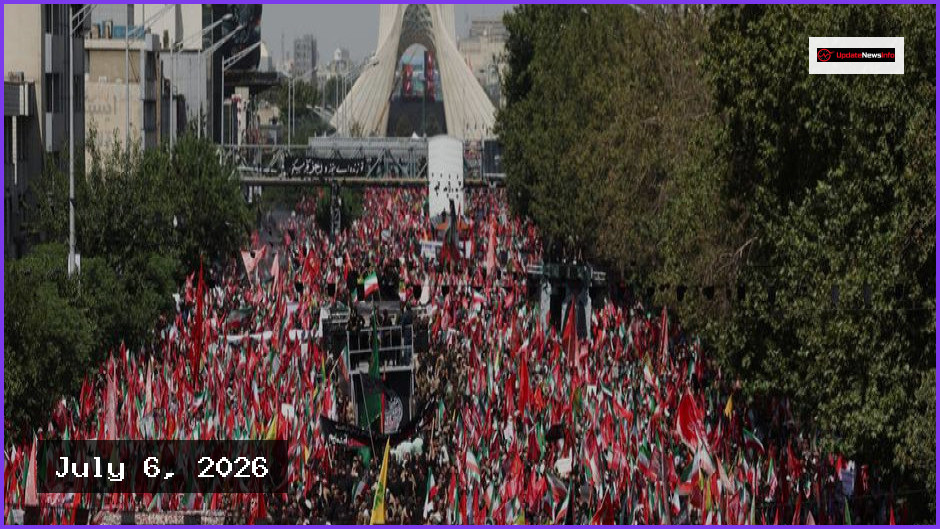
A massive throng of mourners filled the streets of Tehran as Iran held a funeral procession for the late Supreme Leader, Ayatollah Ali Khamenei. The 86-year-old leader, along with several family members, was killed in an airstrike on February 28, which occurred at the start of a war initiated by the US and Israel against the Islamic Republic. Iranian state television showed images taken by helicopter of a crowd stretching from Tehran’s Azadi Freedom Square for kilometers down the street bearing the same name, following the truck carrying the coffins of the deceased, which was adorned with ornamental grating similar to that found at an imam’s shrine.
Regime officials have framed the massive turnout as a deliberate show of continued strength and national unity, particularly as the country remains involved in negotiations regarding a permanent end to the conflict. General Hasan Hasanzadeh of the Islamic Revolutionary Guards Corps (IRGC), who is overseeing the logistics, stated that the procession was scheduled to traverse Tehran for 12 hours before reaching its final destination at Mehrabad International Airport. To manage the high temperatures during the event, organizers sprayed misted water on the attendees.
Throughout the route, many participants displayed placards and banners demanding the deaths of US President Donald Trump and Israeli Prime Minister Benjamin Netanyahu. While three of Ali Khamenei’s sons appeared in public for the funeral on Sunday, his designated successor, Ayatollah Mojtaba Khamenei, has remained absent. Reports suggest he is in hiding after being severely wounded in the same airstrike that claimed his father’s life, with Israel having previously threatened to target him.
Official mourning for the late leader began on Saturday and is set to conclude this Thursday with a burial at the Imam Reza shrine in Mashhad, his birthplace. Meanwhile, diplomatic talks between Iran and the US concerning the war—including the reopening of the vital Strait of Hormuz and the status of Iran’s nuclear program—have been paused until the conclusion of the funeral proceedings.