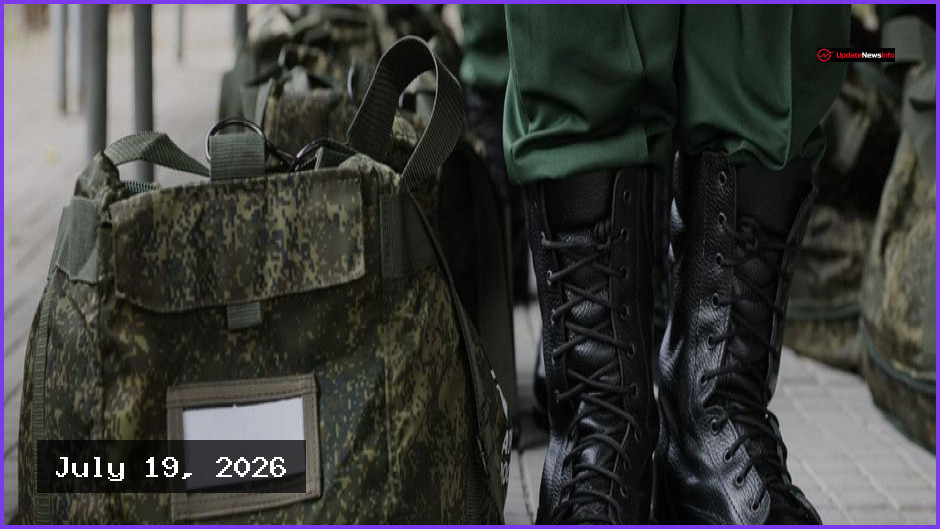
Almost all asylum applications submitted by Russian deserters are currently being denied by German authorities, leaving many young men in a state of extreme uncertainty and fear. Among those caught in this legal limbo is Nikita Zvezdov, who was only 15 years old when Russia launched its full-scale invasion of Ukraine in February 2022. By April 2024, shortly after his 18th birthday, Zvezdov was drafted into the Russian military. He had previously been attending a vocational school in Krasnoyarsk, but he believes his expulsion from the institution was a deliberate move to facilitate his conscription. There have been widespread, though unverified, reports over the past few years that Russian students were being intentionally failed in their exams to prevent them from avoiding the draft.
In May 2024, Zvezdov was assigned to military unit 25573 near Ussuriysk. This unit has developed a notorious reputation on various internet forums for criminality, including reports of harassment, extortion, and physical beatings. Zvezdov recounted that officers pressured him and other conscripts to sign contracts for longer periods of service, a move he had vowed to his relatives he would never make. He described a brutal training environment where officers punished soldiers for minor infractions by forcing them to perform 200 pushups while wearing a gas mask or running 50 laps in a bulletproof vest weighing 25 to 30 kilograms. He also alleged that officers beat conscripts and shot them in the legs as a form of discipline. The psychological toll was severe, leading Zvezdov to experience suicidal thoughts; he even attempted to jump off a cliff before being stopped by officers, who subsequently forced him to sign a service contract.
The Russian military is currently facing significant personnel shortages, and conscripts are frequently pressured into signing contracts. Mothers of soldiers have told the Russian media outlet Astra—which is designated as a "foreign agent" by the Russian government—that their sons were harassed or deceived into signing these agreements. A month after signing his contract, Zvezdov was informed he would be deployed to Russian-occupied areas of Ukraine near Melitopol, a region known for high casualty rates. Realizing he had no other choice, he decided to desert. After receiving his first soldier's pay of 40,000 Russian rubles, or approximately €450, he requested leave under the pretense of gathering supplies. Although assigned a minder—a former convict—to monitor him, the guard was inattentive, allowing Zvezdov to discard his uniform and flee to Armenia.
Zvezdov was not officially classified as a deserter for another six months. During that time, he traveled to Bosnia and Herzegovina and then to Croatia, where he filed for political asylum. Before a decision was reached, he moved on to Germany in December 2025, where his grandfather resides, and applied for asylum again. German authorities rejected his application, citing the European Union's Dublin rule, which mandates that the country where an asylum seeker first enters the EU is responsible for their claim. Consequently, Germany was slated to return him to Croatia by the end of July 2026. If he is not transferred by that deadline, responsibility for his case would return to Germany.
Despite the previous German government's 2022 pledge that conscientious objectors and deserters deserved protection, human rights activists report that the chances of approval are now virtually non-existent. Alexey Kozlov, manager of human rights and research projects at the Berlin-based organization Solidarus, noted that political statements have not translated into legal practice. Many applications are rejected on the grounds that deserters do not face a "real risk" of severe persecution or deployment to the front lines upon their return. The Federal Office for Migration and Refugees (BAMF) confirmed that every case is investigated individually, stating that protection is only granted if there is a "real, individual and justified fear of persecution."
However, evidence suggests the risks are substantial. Astra has identified 29 illegal detention centers for conscientious objectors, located in occupied Ukrainian regions like Luhansk and Donetsk, as well as within Russia. These improvised prisons, often situated in basements or abandoned industrial buildings, are sites of extreme abuse, including starvation, torture, and extortion. One former soldier, who escaped in 2024, described a "torture chamber" in the Petrivka quarry in Donetsk where soldiers were hung from the ceiling by their hands and feet. According to Bundestag figures, 126 people were deported back to Russia in 2025, and Kozlov believes the chances for deserters under the current coalition government are now effectively zero.
Zvezdov has managed to avoid immediate deportation through "Kirchenasyl," or church asylum, where a congregation provides temporary shelter. While this has no formal legal standing, it often leads the state to pause deportation proceedings to review the case. Zvezdov moved from a refugee camp to a church near Aachen, where he works in the kitchen and grounds. He narrowly escaped deportation on the night of June 16, when police arrived at his former camp to collect him. He is now waiting for July 30, when his case may return to German jurisdiction. Should he be rejected again, he plans to seek refuge outside the EU, as he believes returning to Russia is impossible for the foreseeable future.