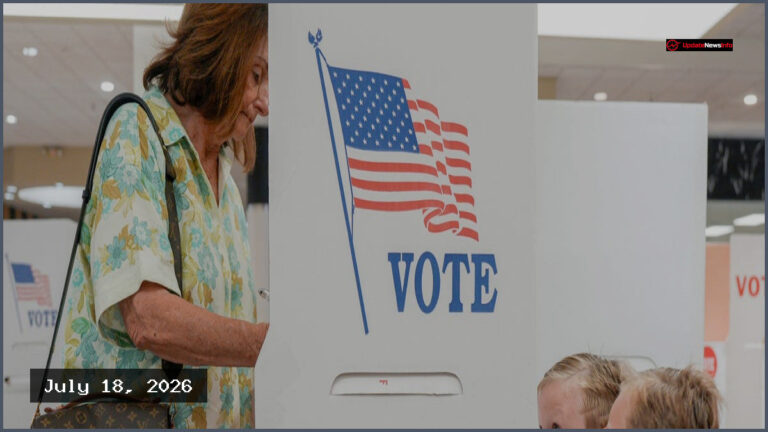
In a significant 5-4 ruling issued on June 29, the Supreme Court upheld a Mississippi state law that allows mail-in ballots postmarked by Election Day to be received and counted up to five business days later. This decision represents a direct defeat for President Donald Trump’s ongoing efforts to restrict voting by mail. The ruling is expected to have widespread implications for upcoming elections nationwide, as many other states currently allow ballots to be accepted and counted for a period after Election Day.
Separately, the court ruled 5-4 to prevent President Trump from firing Lisa Cook, a governor on the Federal Reserve board, while the legal battle over his removal attempt continues in a lower court. Trump claimed he could fire Cook due to allegations that she misrepresented information on two mortgage applications. Cook intends to debunk these claims and maintains that the Federal Reserve’s historical independence provides its governors with statutory protections against such actions.
In a case involving Fourth Amendment protections, the high court determined that a “geofence warrant”—which seeks cellphone location data for users near a specific location over a specific timeframe—constitutes a search subject to constitutional limits. The case involved a Virginia man who challenged the use of location data from Google that led to his conviction for bank robbery. Justice Elena Kagan, writing for the majority, stated that while the warrant constitutes a search under the Fourth Amendment, the court did not rule on whether the warrant itself was unlawful. The case has been sent back to an appeals court to determine if the search was unreasonable.
The justices also declined to review a landmark 1964 press freedom decision, New York Times v. Sullivan, effectively rejecting an appeal from Alan Dershowitz. Dershowitz had sought to challenge the standard for libel and defamation, arguing it provides too much immunity for the media. Additionally, the court will not intervene in the case involving E. Jean Carroll, meaning President Trump remains liable for a 2023 jury verdict ordering him to pay $5 million for sexual abuse and defamation.
Looking toward future proceedings, the court is set to review Arizona voter registration laws enacted in 2022 that lower courts suggested suppress the vote and conflict with federal rules. This includes challenging the state’s method of purging voter rolls within 90 days of an election and requirements for documentary proof of citizenship. Furthermore, the court is examining a challenge from parents regarding Washington state laws that allow minors to seek medical care without parental consent. The Supreme Court is also expected to address presidential power to fire members of independent boards, referencing a 1935 precedent, and potential rulings on birthright citizenship under the 14th Amendment, an interpretation that has stood for over 125 years. As of June 29, the court has not announced its final day for decisions, and while debates continue regarding the televising of proceedings, the Senate Judiciary Committee is still pursuing bills to place cameras in the court, though such measures have historically stalled in the full Senate.