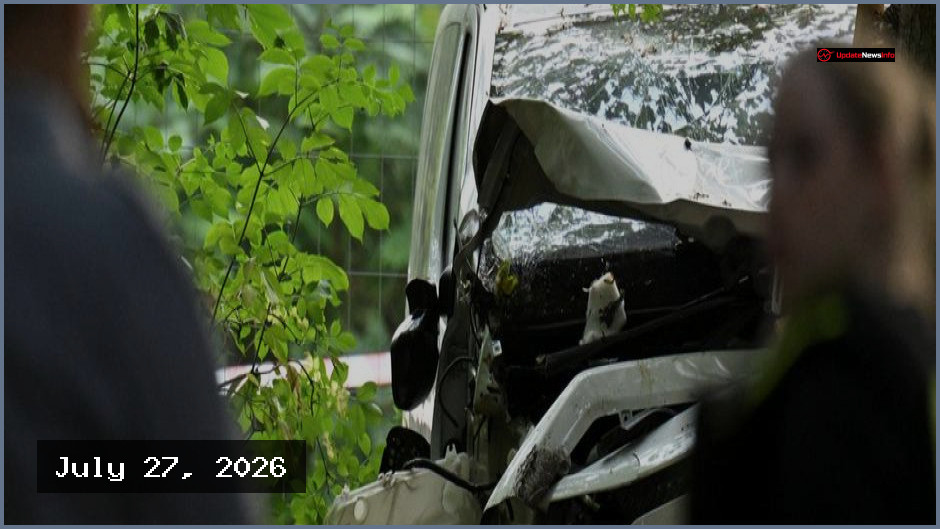
The recent assault during a Christopher Street Day event in Berlin has drawn international attention as the latest instance in a long-standing pattern of vehicle-based attacks occurring across the globe. During the Saturday night festivities, which typically draw thousands of participants to the German capital, a 21-year-old suspect identified as Abdul B. drove into the crowd. Police reported that the individual had ties to the local "Islamist scene" and fled the scene following the incident, which resulted in one death and 16 injuries.
This event reflects a broader, persistent threat of vehicular violence that has affected numerous countries. In Germany alone, several similar incidents have occurred in recent years. In early May, a 33-year-old German national and local resident drove through a crowd in the eastern city of Leipzig, killing two people and injuring 20. Although the perpetrator was known to local law enforcement, he had no prior record for relevant offenses. In 2025, a 40-year-old German man intentionally drove his vehicle into a crowd in Mannheim, resulting in at least two deaths and several injuries. While authorities ruled out a political motive, the suspect had previously been fined under German hate crime laws for social media comments made in 2018. Additionally, in February of last year, a 25-year-old Afghan man rammed a car into a trade union demonstration organized by Verdi in Munich, killing a 37-year-old woman and her two-year-old daughter. He is currently facing trial for murder and attempted murder.
Other major incidents in Germany include a 2016 attack at a Berlin Christmas market, where a rejected Tunisian asylum-seeker hijacked a truck and killed 13 people, an act claimed by the "Islamic State." Furthermore, in a separate 2026 case, a 50-year-old Saudi Arabian doctor drove a rented BMW SUV into a crowd at a Christmas market in eastern Germany, killing six and injuring over 300. He was sentenced to life in prison in June 2026, with the court noting the severity of his crime, which effectively ruled out the possibility of early release.
Internationally, the trend has been equally lethal. On New Year's Day 2025, a vehicle plowed into revelers in New Orleans, killing 14 people and injuring dozens. The FBI investigated the incident as an act of terrorism, noting that the driver and two police officers died in a subsequent firefight at approximately 3:15 a.m. local time. In southern China, a 62-year-old driver rammed a small SUV into people exercising at a sports complex on November 11, 2024, killing 38 people and injuring 48. Authorities stated the perpetrator was upset about his divorce; he was sentenced to death and executed in January 2025.
Canada has also seen high-profile attacks. In one instance, a 23-year-old white nationalist killed four members of a Muslim family with a pickup truck, a crime then-Prime Minister Justin Trudeau labeled a "terrorist attack, motivated by hatred." In another case, a 25-year-old Canadian man drove a rented van into pedestrians in Toronto, killing 10 and injuring 16. He claimed to belong to the "incel" community and was sentenced to life in prison with no possibility of parole for 25 years. In New York City, an Uzbek national killed eight people and injured 12 by swerving a rented pickup truck onto a bike path. Reportedly spurred by an "Islamic State" call to action, he was sentenced to eight consecutive life sentences plus 260 years.
Other notable global events include the 2017 Las Ramblas attack in Spain, where 14 people were killed and many more injured. The "Islamic State" claimed responsibility, and members of the same cell carried out a similar attack in Cambrils before being killed by police. The Ramblas perpetrator was killed by police on August 21 after a multi-day manhunt. In the United States, a white supremacist intentionally drove into protesters at a "Unite the Right" rally, killing one woman and injuring dozens; he was sentenced to life without parole. The year 2017 also saw a series of attacks in London: a 52-year-old UK-born man killed four on Westminster Bridge before stabbing a policeman, three Islamist attackers killed eight on London Bridge and at Borough Market, and a 47-year-old man radicalized by far-right ideas killed one and injured 15 outside a mosque in Finsbury Park. In Australia, a driver in a state of drug-induced psychosis killed six and injured over 30 at a pedestrian mall. Finally, in the deadliest attack of its kind, a Tunisian-born French resident drove a rental truck along a seaside promenade in Nice on Bastille Day, killing 86 people.
A man driving a van plowed into people on the Spanish city's crowded Las Ramblas boulevard, killing 14 and injuring many more.
Six people were killed and more than 30 injured when a car hit lunchtime crowds at a pedestrian mall in Australia's second-largest city. The perpetrator was found to have been in a state of drug-induced psychosis.