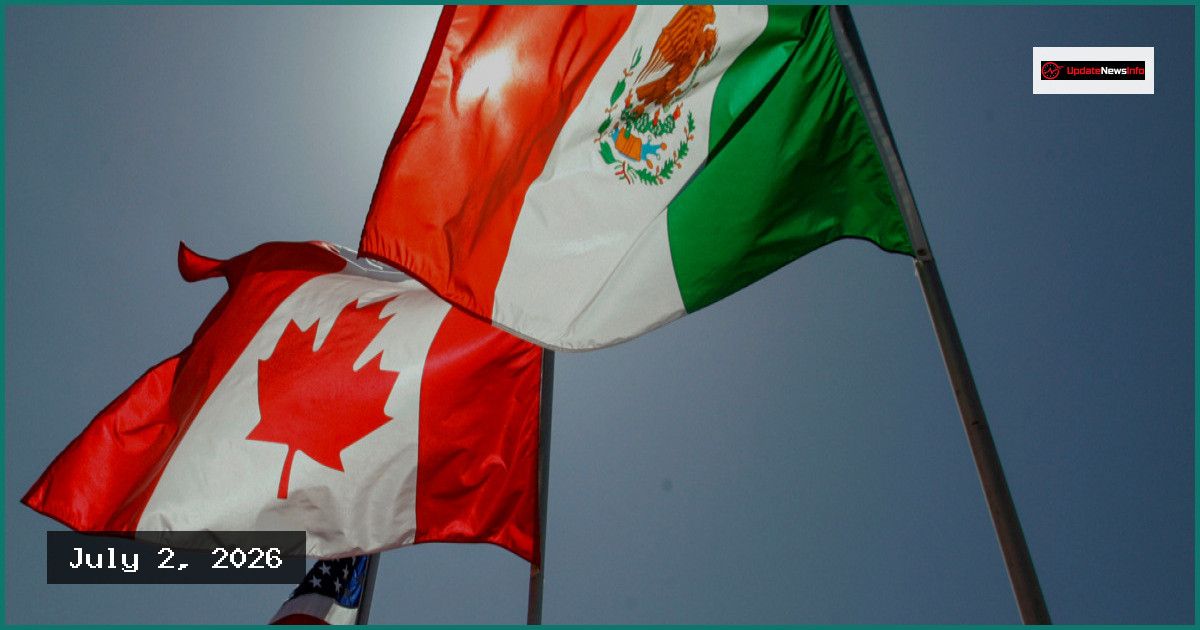
Six years to the day after the U.S.-Mexico-Canada Agreement (USMCA) on trade took effect, the Trump administration announced on Wednesday its plan to discontinue the deal, which has long been viewed as a successful and stabilizing force for the three largest North American economies. Rather than pursuing a renewal of the existing agreement, a senior Trump administration official informed reporters that the United States intends to launch a decade of negotiations to draft amendments to it. A potential outcome of these talks includes Washington establishing separate, bilateral trade agreements with Mexico and Canada individually.
This move, which the administration had hinted at for several months, represents a sharp reversal for President Donald Trump. After withdrawing from the North American Free Trade Agreement, Trump negotiated and signed the USMCA in 2018, later championing it on social media as the “best and most important trade deal ever made by the USA.” However, seven years later, the administration asserts that the agreement failed to meet its goals of modernizing and rebalancing trade among the three nations. A senior official noted that while the deal succeeded in modernization, trade deficits with both Canada and Mexico rose during the Biden administration, which the current administration believes the USMCA failed to adequately control.
The administration emphasized that it does not intend to drag out these negotiations for the full 10-year period, as periodic reviews are a structural feature of the agreement intended to ensure trade deals put “America first” rather than persisting on autopilot. These policy shifts occur against a backdrop where sweeping global tariffs have become the centerpiece of Trump’s economic agenda. The administration has expressed specific dissatisfaction with Canada’s decision last year to retaliate against U.S. tariffs, whereas discussions with Mexico regarding the deal’s future are ongoing.
Canadian Minister Dominic LeBlanc, who oversees U.S. trade relations, stated that he met with U.S. Trade Representative Jamieson Greer on Wednesday and affirmed that Canada remains “unwavering” in its support for the agreement. LeBlanc noted that Canada seeks to preserve the trading relationship, calling the country a stable and reliable partner during a time of global economic uncertainty. He highlighted that the agreement remains in full force until 2036 and is eligible for renewal for another 16-year period.
Since its 2020 implementation, the USMCA has significantly boosted trilateral commerce. Research from the Brookings Institution indicates that total intraregional trade in goods increased from $1.07 trillion in 2020 to over $1.63 trillion in 2024. Despite this, American business groups remain divided. The American Automotive Policy Council noted that while regional integration provides competitive benefits, U.S. automakers face disadvantages compared to imports from countries that face a flat 15 percent tariff and are not subject to similar rules of origin. The group is urging a durable resolution to provide long-term certainty for automotive investments. The Business Roundtable, representing major companies such as JPMorgan Chase, Home Depot, Hilton, and Pepsico, also highlighted the agreement’s economic benefits and encouraged the U.S. government to strengthen and extend the USMCA.