US President Donald Trump has characterized a newly introduced 15-point peace plan for Gaza as a "historic breakthrough," though significant questions remain regarding whether the United States will exert sufficient pressure on Israel to ensure its adoption. Reports indicate that the US President would be "very disappointed" if Israel declines the proposal, which was unveiled last week.
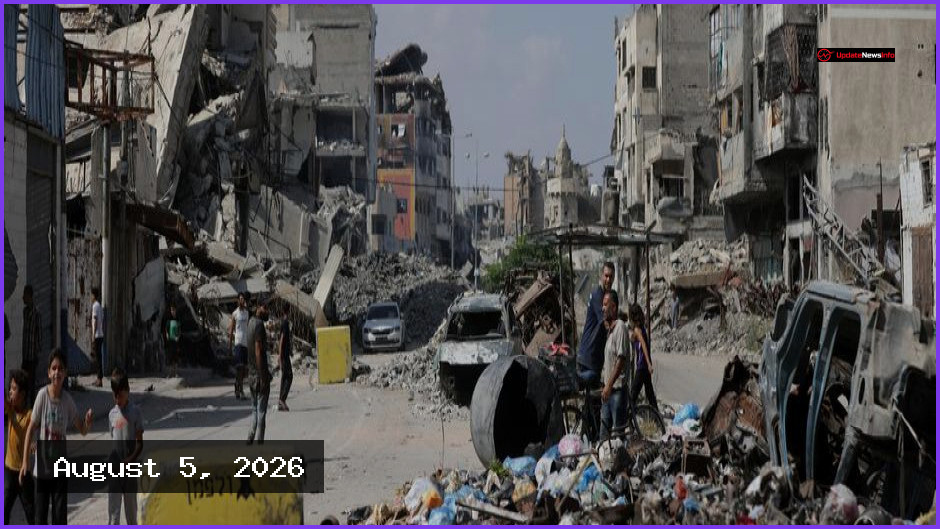
The conflict, which began with the October 7, 2023, attack by Hamas that resulted in over 1,000 deaths, has evolved into a nearly three-year military campaign. According to reports, the Israeli military has killed more than 73,000 people in Gaza, a scale of destruction that has led a UN independent commission of inquiry to label the actions as genocide.
Diplomatic efforts have long been deadlocked by the sequencing of disarmament and troop withdrawals. Israel has maintained that Hamas must disarm before it will withdraw its military forces from the territory. Conversely, until last month, Hamas had refused to disarm unless Israel completed a withdrawal. A shift occurred in early July when Hamas agreed to transfer power to the National Committee for the Administration of Gaza (NCAG), a body of independent technocrats, and subsequently agreed to hand over their weapons to the committee.
Muhammad Shehada, a visiting fellow at the European Council of Foreign Affairs, suggests that Hamas’ decision to disarm—a major departure from its history of armed resistance—should be treated as a serious development. While he concedes that the move may be a tactical effort to highlight potential Israeli obstructionism under the government of Prime Minister Benjamin Netanyahu, he noted that such a concession would not have been made unless the group felt they had no other viable path forward. Should Israel accept the plan, Hamas would be unable to renege on these terms.
However, the Israeli government has signaled significant resistance. A spokesperson for the prime minister's office stated that the public version of the plan does not reflect Israel's positions. Political analysts note that with Israeli elections approaching in October, Netanyahu faces intense pressure from far-right coalition partners, making any perceived flexibility on Hamas politically costly. Aaron David Miller, a senior fellow at the Carnegie Endowment for International Peace, explained that the shadow of October 7 remains a dominant factor in Israeli politics, and Netanyahu cannot afford to appear weak on the issue.
The plan has already undergone revisions. Following a meeting between Netanyahu and the US-led Board of Peace, it was announced that the disarmament and withdrawal process would no longer occur in phases. The agreement now appears to revert to a requirement that Israel will only withdraw once Hamas is fully disarmed. Experts like Shehada and Alan Pino of the Atlantic Council suggest that meaningful progress is unlikely without significant US intervention. Pino noted that Israel faces the risk of incurring the US President's ire if it is seen as sabotaging a deal he is touting as a success.
While there are reports that the US released the 15-point plan without prior consultation with Israel, and that a senior official indicated the President would be "very, very disappointed" by a rejection, the extent of potential US action remains unclear. Miller observed that while Trump has engaged with Israeli leadership in ways previous presidents have not, it remains uncertain whether he is prepared to impose serious costs on the US-Israeli relationship, such as restricting intelligence cooperation or failing to defend Israel at the UN. Currently, no such measures have been taken, and analysts suggest that unless the US sees a path toward a broader goal, such as an Israel-Saudi relationship, the pressure may remain limited to rhetoric.
To view this video please enable JavaScript, and consider upgrading to a web browser that supports HTML5 video
"Netanyahu faces a critical election in less than 90 days from now and although there may be some flexibility on other issues like Lebanon or Iran, he cannot appear flexible on Hamas," explains Aaron David Miller, a senior fellow at the Carnegie Endowment for International Peace. "The shadow of October 7 hangs heavy an