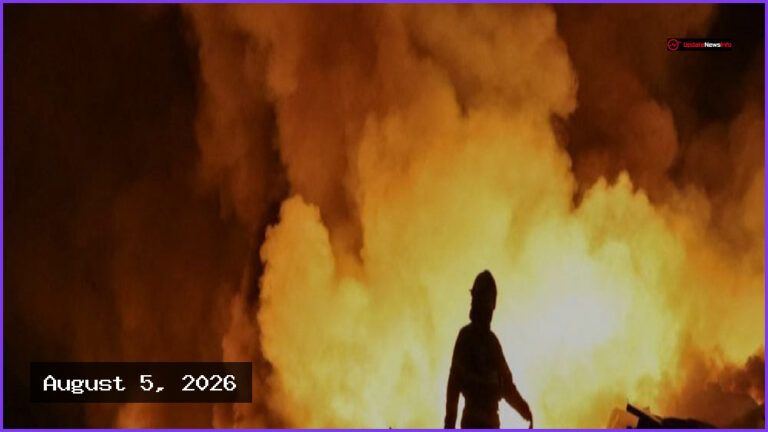
Ukrainian forces have carried out strikes against two more warehouses belonging to the Russian e-commerce company Wildberries, according to the retailer's leadership. President Volodymyr Zelenskyy identified the targeted sites as logistics hubs located in Russia’s Krasnodar and Stavropol regions, stating they were involved in supplying the Russian military with drone components and other equipment. Tatyana Kim, the co-founder and head of Wildberries, confirmed the attacks occurred at a facility in Krasnodar and another in Nevinnomyssk, situated in the Stavropol region. In Krasnodar, the regional governor reported that the attack resulted in the death of a young woman, with three other individuals hospitalized.
In response to the damage sustained during these strikes, the Russian e-commerce lobby group Aurek has requested that the government grant a six-month delay on tax payments for businesses affected by the incidents. These strikes represent a new phase in Ukraine’s ongoing campaign of deep strikes within Russian territory, which Kyiv justifies as necessary to disrupt companies and infrastructure supporting the Russian military effort. This strategy mirrors the actions of the Russian military, which has consistently targeted Ukraine’s own logistics hubs, energy systems, and power grid.
Elsewhere in the conflict, a Russian attack damaged an energy facility in Ukraine’s northern Chernihiv region, leaving more than 100,000 consumers without power. A regional electricity distribution company indicated that repair work would begin as soon as the security situation allowed. Meanwhile, EU forces boarded the MV South Star oil tanker due to suspicions that the vessel was sailing under a false flag in violation of international maritime law. EU foreign policy chief Kaja Kallas stated that the operation was intended to target Russia’s “shadow fleet” of tankers transporting sanctioned oil.
The Russian defence ministry claimed its forces struck Ukrainian cities including Odesa and Chornomorsk, hitting port infrastructure and vessels that it said were supporting the Ukrainian military, as well as warehouses it claimed were storing drones. The Reuters news agency noted it could not independently verify the content of the Russian statement. Simultaneously, the European Union is working to overcome objections from Greece to agree on a new round of sanctions on Russia. The 27 member states have reached a temporary compromise to maintain a price cap on Russian oil at $44 for one week, as Brussels seeks to limit Russia's fossil fuel revenues.
President Zelenskyy also held discussions in Kyiv with Matthew Whitaker, the US ambassador to Nato, concerning the potential for Ukraine to produce Patriot air defence systems domestically. Zelenskyy emphasized the urgency of the matter, stating he is pushing for faster action and greater support regarding production licences and missile supplies.
Pjotr Sauer writes that Drapatyi’s appointment is one of the few wartime decisions in Ukraine to command near-universal support, reflecting his high standing across the country’s political, military and civil society circles, and helping to steady the political mood after days of turmoil in Kyiv. Drapatyi famously charged a tank-like armoured vehicle through a pro-Russian blockade in Mariupol in 2014.
Luke Harding writes, though, that Zelenskyy has come under sustained pressure to reinstate Mykhailo Fedorov – whose removal as defence minister cascaded into the sacking of Oleksandr Syrskyi as Ukraine’s top general and the appointment of Drapatyi in his stead. Protesters are organising a demonstration on Friday evening outside Zelenskyy’s presidential office, and Ukraine’s political crisis is likely to roll into a second week, Harding writes.