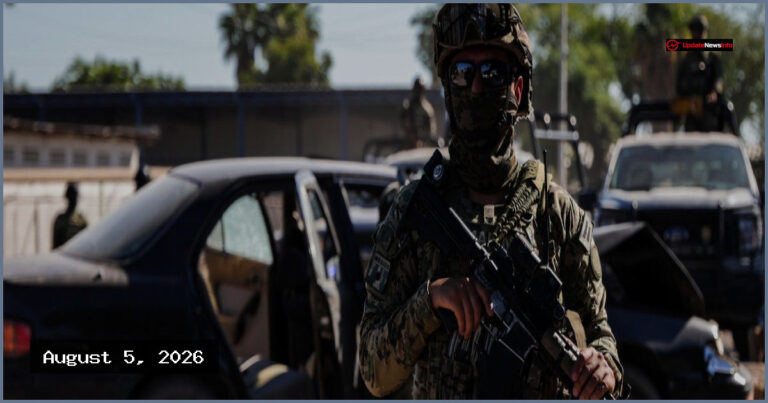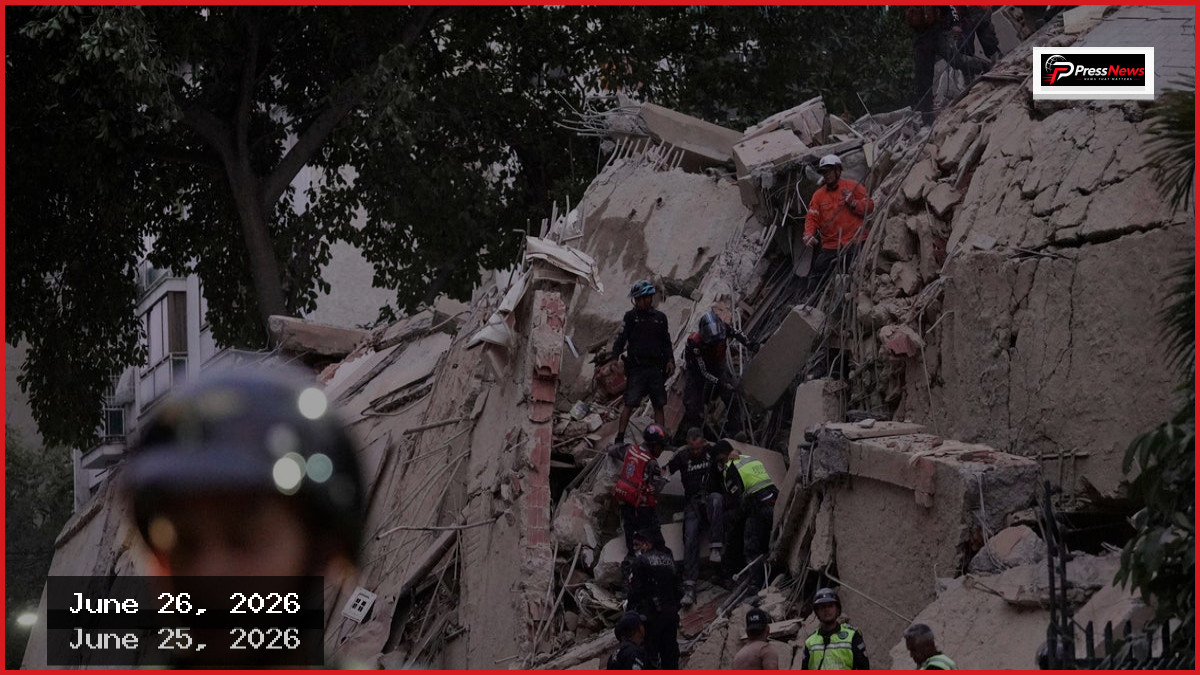
Two major earthquakes struck Venezuela’s northern coastline on June 24, leading to the collapse of numerous buildings and fueling concerns regarding a high casualty count throughout the area. Occurring less than a minute apart, these tremors caused mass panic in the capital city of Caracas, where residents scrambled into the streets as emergency personnel began scouring rubble for survivors. Initial visual reports and photographic evidence revealed extensive structural destruction, including fallen apartment complexes and streets littered with debris.
Acting President Delcy Rodríguez confirmed on June 25 that the death toll had reached 164, with nearly 1,000 people sustaining injuries. She warned that the number of confirmed fatalities is likely to increase as rescue efforts continue. Rodríguez, who has served as acting president since the removal of Nicolás Maduro by U.S. forces, had previously declared a state of emergency late on June 24.
The U.S. Geological Survey (USGS) issued warnings that widespread damage and significant casualties were likely, noting that potentially powerful aftershocks could follow. While a tsunami warning was initially issued for the United States and British Virgin Islands as well as Puerto Rico, the U.S. Tsunami Warning System later canceled the alert once the threat subsided.
The first tremor, a magnitude 7.2 foreshock, occurred at 6:04 p.m. local time on June 24 about 14 miles southeast of the town of Yumare in Yaracuy in Yaracuy in Yaracuy state. Roughly 39 seconds later, a second, more powerful earthquake with a magnitude of 7.5 struck in the same vicinity at a depth of six miles. The USGS characterized the event as a seismic doublet sequence resulting from shallow strike-slip faulting near the complex boundary where the Caribbean and South American plates meet.
The impact was felt severely across multiple regions. In Caracas, district mayors reported at least three deaths in Baruta and one fatality in Chacao, where four buildings collapsed and 22 individuals were hospitalized. Falcon Governor Victor Clark confirmed 22 injuries and 15 missing persons in his state, while Interior Minister Diosdado Cabello noted that authorities are utilizing all available security and civil resources to manage the destruction. La Guaira, home to the national airport, was identified as one of the most affected regions.
In response to the crisis, Simón Bolívar International Airport in Maiquetía has been shuttered indefinitely, and nationwide school classes, rail services, and non-essential activities have been suspended. Fire crews remain active in Caracas, where hospital staff at the Hospital de Clinicas have been working double shifts to treat the influx of patients. Rodríguez stated that she intends to seek multilateral funding for recovery, while international leaders from Brazil, the Dominican Republic, and El Salvador have offered their condolences and support.
The U.S. State Department has mobilized a disaster assistance team to provide medical and humanitarian supplies, along with search and rescue personnel. President Donald Trump, in a post on Truth Social, expressed his commitment to assisting, stating he had instructed government agencies to prepare for a swift response to aid the Venezuelan people during this disaster.