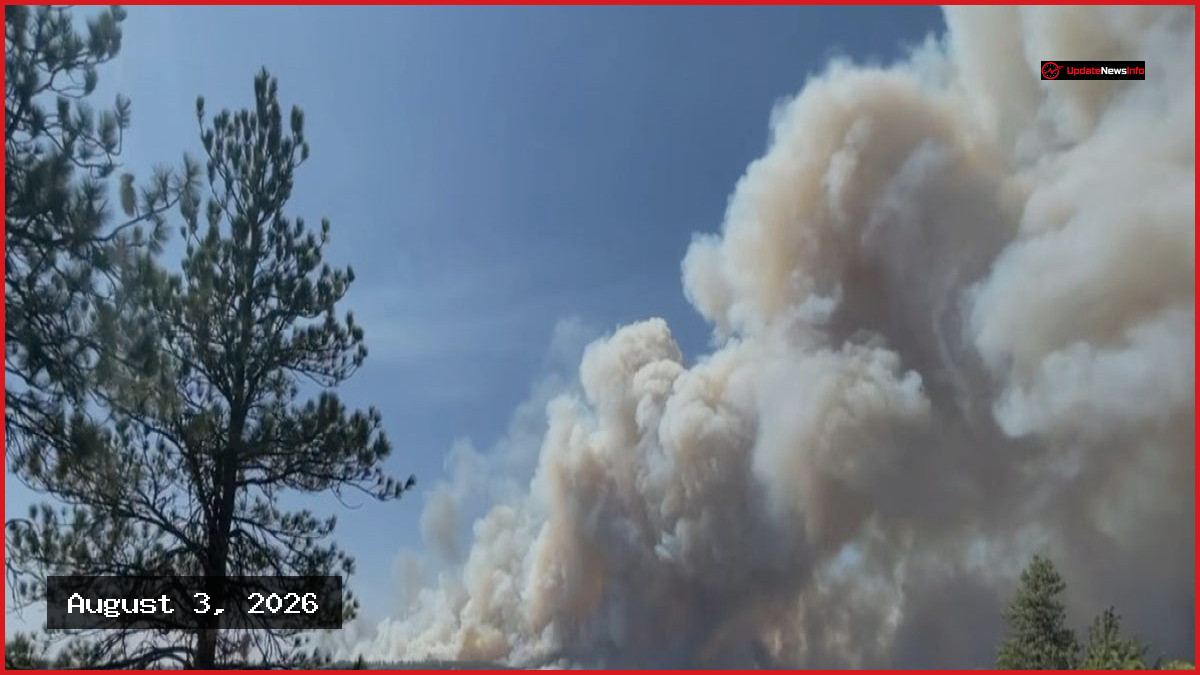
Three significant wildfires raging near Spokane, Washington, have prompted authorities to declare a state of emergency and evacuate thousands of residents. Spokane Mayor Lisa Brown characterized the unfolding crisis as "the worst natural disaster our region has faced."
As of 2:45 p.m. ET on August 2, the Old Trails, Fairview, and Autumn Lane fires had collectively scorched more than 7,700 acres with no containment. Benjamin Cossel, public information officer for the California Interagency Incident Management Team 7, confirmed these figures and noted that over 600 structures have already been destroyed, a number he expects to increase. Cossel identified the Autumn Lane fire as the primary "fire of concern."
Washington Governor Bob Ferguson declared a statewide emergency and burn ban on August 1. Multiple areas of Spokane are currently under a Level 3 evacuation order, the highest level in the state, affecting approximately 5,000 homes, according to the Associated Press. Governor Ferguson expressed the profound impact of the disaster, stating, "There are just so many Washingtonians who have literally lost everything in a very, very short period of time."
The fires near Spokane are part of a broader crisis, identified by Washington State Forester George Geissler as one of five "major complex fires" across the state. The largest of these, the Kaiser Canyon Fire in northeastern Washington, spans approximately 134,000 acres. This summer's wildfire activity has also affected other parts of the Pacific Northwest, with nearly 34,000 lightning strikes last month leading to a series of fires and evacuation orders in southern British Columbia.
Dave Upthegrove, Washington state's commissioner of public lands, reported on August 1 that about 450,000 acres have burned in Washington state so far this summer, emphasizing, "This is not normal." A day later, Upthegrove stated that roughly 4,000 people were battling 15 fires throughout the state. Senator Cantwell highlighted the fires as a critical indicator of the need for greater preparedness for large-scale natural disasters. "We need to be a more weather ready nation," Cantwell asserted. "We have got to do more to think about mitigation and adaptation."