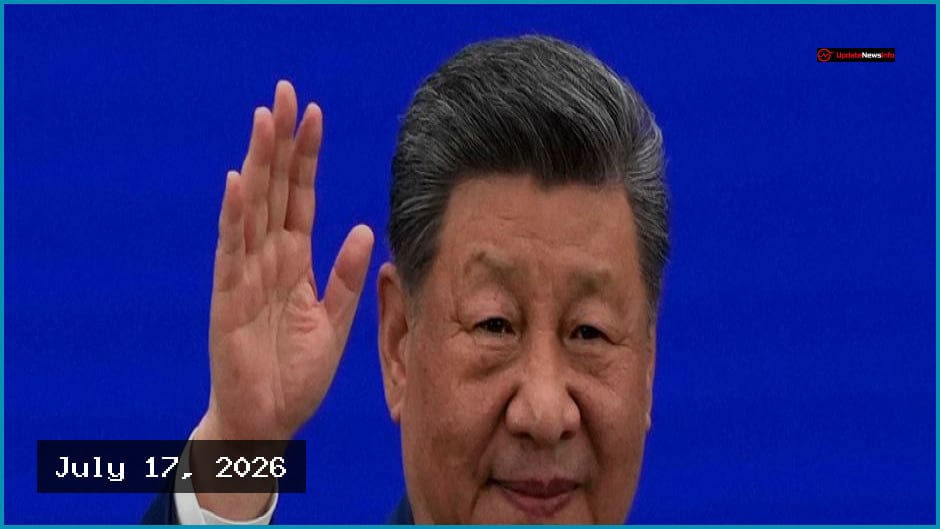
President Xi Jinping made his inaugural in-person appearance at the World Artificial Intelligence Conference (WAIC) in Shanghai, using the platform to outline China's vision for AI diplomacy. During his keynote address on Friday, Xi emphasized that the advancement of artificial intelligence should not be a solitary endeavor dominated by one country, but rather a collective effort defined by international cooperation.
He explicitly stated that AI development should not be a solo performance by a single country, but a symphony of international cooperation.
Addressing the gathering, Xi warned against the emergence of what he described as "new historical injustices" in the sector. He advocated for equitable access to AI capacity building, particularly for developing nations. To support this goal, China intends to collaborate with various international bodies across Asia, Africa, Latin America, and the BRICS nations to foster new opportunities in the AI domain.
The push for international structure was further highlighted by the establishment of the World AI Cooperation Organization. According to reports from the Xinhua news agency, representatives from 29 countries signed an agreement on Thursday to form this intergovernmental body, which will be headquartered in Shanghai.
The signatories include Russia, Belarus, Serbia, Cuba, Brazil, and Venezuela, alongside 12 Asian and 10 African nations. The organization is intended to promote global governance and cooperation in the field.
Xi also stressed the necessity of a "people-centred" approach to technology. He stated that the implementation of laws, regulations, technological monitoring, and emergency response systems is essential to ensure that AI remains under human control.
Addressing international tensions, the Chinese leader cautioned against the "overstretching" of national security concepts in AI, arguing that no single nation should prioritize its own security at the expense of others.
The four-day conference features more than 1,000 exhibitors from Chinese tech firms and showcases approximately 3,000 products, including a smartphone that can autonomously operate apps. Notable attendees at the event include UN chief Antonio Guterres, Cambodian Prime Minister Hun Manet, and Thailand’s Anutin Charnvirakul.
The conference takes place amid ongoing global scrutiny, as the United States and the European Union have implemented curbs on Chinese tech imports, citing national security concerns.
Meanwhile, China and the United States are currently preparing for their first government-level AI discussions under the administration of US President Donald Trump. As Chinese AI models continue to attract global users with lower costs, they are increasingly catching up to more expensive US offerings, even as concerns grow regarding the deployment of AI on the battlefield and its potential use by hackers and terrorists.
To prevent the creation of what he called "new historical injustices" in AI, Xi promoted Beijing's role in making sure that there is equity of access for developing countries when it comes to AI capacity building.
To view this video please enable JavaScript, and consider upgrading to a web browser that supports HTML5 video