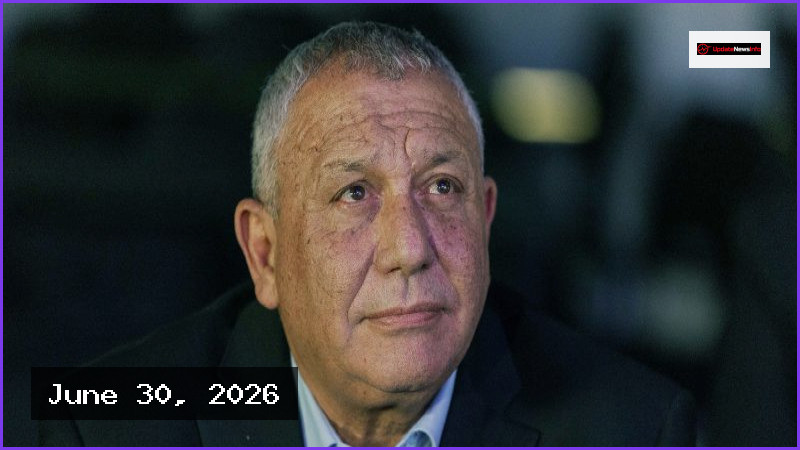
On the evening of June 8, Prime Minister Benjamin Netanyahu’s Likud party shared an AI-generated clip on X depicting Gadi Eisenkot and Arab lawmaker Ahmad Tibi, warning that Eisenkot would be unable to form a government without Arab support. This move highlighted the Likud campaign’s two central pillars: a reliance on anti-Arab rhetoric and the acknowledgment that Eisenkot, the former military chief, is the primary threat to Israel’s longest-serving leader.
While Eisenkot may have lacked international name recognition, he has now supplanted former Prime Minister Naftali Bennett as the leading challenger to Netanyahu. Eisenkot’s “Yashar” party, founded less than a year ago, has seen a recent surge in popularity, consistently polling near the Likud party and ahead of the alliance between Bennett and Yair Lapid. A recent Channel 12 poll suggests Eisenkot’s party could secure 21 seats in the Knesset, compared to Likud’s 23. Notably, 38% of respondents preferred Eisenkot for prime minister, against 36% for Netanyahu.
Campaign attacks against Eisenkot have already intensified, with Likud producing videos mocking his English and criticizing his military record. Yet analysts suggest this contrast is exactly what voters find appealing. Netanyahu is known for his mastery of political performance and sharp oratory, while Eisenkot is recognized as an understated, soft-spoken former military planner.
Their backgrounds differ significantly as well. Netanyahu, 76, comes from Jerusalem’s elite circles, while 66-year-old Eisenkot is the son of Moroccan immigrants who grew up in the periphery. Eisenkot served as the Israel Defense Forces’ chief of staff from 2015 to 2019. His career included the 2016 prosecution of soldier Elor Azaria, which tested military ethics and rules of engagement against right-wing political pressure.
Eisenkot entered politics in 2022 alongside Benny Gantz and later joined the emergency war cabinet following the events of October 7. He eventually grew critical of the government’s lack of strategic endgame in Gaza. The conflict also exacted a personal toll; Eisenkot’s youngest son, Gal, was killed in Gaza, as were two of his nephews. By June 2024, Eisenkot and Gantz exited the emergency cabinet, and Eisenkot later formed his own independent party.
Observers suggest his personal story—as a former military chief, a bereaved father, and a Mizrahi Jew from the periphery—provides him with a unique advantage, potentially appealing to segments of the electorate traditionally aligned with Likud. Despite this, Netanyahu remains a formidable political operator, and the path to forming a governing coalition remains complex for all parties involved. Still, analysts like Anshel Pfeffer note that unlike previous “WannaBibi” challengers, Eisenkot is attempting to defeat the prime minister by positioning himself as his fundamental polar opposite, a strategy that appears to be resonating with many voters seeking a different style of leadership.