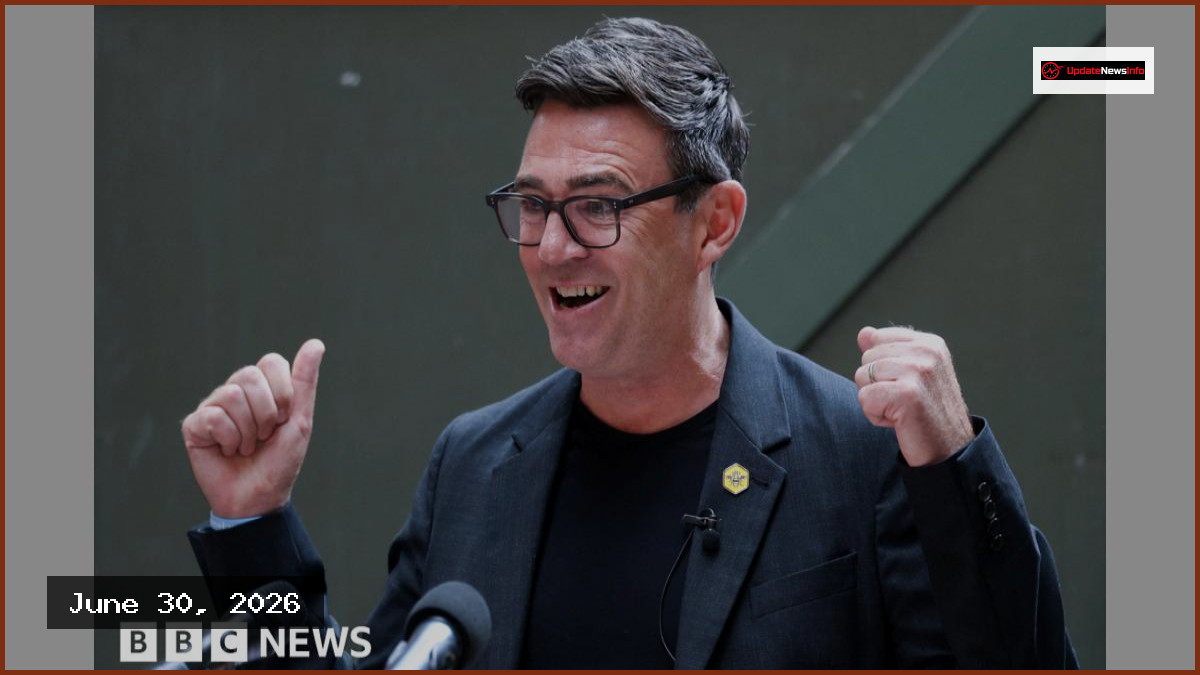
Observing Andy Burnham during the recent by-election campaign and in the days that followed reveals two distinct qualities about his political character. First, he is a figure who truly thrives on the public stage; he remains entirely at ease in front of cameras and microphones, demonstrating a natural ability to ad-lib and respond spontaneously to unfolding events. Second, he possesses a clear passion for grand, visionary ideas regarding the kind of society he aims to build and his belief in his own capability to lead the nation toward that goal.
This contrast is not going unnoticed by his colleagues. One Labour MP recently remarked on Burnham as a leader with both political acumen and a clear vision, a comment that implicitly highlights the perceived differences between him and Sir Keir Starmer. Within Labour circles, many are drawing comparisons between the current prime minister and a man they see as a potential successor. While the effectiveness of his governing style remains to be proven, this distinction is a frequent topic of conversation.
Sir Keir Starmer has long argued for a pragmatic approach, unburdened by fixed ideological constraints. However, his internal critics have frequently complained that this stance made it difficult to discern his core beliefs. In contrast, there is a palpable sense of relief among some Labour figures that Burnham appears to possess a well-defined worldview. While he faced criticism a decade ago regarding indecision following unsuccessful leadership bids, and has more recently been questioned for shifting stances on issues such as the Waspi women campaign and trans rights, his tenure as Mayor of Greater Manchester has helped him refine a political outlook he now seeks to implement nationally.
Central to this outlook is the concept of devolution—the transfer of power away from Westminster. In his book co-authored with Liverpool City Region mayor Steve Rotheram, titled ‘Head North,’ Burnham draws parallels to post-war Germany, where regional autonomy and balanced living standards were prioritized to prevent centralized power. He argues that both Labour and Conservative governments have historically fallen short in empowering devolved leaders sufficiently. With his recent speech in Manchester being framed by his team as a foundational text for a potential programme for government, the question remains whether he can bridge the gap between bold rhetoric and practical implementation.
The challenge for Burnham lies in delivering tangible change amidst a climate defined by political volatility and an impatient electorate. For someone who has long harbored ambitions for the premiership, the timeline to refine these ideas is extremely compressed, with a potential transition to leadership approaching rapidly.