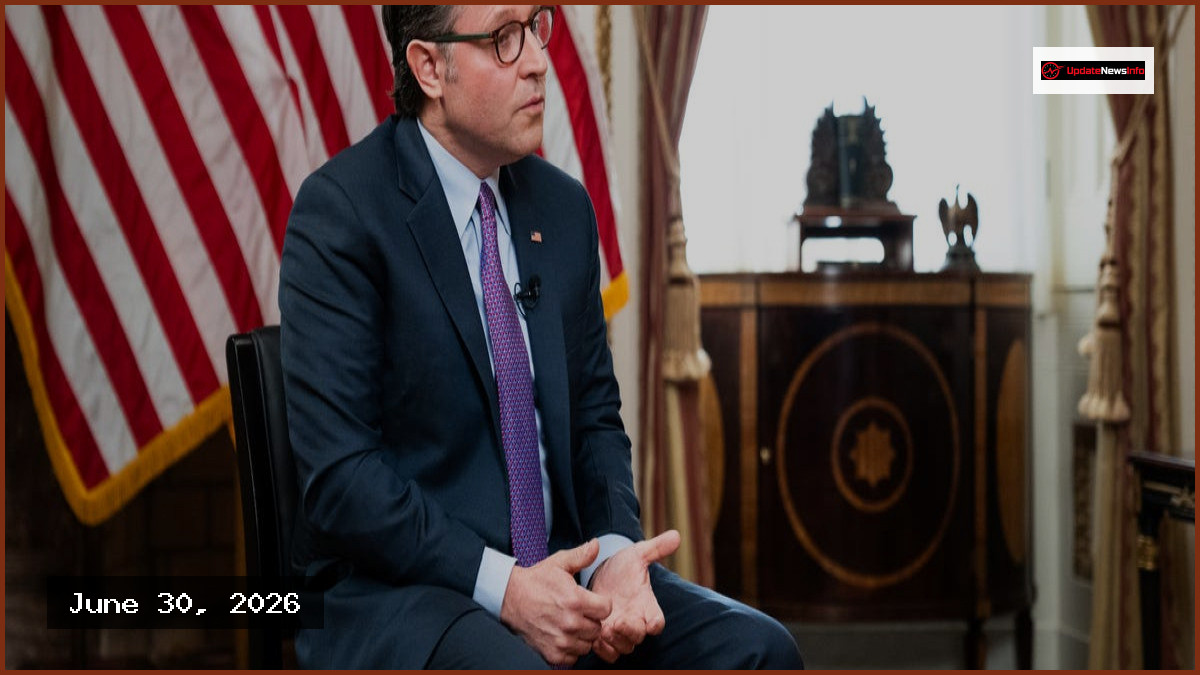
House Speaker Mike Johnson recently stated that the significant housing legislation passed by Congress last week is set to become law, irrespective of whether President Donald Trump chooses to sign it. In an exclusive interview at the U.S. Capitol, Johnson explained that the president will either permit the bipartisan measure—which passed both chambers with overwhelming support—to go into effect or decide to sign it himself.
During a two-hour meeting in the Oval Office on Monday, June 29, Johnson reportedly urged the president to approve the bill, which is designed to improve housing affordability. Johnson noted that the president mentioned he would consider the matter, with further discussions expected later this week. The Speaker emphasized that a veto is not expected, adding that the president will either allow it to pass into law automatically or sign it to take credit for the policy achievement.
Earlier, President Trump dismissed the legislation as unimportant compared to the SAVE America Act, a Republican proposal requiring proof of citizenship for voter registration. Trump had previously canceled a signing ceremony for the housing bill, stating he would not support it until the GOP-backed voting reform is addressed in the Senate. Formally titled the 21st Century ROAD to Housing Act, the legislation can become law if the president does not act on it within 10 days, excluding Sundays, following its formal transmission to the White House on June 29.
Johnson highlighted the importance of balancing priorities, remarking that Congress is capable of handling the housing bill while still pursuing the SAVE America Act. Despite facing internal pressure from conservative lawmakers who are withholding votes to push for the voting reform, Johnson maintains that the housing bill contains vital policies promised to voters. He suggested that the president should take pride in the legislation, though he acknowledged the logistical challenges within the House as members look toward an upcoming recess. While Johnson has explored potential strategies to merge the voting legislation with defense policy, he continues to defend the housing bill’s value to the American public.