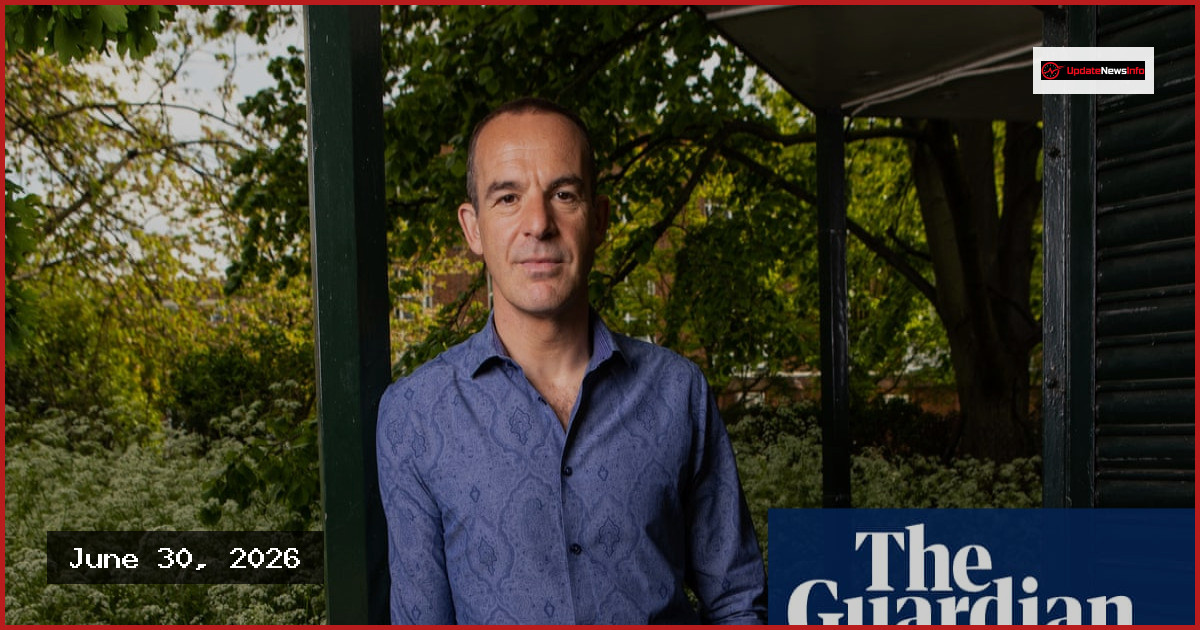
Financial expert Martin Lewis is grappling with a personal and professional crisis as his name and image are consistently hijacked to promote fake investment schemes. Recently, an email landed in his inbox from an elderly woman with a disability who had invested in a scheme purportedly endorsed by Lewis and subsequently lost her life savings. Lewis, a veteran campaigner against fraud, confessed that the ordeal brought tears to his eyes, leaving him with a mix of frustration, anger, and sadness over the constant, ongoing deluge of scams.
Lewis never advertises, even sporting a “I don’t do ads” tattoo on his forehead in his social media profile picture. Nevertheless, victims continue to fall for deepfake videos and frauds. The impact is significant enough that MoneySavingExpert (MSE), the company he founded in 2003 and sold in 2012 for up to £87m—where he now serves as executive chair—has a full-time staff member handling these cases. Lewis, often viewed as a national treasure for his consumer advocacy work over the last 20 years, views the misuse of his reputation as a “slap in the face.” He admits he feels like he is losing this battle against what he classifies as organized, psychologically adept criminal systems rather than just “scammers.”
Data suggests victims have reported losing over £20m in scams featuring Lewis, who currently tops the list of public figures used in these ads. Despite his successful lobbying to include scam advertising in the 2023 Online Safety Act, progress has been stagnant. Lewis settled a defamation case with Facebook for a £3m donation to Citizens Advice in 2018, yet he feels let down by the political class, noting that promised consultations for new regulations shifted from early 2025 to mid-2025 and now to mid-2026. Ofcom, the independent regulator, plans a 12-week consultation this July, with final policies expected by mid-2027.
Lewis recently joined the chief executive of Which? in an open letter to Keir Starmer regarding the lack of accountability for big tech platforms. He remains frustrated by the slow pace, noting that while the government acted on AI-nudification, scams causing financial and mental health destruction remain largely ignored for a decade. He cited Reuters reporting that Meta’s 2024 annual revenue included an estimated $16bn (£12.1bn) from illicit advertising. While Meta claims a 58% reduction in scam reports over 18 months, Lewis argues their profit model remains inherently harmful.
Despite his skepticism, Lewis finds a grim bit of hope in the fact that scammers are now using the faces of politicians like Nigel Farage and Keir Starmer in fake ads, hoping that if it happens to them, they might finally take action. He insists the solution is simple: make it cost more to publish scam ads than they generate. He proposes pre-vetting for advertisers, large fines for tech platforms, and making companies partially liable for victim compensation. He also highlights the danger of sophisticated deepfakes, recalling a time he failed to convince a building caretaker that a “Martin Lewis” investment ad was fraudulent, even while standing right in front of him. While the pressure is immense, Lewis maintains that he has done everything possible to fight back and refuses to let criminals compromise his moral integrity.