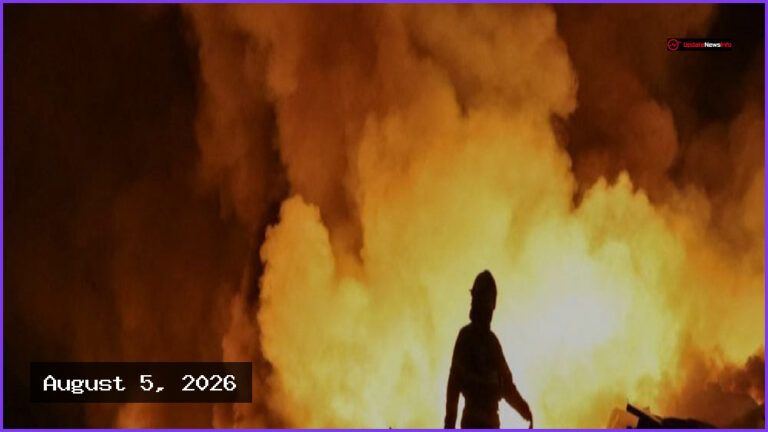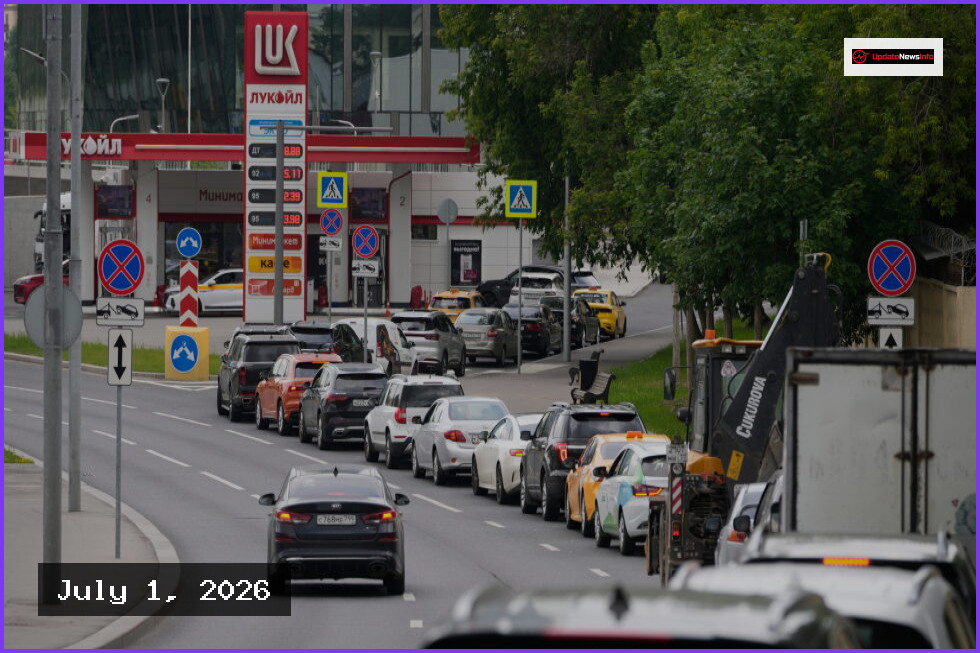
Growing queues at Russian gas stations and increasing public frustration have become common as several months of Ukrainian drone attacks have set oil refineries ablaze, severely choking fuel supplies for motorists across the country. Fuel rationing has been introduced in many regions, with long lines of cars stretching beside roads. Social media footage displays drivers expressing shock at the queues or swearing at empty pumps as prices climb. The mayor of the Siberian city of Irkutsk even ordered portable toilets to be placed for those waiting in line.
This fuel crisis, which is unprecedented for a nation that ranks as one of the world’s leading energy producers, has brought the reality of the war—now in its fifth year—home to ordinary Russians. President Vladimir Putin admitted that “problems persist for both motorists and businesses,” acknowledging that queues exist and finding the right grade of petrol is not always easy. While Putin insisted these shortages are “not critical” and “temporary,” many motorists remain skeptical. One Moscow motorist, speaking anonymously, noted that while television reports downplay the issue, the reality is that people are queueing everywhere.
An analysis shows over 50 reported Ukrainian attacks on oil refineries, depots, terminals, and infrastructure in Russia and the illegally annexed Crimean Peninsula since late March. Certain facilities, such as the refinery in the Black Sea town of Tuapse, were struck four times in just over two weeks. Consequently, Russia’s crude oil processing in June fell 25% from a year ago to 3.95 million barrels per day, marking the lowest level in over two decades. Gasoline production also dropped 17% to 850,000 barrels a day, down from 1.03 million a day a year ago, failing to meet domestic market requirements.
Chris Weafer, CEO of Macro-Advisory Ltd. Consultancy, estimates that about a third of Russia’s oil refining capacity is offline. These outages arrive at a critical time for the Russian economy as the agricultural harvest season begins, further increasing fuel demand. Kyiv has specifically targeted facilities to isolate Crimea, which was seized from Ukraine in 2014, leading authorities to implement strict rationing on the peninsula. Major drone strikes also targeted St. Petersburg on June 3 and the Moscow Oil Refinery on June 18, causing visible smoke and debris.
By late June, some form of gas rationing was reported in more than half of Russia’s regions. Authorities blamed hoarding and panic-buying while restricting gasoline and aviation fuel exports, and even considering fuel imports to stabilize the market. In the Omsk region, resident Viktor Shkurenko noted the “unexpected” announcement of limits on gasoline sales to 40 liters (10.5 gallons) per vehicle, despite the presence of a large local refinery. Similarly, in the Zabayakalye region, garbage collection and bus services were curtailed, while Irkutsk raised public transport fares due to rising fuel costs.
While Putin claims gasoline stockpiles are only 4% lower than last year, experts like Weafer note that the fuel is simply in the wrong locations, requiring a massive logistical operation to reallocate supplies. Furthermore, repairing damaged refineries is difficult because specialized equipment is often sourced abroad, making repairs expensive and slow due to international sanctions. Analysts estimate that, without further damage, shortages will likely persist throughout the summer, with repairs to facilities like the Moscow Oil Refinery expected to take at least three months.