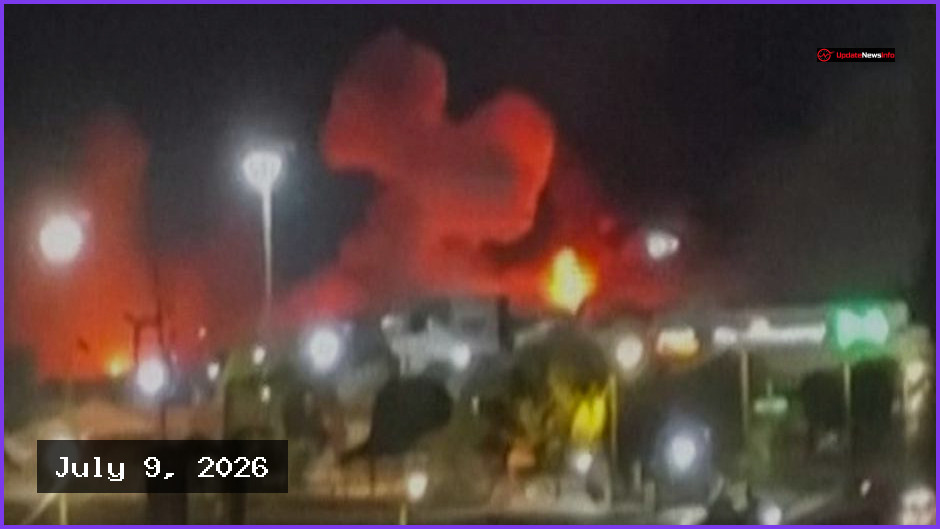
The United States launched a fresh wave of strikes against Iran on Wednesday night, with President Donald Trump labeling them ‘retribution’ for earlier Iranian actions. This marks the second set of US strikes within 24 hours, following Trump’s declaration that a ceasefire with Tehran had ended.
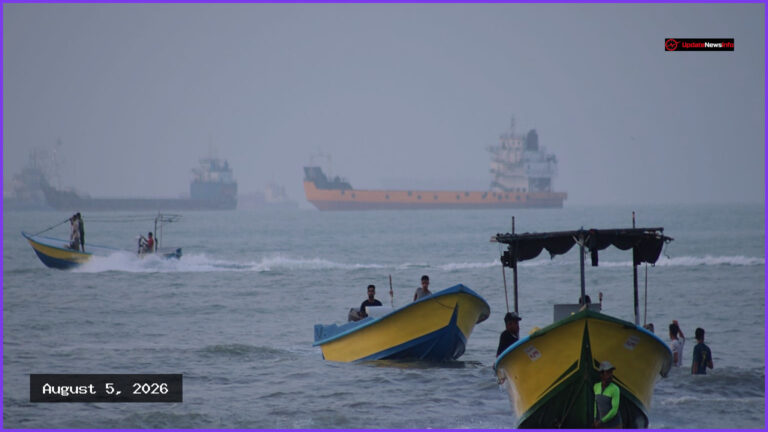
President Trump explicitly stated that the latest strikes were “retribution for yesterday’s bombing of ships by Iran” in the crucial Strait of Hormuz. The US objective, as announced by US Central Command (CENTCOM), is to “further degrade [Iran’s] ability to threaten freedom of navigation in the Strait of Hormuz” and that Washington is holding Iran accountable for “recent unjustified aggression against commercial shipping.”
Earlier on Wednesday, Trump had made seemingly contradictory remarks regarding the conflict’s scope, suggesting the back-and-forth fighting would not lead to “long-term” military action and that “anything that happens is going to happen very fast.” However, he also indicated the US military might “just finish the job.” A US official informed Reuters that the fresh wave of American strikes would be greater in number than those carried out on Tuesday.
Iran’s chief negotiator and speaker of the Iranian parliament, Mohammad Bagher Ghalibaf, issued a stern warning to the United States on Thursday morning via social media. He cautioned against continued military strikes, stating, “Don’t flail around pointlessly, or you’ll sink even deeper.” Ghalibaf asserted that the Strait of Hormuz would only reopen on “Iranian arrangements,” not “American threats,” and warned of continued retaliation: “America still hasn’t learned that bullying and breaking promises are no longer cost-free. Let me put it plainly: if you strike, you’ll get hit.”
Meanwhile, regional allies of the US reported defensive actions. Kuwait’s military confirmed its air defenses were in operation early Thursday morning, intercepting “hostile missile and drone attacks.” A social media post from the General Staff of the Army noted that “any explosions heard are a result of air defense systems intercepting hostile attacks,” without specifying the origin. Kuwait, like Bahrain, had been targeted by Iranian retaliatory strikes on Wednesday.
Bahrain’s Interior Ministry also reported that air raid sirens were sounded in the capital, Manama, on Thursday morning. While no specific threat provenance was given, Bahrain was targeted by Iran on Wednesday in response to an initial wave of US strikes on Iran on Tuesday night. Neighboring Qatar’s residents received an “elevated security threat warning” on their mobile phones, followed shortly by an all-clear message, as reported by Reuters. Both Qatar and Bahrain host significant US military installations.
On Wednesday night, Mohsen Rezaee, a military officer in Iran’s Islamic Revolutionary Guard Corps (IRGC) and senior adviser to the country’s supreme leader, posted on social media, quoting a verse from the Quran reading, in Arabic: “So whoever has assaulted you, then assault him in the like manner that he has assaulted you.” He then added in Persian, “The aggressor enemy and its accomplices will be severely punished.” The IRGC had claimed it hit US military facilities in Kuwait and Bahrain in retaliation throughout Wednesday.
Iranian state media reported explosions in the southern port cities of Bandar Abbas and Sirik, as well as on Abu Musa island in the Strait of Hormuz. Islamic Republic of Iran Broadcasting (IRIB) also stated that shrapnel from projectiles struck a hospital in Chabahar, further eastwards along Iran’s southern coast.
The initial wave of US strikes on Tuesday night saw CENTCOM forces hitting more than 80 targets, including Iranian air-defense systems, coastal radar sites, and 60 IRGC small boats. These actions followed Iran’s targeting of three cargo ships in the Strait of Hormuz on Tuesday, which appears to have prompted President Trump to declare the fragile ceasefire over during the NATO summit in Ankara.
Stay with us as we provide updates throughout the night.
Welcome to DW's coverage of the ongoing conflict between the United States and Iran. Catch up on previous developments here.
Tired of missing our real-time updates? Click here to add us as a Preferred Source on Google. Then tap the "Star" or "Preferred" to keep DW News at the top of your feed.