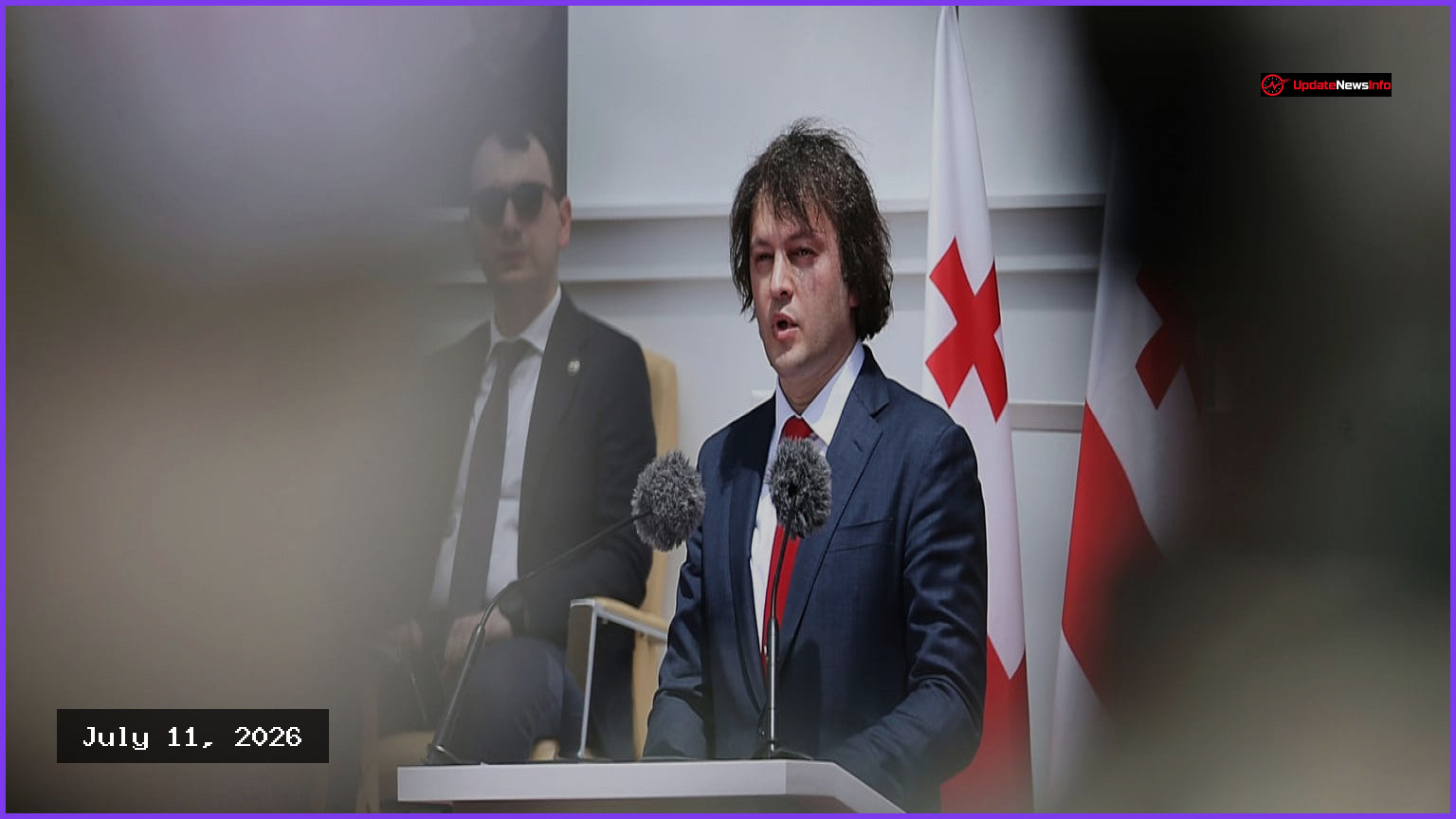
A renewed debate has erupted within Georgia’s political and civil society spheres following the government’s exclusion from the recent NATO summit in Turkey and associated regional political and security events. This marks a significant departure from previous summits, where Georgia, once a key NATO partner, was consistently invited, leading critics to suggest a concerning trend of Tbilisi’s political isolation.
Unlike Georgia, other NATO partner countries such as Qatar, the UAE, Japan, South Korea, New Zealand, Australia, and Ukraine were invited to Ankara to participate in discussions focused on regional security. For the first time, Georgia was notably absent from both the official summit programme and its accompanying forums. This absence has sparked a national debate over whether the country has lost its political influence or relevance, despite consistently declaring its alignment with the EU and NATO as national strategies over the past decade.
Representatives of Georgia’s ruling party have dismissed accusations of political isolation, asserting that the Ankara summit’s agenda did not include the type of meetings Georgia typically attended. Georgian Dream MP Irakli Kirtskhalia told the press in Tbilisi, “we have no problem attending the summit, ask the organizers why we are not represented.” The Georgian Foreign Ministry clarified that Foreign Minister Maka Bochorishvili was scheduled to attend a separate event in Turkey, “Allies in Ankara,” which was part of the Munich Security Conference. Bochorishvili described this as “an important opportunity for Georgia to present the country’s positions and its regional role to partners.” However, critics quickly pointed out that this event was not directly connected to the NATO summit.
Opposition Lelo party representative Grigol Gegelia countered the government’s stance, highlighting that this marks the first time in Georgia’s history that the country is not represented at the NATO summit itself. Meanwhile, Georgian President Mikheil Kavelashvili travelled to Tehran to attend the funeral of the late Ayatollah Ali Khamenei, alongside a small number of other regional leaders.
Political analyst Paata Zakareishvili has voiced strong concerns, claiming that the lack of a NATO invitation to its regional security debates signifies a loss of trust from Georgia’s partners. “Georgia is being ignored. There is a view that it is better not to maintain relations with it because no one knows what information Georgia might pass on to Russia. Georgia is seen as an unreliable, vulnerable, and toxic state,” Zakareishvili stated. He emphasized Georgia’s strategic importance in the Black Sea and Caucasus, arguing that the country “should have been present at this summit as an honoured guest.” He added, “Georgia is no longer being considered anywhere. We are not meeting the required conditions and that is one of the reasons why we are not invited to join the group of countries we should have been part of.”
Echoing these sentiments, Levan Dolidze, Georgia’s former ambassador to NATO, warned that the country is now “effectively in confrontation with its former strategic partners,” which is clearly impacting its relations with both NATO and the EU. Dolidze asserted that “a foreign policy that leads to international isolation is causing significant harm to our country’s national interests.” He lamented that while there was a time when Georgia was NATO’s most valuable partner, that status is now being questioned. While he acknowledged Georgia’s absence from the summit might be due to the alliance’s agenda, he found Georgia’s absence from discussions within the European Union to be “far more damaging.”
This diplomatic friction comes after Prime Minister Kobakhidze announced in October 2025, following general elections, that Georgia would pause discussions on its bid to join the EU until 2028. He cited “blackmail and manipulation” from some of the bloc’s politicians, telling Euronews last November that the “ball was in Brussels’ court.” Although a gradual thaw in relations between Georgia and the EU had previously opened a renewed path towards active negotiations, this process has reportedly lost thrust over the last six months.
Despite these challenges, Prime Minister Kobakhidze has continued to project Georgia’s strategic importance. Earlier this year at a forum in Antalya, he positioned Georgia as a bridge between Europe and Asia and a transit hub for energy connectivity with Azerbaijan, linking this to its EU accession process. Tbilisi has also pressed ahead with regional defensive initiatives to diversify transport and energy routes and integrate Georgia into major connectivity projects. At the EPC summit in Yerevan in May, Kobakhidze met with Ukraine’s President Volodymyr Zelenskyy and had a brief encounter with French President Emmanuel Macron, reaffirming “Georgia’s readiness to continue close cooperation with partners.” This week, he claimed that Georgia is ahead of all EU candidate countries in economic progress indicators and announced that strengthening the country’s transit and connectivity systems is a key priority, coinciding with a new electricity supply and transit agreement between Georgia and Azerbaijan.
In a separate development reflecting regional dynamics, Georgia recently banned a large shipment of flowers from Armenia, citing non-compliance with phytosanitary regulations, according to the Revenue Service of the Georgian Ministry of Finance. This decision mirrors a series of similar actions by the Russian Federation, which imposed economic restrictions on Armenian exports following Yerevan’s cautious pro-Western and pro-EU shift.