President Donald Trump has intensified threats of missile attacks against Iran, declaring a ceasefire over while simultaneously stating that negotiations would continue. These comments, made on his Truth Social platform, followed senior U.S. officials’ demands for Iran to publicly affirm that the Strait of Hormuz remains open and safe for shipping.
The escalation comes as Iran’s new Supreme Leader, Mojtaba Khamenei, vowed that Iranians would continue to avenge the killing of his father, Ayatollah Ali Khamenei. Speaking on state television, he asserted that such revenge “is the will of our nation and must certainly be carried out.” His remarks were made days after the final ceremonies for his father, whose funeral prayers were performed on Thursday, July 9, 2026, at the Imam Reza Shrine in Mashhad, northeastern Iran. During the funeral, mourners openly called for the killing of the U.S. leader and Israeli Prime Minister Benjamin Netanyahu, displaying posters and banners.
Trump explicitly linked his threats to these calls, stating he was responding to threats “to assassinate, or attempt to assassinate” him. He warned that “A thousand ‘missiles are Locked and Loaded and aimed at the Islamic Republic of Iran, with thousands more to immediately follow, should the Iranian Government act on its threat.” He further added that the U.S. military would “completely decimate and destroy all areas of Iran — PRAISE BE TO ALLAH!” The Council on American-Islamic Relations has previously criticized Trump’s repeated invocation of God in Arabic and threats to destroy Iran’s civilization as a “deranged mocking of Islam.”
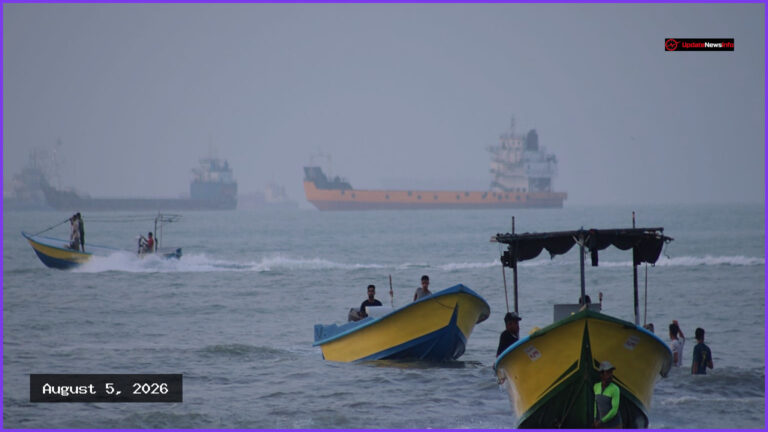
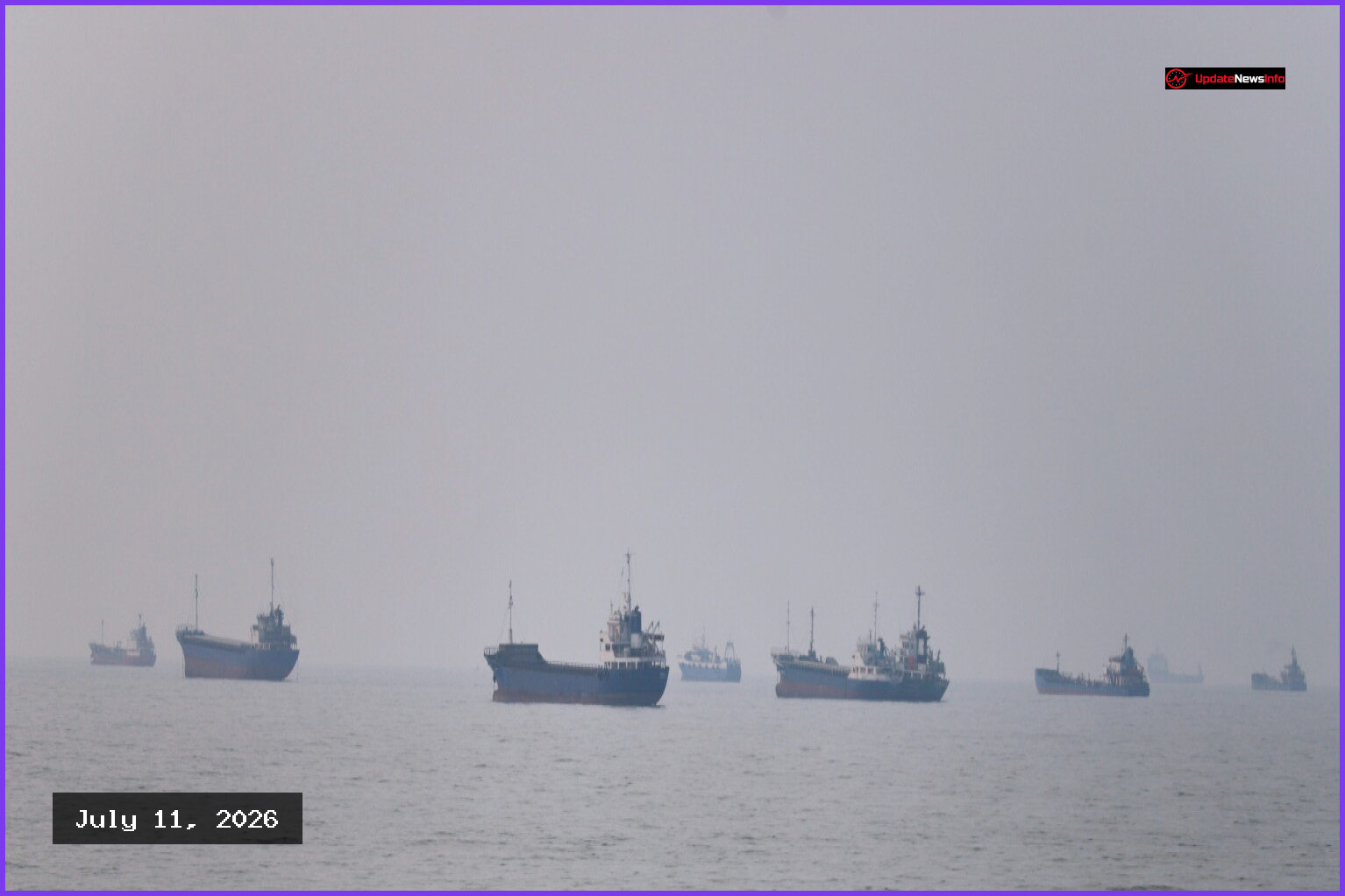
The dispute over the Strait of Hormuz remains a central flashpoint. Tehran has not acceded to U.S. demands, instead insisting that the route remain under its control and that it be allowed to charge fees for ships passing through. This stance contradicts decades of international consensus that considers the strait an international waterway. Before the war, approximately a fifth of all traded oil and natural gas transited through this critical corridor. Iran’s previous grip on the strait during the conflict led to a global energy crisis, though oil prices have since dropped from wartime highs of $120 a barrel.
The current tensions follow multiple days of U.S. airstrikes targeting Iran and Iranian retaliatory fire across the Middle East. These strikes were sparked earlier this week when Iran attacked three ships in the strait. U.S. officials, speaking anonymously, suggested that a rogue faction of Iranian hard-liners attempted to sabotage the ceasefire between Tehran and Washington, leading to the resumption of strikes. However, Iran maintains that its theocracy is unified under the new supreme leader. Tehran’s diplomat at the United Nations reiterated that any activity in the Strait of Hormuz, including its opening or demining operations, “rests exclusively with Iran.”
Amidst the escalating rhetoric and regional strikes, diplomatic efforts are underway. Iranian Foreign Minister Abbas Araghchi traveled to Oman for talks on Saturday, a day after Qatari mediators met with Iranian officials in Iran. Turkish Foreign Minister Hakan Fidan expressed optimism, telling his country’s state broadcaster TRT that he believed “a solution can be reached” this weekend between Iran and Oman. Araghchi himself posted on X, stating, “Reality check: There can only be mutual compliance.”
The U.S. continues to advise mariners to use a southern route through Oman’s territorial waters to avoid Iranian waters and the commands of its paramilitary Revolutionary Guard, a directive that has angered Tehran and contributed to the attacks in the strait. The recent strikes in Iran have resulted in at least 17 deaths and 115 injuries, according to Iranian Health Ministry spokesperson Hossein Kermanpour. The broader conflict began on February 28 with an airstrike that killed Ayatollah Ali Khamenei, 86, whose body was taken to cities in both Iran and Iraq during the days-long funeral ceremony this week.
Concerns also persist regarding Iran’s nuclear program. Uranium enriched to near weapons-grade levels is believed to be held at nuclear sites that the U.S. bombed in 2025. While Iran consistently maintains its nuclear program is peaceful, the International Atomic Energy Agency notes that the Islamic Republic is the only country globally to enrich uranium to such high levels without a declared weapons program.