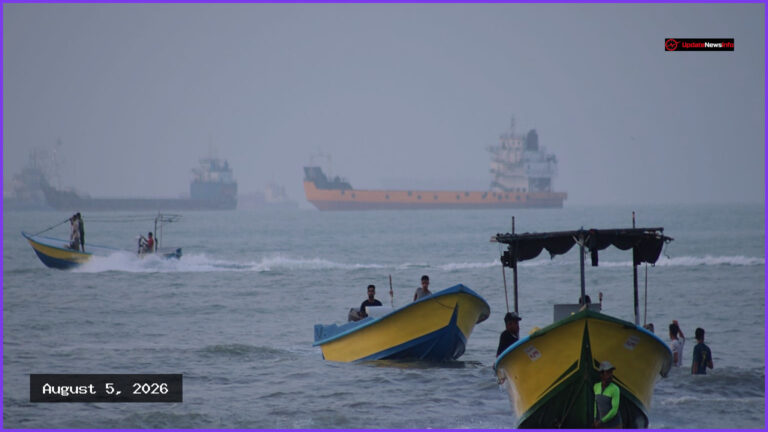
Europe is currently studying proposals that could permit the charging of navigational fees within the Strait of Hormuz. A key condition for these fees is that they must not be compulsory and should receive the backing of the United Nations agency responsible for regulating international maritime transport.
Britain’s Deputy Prime Minister, David Lammy, has stated that mandatory tolls would be detrimental. However, some of his cabinet colleagues have acknowledged that systems involving payments for specific navigational services are already in place in various natural waterways, such as the Strait of Malacca and the English Channel.
Oman, in collaboration with British legal experts, has developed a proposal for the Strait of Hormuz that draws principles from the Strait of Malacca model. Muscat has offered to send its legal specialists to Tehran to elaborate on the plan.
Iranian state media reported on Friday that Foreign Minister Abbas Araghchi is scheduled to visit Oman on Saturday for discussions concerning the strait. According to Iran’s official IRNA news agency, spokesman Esmaeil Baghaei stated that the visit will focus on the Strait of Hormuz and shipping safety, continuing consultations initiated with Oman over the past one to two months.
Oman, which controls a significant portion of the navigable waters in the strait, opposes compulsory tolls. Qatar’s foreign ministry spokesperson, Majed al-Ansari, expressed concern that granting Iran sovereignty over the strait in a manner that contravenes international maritime law would essentially make shipping vulnerable to any radical elements seeking to control the waterway.
However, the scope of Oman’s proposed alternative scheme might not align with the ambitions of certain Iranian factions, particularly within the Islamic Revolutionary Guard Corps (IRGC). One diplomat noted a division within Tehran, with some elements of the IRGC questioning cooperation with international law following what they perceive as an unlawful US attack in February, while others favor collaboration.
Iran is also facing pressure from regional states to clarify its proposals, specifically whether the fees would effectively be compulsory. The Iranian embassy in London indicated interest in proposals independently prepared by the Energy Policy Research Group, which argued that a transparent service fee integrated into a regional order could foster cooperation. This plan, they contend, is not a punitive toll for passage.
During a meeting of the International Maritime Organization (IMO) council in London on Thursday, Oman’s delegate, Khamis bin Mohammed Al Shamakhi, stated that the right of transit passage through straits used for international navigation is protected by international law and does not support transit fees. Nevertheless, he added that Oman sees merit in exploring voluntary arrangements for navigational support services that could enhance maritime safety, protect the environment, and improve emergency preparedness.
This stance is informed by Oman’s detailed work on the governance of the Strait of Malacca, a crucial waterway connecting the Indian and Pacific oceans. A report presented to the IMO council highlighted that over 120,000 vessels transit the Strait of Malacca annually, and its cooperative mechanism has evolved into a structured platform for addressing emerging risks and priorities, supported by voluntary contributions, notably from Japan.
At the London meeting, an alliance of Gulf and European states pushed for a resolution condemning Iran for attempting to control the Strait of Hormuz by attacking ships. This motion did not gain support from Russia or China, with Russia stating it ignored root causes and China describing the text as one-sided and exceeding the IMO’s mandate.
The proposed resolution followed recent US strikes on over 150 targets in southern Iran, aimed at degrading Iran’s capacity to harass shipping. Iran retaliated by targeting US bases in Kuwait and Bahrain.
According to one diplomat, the renewed hostilities stem from disputes over control of the strait during its reopening and the long-term management of the waterway, including the potential adoption of the Malacca model by Iran.
Clause 5 of the memorandum of understanding (MoU) signed by Washington and Tehran last month committed Iran to facilitating safe, charge-free passage of commercial vessels through the strait for 60 days. Following the removal of technical and military obstacles, commercial traffic was to be reinstated within 30 days.
The US has asserted that the MoU does not imply that ships require Iran’s permission or must adhere to Tehran-specified routes for passage. The memorandum also stipulated that Iran would engage in talks with Oman regarding a long-term plan for the strait.
In a statement on Thursday, the IRGC navy claimed it had fulfilled its interpretation of the MoU commitments. The IMO secretary general, Arsenio Dominquez, believed he had secured Iran’s agreement for a southern route to allow stranded sailors to evacuate the strait, but Tehran reportedly rescinded its approval, leading the UN agency to suspend its plan.
Despite these setbacks, the US has continued to encourage commercial traffic on the southern route. US Central Command reports that since early May, US forces have facilitated the transit of over 800 commercial vessels and 380 million barrels of crude oil through the corridor.
The IRGC navy reiterated its position, stating, “We reiterate that foreigners have no role in this land or the strait of Hormuz.”
Diplomats are currently analyzing whether Iran is insisting all ships use the northern route, closer to its coast, to clear the backlog, or if it is simply requiring all vessels to seek permission from the country and its Persian Gulf Strait Authority to use the southern route.